
Prosopis juliflora
Prosopis juliflora
Description
How to identify
Prosopis juliflora is a fast-growing, evergreen shrub or tree belonging to the Fabaceae family. It is characterized by its sharp thorns on the branches and complex, feathery leaves.
In its natural habitat, it can grow up to 12 meters in height, forming dense and impenetrable thickets that are difficult to manage.
Its root system is extremely powerful, capable of penetrating deep into the soil in search of water, which makes it a persistent and resilient plant.
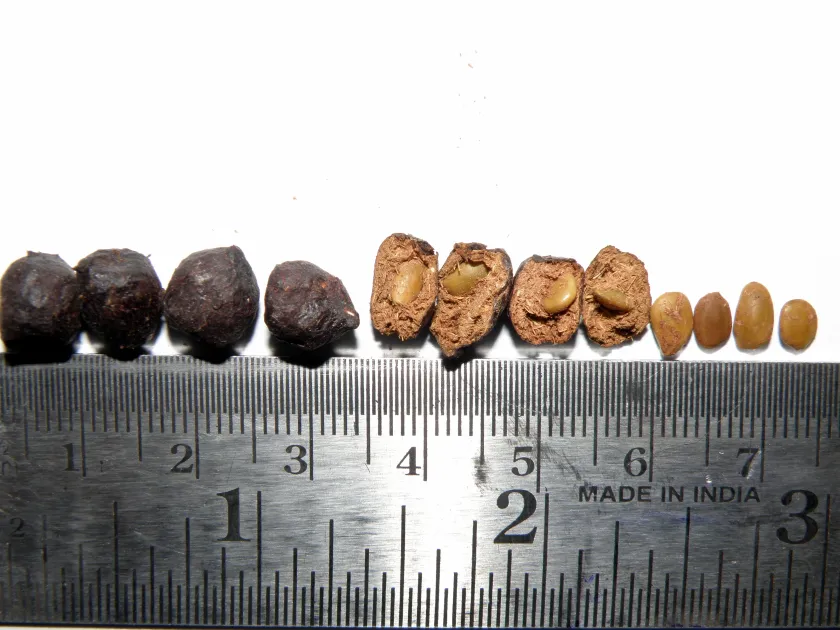
The flowers are small, yellow-green spikes, which develop into pods containing hard seeds that can remain dormant for many years.
Classified under the Fabales order, it is recognized globally as one of the most aggressive invasive species, significantly disrupting ecosystems.
What it damages
The primary agricultural damage is the total suppression of crops due to land occupation and the depletion of critical water resources from the soil.
Its dense canopy creates significant shade, blocking essential sunlight for smaller crops, which leads to stunted growth and reduced yields.
The plant releases allelopathic chemicals from its roots that inhibit the germination and development of nearby agricultural plants.
In livestock farming, it poses a danger as its sharp thorns can cause physical injury, and the pods can cause digestive complications in cattle.
Infestations often lead to the total loss of pasture land and significantly decrease the overall productivity of adjacent farming operations.
When it appears
Prosopis juliflora is capable of year-round growth in tropical and subtropical regions, showing little to no seasonal dormancy.
Flowering and seed production can occur multiple times throughout the year, ensuring a constant supply of seeds in the soil bank.
Peak growth activity for the root system occurs during rainy seasons, allowing the plant to expand its footprint rapidly across agricultural land.
Seeds maintain viability for a long period, waiting for the right environmental conditions, such as sufficient moisture, to germinate.
The plant demonstrates high resilience even during extreme drought, maintaining its vegetative structure while other crops perish.
Signs of infestation
The first sign of infestation is the appearance of young, thorny seedlings in areas where this species was previously absent.
Farmers will notice a rapid decline in the health of crops, characterized by wilting, yellowing, and eventual death due to resource competition.
Soil quality changes, and there is a visible shift in the native vegetation composition as the invasive plant takes over the area.
The presence of fallen bean-like pods is a clear indicator that the plant is in an active reproductive phase and is spreading its seeds.
- Young seedlings with distinct thorny stems.
- Rapid drying of soil in the surrounding area.
- Stunted growth of nearby crops.
Control measures
Controlling this weed is difficult due to its high regenerative capacity, as it can regrow from stumps if the roots are not fully removed.
Manual removal of the entire root system is the most reliable, though labor-intensive, method for clearing smaller infestations.
Chemical control using systemic herbicides is effective when applied to the stems or stumps immediately after mechanical cutting.
Integrated weed management programs are essential, involving continuous monitoring and immediate action to prevent establishment.
Preventing seed dispersal is critical, especially by managing livestock movement to avoid carrying seeds from infested to non-infested fields.
Discussion
No discussions yet — be the first.