
Porosagrotis
Porosagrotis
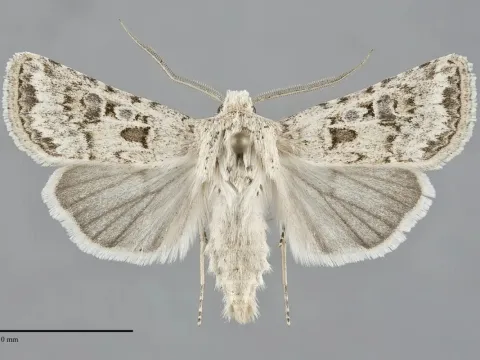
Porosagrotis is a genus of moths belonging to the family Noctuidae within the order Lepidoptera. These insects are widely known as cutworms, a group of soil-dwelling pests that cause significant damage to young agricultural plants.
What the section contains
Porosagrotis
Adult moths typically exhibit cryptic coloration in shades of gray, brown, and buff, which serves as camouflage during their nocturnal activity. Their body structure is adapted to remain hidden among plant debris during the day.
The larvae, or caterpillars, are the most recognizable stage for agronomists. They possess a soil-matching brownish or grayish color and a robust head capsule, which is equipped with strong mandibles for cutting through plant stems.
The life cycle of Porosagrotis is intimately tied to the soil environment. Larvae spend the majority of their development in the topsoil, where they are protected from environmental fluctuations and many natural predators.
Effective identification relies on distinguishing these larvae from other soil-dwelling species, primarily by observing their behavioral response to touch and their specific feeding pattern on the lower sections of stems.
The primary damage is inflicted by late-instar larvae that feed at night. They cut through the stems of seedlings at or just below the soil surface, causing the plants to topple over and die within a short time.
Various crops are susceptible to this pest, including cereals, corn, sugar beets, and sunflower. The loss of seedlings results in thin, uneven stands, which complicates field management and reduces overall yields.
Unlike some other pests, cutworms are indiscriminate feeders and can survive on a wide range of weeds present in the field. This ability allows them to maintain a population presence even when primary crops are not available.
High levels of infestation often result in the total destruction of localized patches within a field. This uneven crop development leads to increased competition from weeds in the gaps left by the destroyed seedlings.
During dry and hot weather, the impact of Porosagrotis is often magnified as larvae become more desperate for moisture, leading them to feed more aggressively on the succulent parts of young crop tissues.
The activity of these pests begins in early spring as soil temperatures rise, prompting larvae to move up from deeper soil layers to the surface to begin feeding on emerging crop seedlings.
The moth flight period usually occurs late in the spring or early summer. During this time, females lay eggs on soil particles or on the undersides of leaves near the ground level, starting the next generation.
Developmental rates are heavily influenced by local climate and soil moisture. A favorable environment allows for multiple generations per year, with the most active feeding phases coinciding with the early development of spring crops.
As autumn approaches, the final generation of larvae prepares for winter. They burrow deeper into the soil profile to enter diapause, a state of dormancy that protects them from frost until the following spring season.
Understanding the specific phenology of the pest is crucial for precise timing of monitoring efforts, as the window for effective chemical or cultural intervention is often relatively narrow.
The most common sign of infestation is the sudden wilting of previously healthy seedlings. When checking the base of these plants, one will typically find the stem severed or heavily chewed.
Searching the soil around the damaged area, especially within a 5-10 cm radius of the plant, often reveals the larva. A characteristic response when handled or uncovered is that the larva coils itself into a tight "C" shape.
- Missing plants or gaps in established crop rows.
- Symptoms of "lodging" in very young seedlings.
- Small, granular frass (excrement) pellets found on the soil surface near the stem.
- Visible gnawing marks on the roots or crown tissue of the damaged plant.
Scouting during the twilight hours or at night is the most reliable way to confirm the presence of feeding larvae, as they are strictly nocturnal and remain inactive and hidden during the day.
Cultural control is the first line of defense. Deep autumn plowing is highly effective as it exposes the overwintering larvae to birds and predators, significantly reducing the starting population for the next season.
Eliminating weed hosts in and around the field is essential to deny the pest food sources and egg-laying sites during the early parts of the season, which helps keep population densities below the economic threshold.
When chemical control is necessary, apply insecticides during the evening hours. Since the larvae are active feeders at night, evening applications increase the likelihood of direct contact and ingestion of the insecticide.
Crop rotation remains a powerful tool in managing Porosagrotis. By breaking the cycle of preferred hosts, farmers can make fields less attractive for egg-laying adults, thus decreasing the likelihood of heavy infestations.
The use of pheromone traps provides valuable data on moth population spikes. This information allows agronomists to predict the emergence of larvae and apply control measures only when strictly necessary, minimizing costs.