
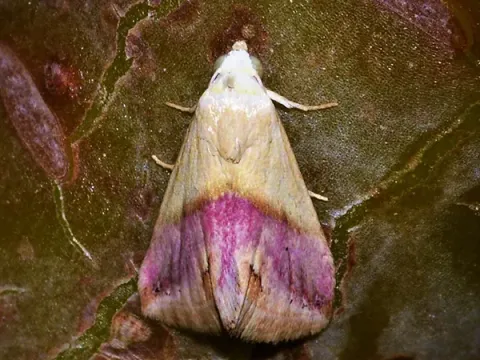
Porphyrinia
Porphyrinia
Porphyrinia is a genus of moths belonging to the Erebidae family. These insects are relatively small and often nocturnal, which makes them elusive and difficult to spot during routine field inspections.
What the section contains
Porphyrinia
Adult moths possess distinctively colored wings, often featuring shades of pink, purple, or brown. This coloration acts as excellent camouflage when they rest on vegetation or flower petals.
The larvae, or caterpillars, have a typical lepidopteran structure with a robust head capsule and a cylindrical body. Depending on the species and the host plant, their color can range from pale green to brownish.
Accurate species identification often requires professional morphological analysis, including the examination of genitalia. In the field, however, scouts focus primarily on observing the symptoms caused by larval feeding.
These moths are highly adaptable to various environmental conditions and are frequently found in both wild meadows and commercial crop fields.
Larvae of the Porphyrinia genus are primary pests of the reproductive organs of host plants. They specialize in consuming flower buds and developing seed heads, which severely impacts plant reproduction.
Crops belonging to the Asteraceae family, such as wormwood or medicinal flowers, are particularly susceptible. The destruction of floral buds results in significant losses of seed yield and raw material quality.
Feeding larvae not only destroy the reproductive parts but also weaken the plant by feeding on leaves and soft stems, which reduces the plant's overall vigor and photosynthetic ability.
In cases of severe infestation, entire fields can experience a significant reduction in output, as the larvae consume the most nutritionally valuable parts of the plant during the critical flowering stage.
Economic damage is most pronounced in seed production fields where the integrity of the flower head is essential for the harvest.
The flight period for adult moths begins in late spring and persists throughout the growing season, depending on the climatic zone and local temperature patterns.
The life cycle encompasses four stages: egg, larva (caterpillar), pupa, and adult. Some species may produce multiple generations per season, increasing their potential impact on crops.
Overwintering typically occurs in the pupal stage, with the insects remaining in the soil or protected within plant debris until the following spring.
Larval activity peaks concurrently with the flowering phase of target host plants, as this stage provides the larvae with the necessary nutrition for rapid development.
During the latter part of the summer, mature larvae often move into the soil to pupate, entering a state of diapause that allows them to survive the colder months.
One of the most reliable signs of an infestation is the presence of small, drilled holes in flower buds and seed heads. These holes allow the larvae to feed on the inner tissues protected from predators.
Affected flowers often show symptoms of premature browning, wilting, or deformation. Eventually, these parts of the plant wither and fall off prematurely.
Frass (larval excrement) found on the petals or tucked into the leaf axils near the buds is a clear indication that a larva is actively feeding in the vicinity.
Early-stage infestations may manifest as minor irregular bite marks on the leaves, which serve as a warning sign for field scouts to check the buds more closely.
Night-time observations using light traps can confirm the presence and population density of the adult moth population in the area.
Effective management requires a combination of agricultural practices, such as deep autumn plowing, which disturbs the soil and destroys overwintering pupae.
Sanitation practices, including the removal of weeds that act as alternative host plants, are crucial to reducing the population pressure on commercial crops.
Chemical control should be timed to target the larvae before they bore into the flower buds, as larvae inside the buds are well-protected from contact insecticides.
Integrated Pest Management (IPM) encourages the use of pheromone traps to monitor adult populations and determine the precise timing for intervention.
Biological controls, such as the release of beneficial insects (e.g., Trichogramma wasps), can be highly effective in reducing larval populations without disrupting the surrounding ecosystem.