
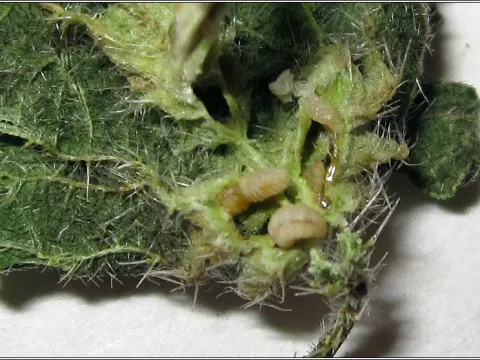
Aphidoletes urticariae
Phaenobremia urticariae
Aphidoletes urticariae (formerly known as Phaenobremia urticariae) is a species of gall midge belonging to the family Cecidomyiidae in the order Diptera.
What the section contains
Aphidoletes urticariae
The adult insect is a delicate, long-legged midge that typically measures between 2 and 3 millimeters in length, often appearing greyish-brown.
The larvae are the most recognizable stage, characterized by a vibrant orange-red color, which makes them stand out when crawling among aphid colonies.
Unlike many other gall midges that form galls on plants, this species is a specialized predator that feeds on various species of aphids.
The lifecycle consists of four stages: egg, larva, pupa (occurring in the soil), and the adult fly, with overwintering occurring in the pupal stage.
This species is not a plant pest; rather, it serves as a highly effective biological control agent for aphids on various garden and greenhouse crops.
The larvae consume aphids by piercing their integument and injecting toxic saliva, which liquefies the contents of the prey.
By significantly reducing aphid populations, these midges prevent the direct damage that aphids cause, such as leaf curling, wilting, and the spread of viral diseases.
Their role in maintaining the balance of an ecosystem is critical, as they act as a natural check against the exponential growth of aphid infestations.
In professional agriculture, conserving this predator is considered a key practice in sustainable integrated pest management (IPM) strategies.
The adult midges emerge in late spring when temperatures rise, coinciding with the initial buildup of aphid populations on host plants.
Multiple generations occur throughout the growing season, typically peaking in mid-to-late summer when aphid abundance is at its highest.
The midges are most active during the night and are attracted to the honeydew produced by aphids, which guides them to suitable sites for egg-laying.
As autumn approaches and temperatures drop, the larvae drop to the soil, form cocoons, and enter diapause to survive the winter season.
The synchrony between the midge's lifecycle and the aphid's availability ensures a steady supply of food for the larval development.
The presence of Aphidoletes urticariae can be detected by examining the underside of leaves for small, bright orange larvae amidst aphid clusters.
Visual identification of the predator is straightforward once you know that these orange maggots are not harmful to the plant but are actively hunting.
A sudden collapse of an aphid colony in the absence of chemical intervention is a strong indicator that natural predators like the gall midge are present.
There is no specific plant damage associated with this insect, as its activity is focused entirely on the consumption of herbivorous prey.
Frequent scouting of potential host plants for the presence of these predatory larvae helps in making informed decisions about pest control.
The primary management strategy for this species is conservation, which involves providing a habitat that supports its survival and reproduction.
Avoid the use of broad-spectrum insecticides, as these chemicals are highly toxic to beneficial insects and disrupt the natural predatory balance.
Maintaining floral strips or hedgerows can provide essential nectar sources for adult midges and shelter for the soil-dwelling pupae.
When chemical treatment is absolutely necessary for other pests, opt for selective pesticides that have minimal impact on non-target predatory species.
- Minimize pesticide use during the peak activity months of summer.
- Preserve organic mulch in garden beds to protect overwintering pupae.
- Monitor aphid populations to allow natural predators time to react.