
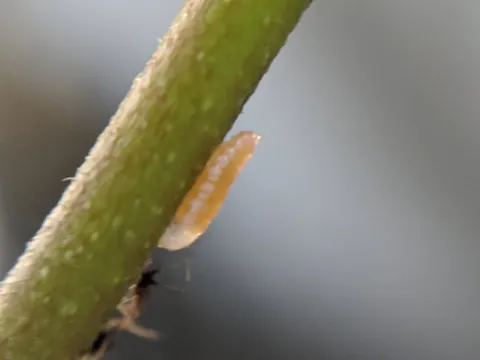
Aphidoletes aphidimyza
Phaenobremia aphidivora
Aphidoletes aphidimyza is a specialized predatory midge belonging to the family Cecidomyiidae. The adult midge is a delicate insect, about 2-3 mm long, with long, slender legs and antennae.
What the section contains
Aphidoletes aphidimyza
The larvae are the active predatory stage. They are distinctive in appearance, characterized by their bright orange to reddish color, making them easy to identify within aphid colonies.
Adult midges are nocturnal and typically spend the daylight hours hiding in humid microclimates or dense vegetation near the ground.
The life cycle consists of the egg, three larval instars, pupa, and adult. Development is highly temperature-dependent, typically taking 3-4 weeks under warm conditions.
A crucial biological feature is the entry into diapause; as day length decreases, larvae pupate in the soil to survive the winter season.
It is important to clarify that Aphidoletes aphidimyza is not a plant pest. It is a highly effective biological control agent used specifically to manage aphid populations.
These midges target over 60 species of aphids, including the green peach aphid and melon aphid, which are major pests in both greenhouses and open fields.
The larvae prey upon aphids by piercing their exoskeletons and injecting a paralyzing toxin, effectively consuming the aphid from the inside out.
Because of their high search efficiency, they can rapidly find and eradicate localized aphid outbreaks before they become widespread economic threats.
By effectively suppressing aphid numbers, they prevent the secondary damage caused by aphids, such as plant deformity, virus transmission, and sooty mold growth.
In natural outdoor ecosystems, these midges typically emerge in late spring or early summer, coinciding with the natural buildup of aphid populations.
In greenhouse settings, they can be introduced whenever aphid presence is detected, provided temperatures are consistently above 15°C.
Optimal conditions for activity and reproduction are found at temperatures between 20°C and 25°C and relative humidity above 60%.
If temperatures drop or the environment becomes too dry, the midge's development slows down, and larvae may enter a pre-pupal stage to protect themselves.
Strategic timing of releases is vital; applying them at the very first signs of aphid arrival ensures that the predator population establishes before the pest explodes.
The most visible sign of successful control is the presence of bright orange larvae crawling amongst the aphid colonies on the underside of leaves.
A further indicator of successful predation is the presence of brown, shriveled aphid carcasses, which are the leftovers after the larvae have finished feeding.
A reduction in the production of honeydew (the sticky substance excreted by aphids) on leaves is a clear sign that the predator is reducing the pest population.
If the plants are not showing further signs of leaf curling or yellowing, it suggests that the biological control agent is effectively limiting the pest damage.
Monitoring the undersides of leaves during early morning or late evening often reveals the presence of both the larvae and the subtle activity of the adults.
To conserve Aphidoletes populations, avoid the use of broad-spectrum insecticides, which are lethal to beneficial insects and disrupt natural biological control.
When chemical intervention is required, select highly selective products that are compatible with predatory midges and apply them using spot treatments.
Maintaining high humidity in greenhouses is critical, as pupation happens in the soil, and dry substrate can significantly reduce the emergence rate of adults.
Regular release programs, often conducted in tandem with other beneficials like parasitic wasps, can create a robust and resilient Integrated Pest Management (IPM) system.
Encouraging biodiversity by planting flowering nectar sources near crops helps sustain adult midge populations, as they rely on nectar for nutrition when prey density is low.