
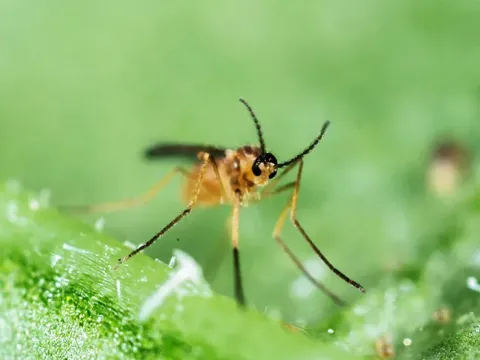
Aphidoletes aphidimyza
Phaenobremia aphidimyza
Aphidoletes aphidimyza, commonly known as the predatory gall midge, is a highly effective beneficial insect widely used in biological control programs. The adult is a small, delicate fly, roughly 2-3 mm long, with a nocturnal or crepuscular lifestyle.
What the section contains
Aphidoletes aphidimyza
Taxonomically, it belongs to the order Diptera and the family Cecidomyiidae. While the adults feed on nectar and are harmless, their larvae are specialized predators of aphids.
The eggs are minute and reddish-orange, usually laid by the female directly into aphid colonies. The larvae are bright orange or red, making them easy to distinguish from the pests they consume.
The pupal stage occurs in the soil, protected by a cocoon covered with soil particles. This stage is crucial for the survival of the species during unfavorable conditions or wintering.
The biology of this species is defined by the female's exceptional ability to detect aphid-infested plants using chemical signals (volatile organic compounds) emitted by the plants, allowing them to precisely target infestations.
It is critical to note that Aphidoletes aphidimyza does not damage plants; it is a predator that exclusively targets aphids. It is one of the most effective tools for protecting horticultural crops.
The larvae prey on over 70 species of aphids, including the green peach aphid, melon aphid, and various other sucking pests that cause leaf curling, stunted growth, and virus transmission.
Without the control provided by such predators, aphid outbreaks can rapidly destroy high-value greenhouse crops, including tomatoes, cucumbers, peppers, and ornamental flowers.
A single larva can consume a significant number of aphids, paralyzing them first and then draining their body fluids. This rapid predation makes them highly efficient at suppressing even high-density aphid colonies.
By integrating Aphidoletes aphidimyza into management practices, growers can drastically reduce reliance on chemical insecticides, promoting a healthier and more sustainable crop environment.
The activity of Aphidoletes aphidimyza begins when temperatures stabilize above 15°C (59°F). Their ideal performance is observed at temperatures between 20°C and 25°C (68–77°F).
In greenhouse settings, they can be used year-round, provided there is enough light and a continuous prey population. In outdoor crops, their season is typically restricted to the warmer months of spring and summer.
Their life cycle is relatively short, usually lasting about 3-4 weeks. This fast development allows for multiple generations per season, enabling the predator population to mirror the growth of aphid populations effectively.
As the photoperiod decreases in autumn (under 14 hours of light), the larvae enter diapause and burrow into the soil to pupate and overwinter. This natural cycle must be considered when planning for the next season.
Growers should maintain soil moisture and avoid harsh cultivation practices in areas where the midge is expected to overwinter, ensuring the pupae remain viable for the following spring.
The most reliable sign of Aphidoletes aphidimyza activity is the presence of orange-colored larvae moving actively within aphid colonies. Their distinct color makes them visible even on dense foliage.
A secondary sign is the presence of hollowed-out, dry aphid skins left behind on the leaves after the larvae have finished feeding. This indicates successful predation.
A gradual decline in aphid numbers, particularly in the center of infested clusters, is a clear indicator of the midge's impact. The plants often show signs of recovery as the pressure from sucking pests subsides.
Adult midges may sometimes be observed near the plants during the evening hours or caught on yellow sticky traps, which serves as a monitoring signal for their presence in the greenhouse.
Increased plant vigor and a decrease in the production of honeydew (the sticky substance excreted by aphids) are major indicators of a successful biological control program in progress.
The primary control strategy involves creating a supportive environment for the midges. The use of broad-spectrum insecticides is strictly prohibited, as these are highly toxic to the larvae and adults.
If chemical interventions are necessary for other pests, growers must choose selective pesticides that are known to be compatible with Aphidoletes aphidimyza to preserve their population.
Humidity is essential for their success; maintaining relative humidity above 70% helps the larvae move across leaves and find their prey more efficiently. Misting systems or regular watering can be beneficial.
Releases should be timed with the first sightings of aphids. The midges are typically released as pupae placed in a substrate, which allows the adults to emerge gradually and establish their population.
Key recommended practices:
- Monitor adult midge populations using yellow sticky traps.
- Maintain moist soil conditions to support pupal survival.
- Plant refuge areas with pollen-producing flowers to sustain adult midges.