
Aphidoletes gall midge
Phaenobremia basalis
Description
How to identify
Aphidoletes basalis (often referred to as Aphidoletes gall midge) belongs to the family Cecidomyiidae in the order Diptera. These are tiny insects essential for biological control programs.
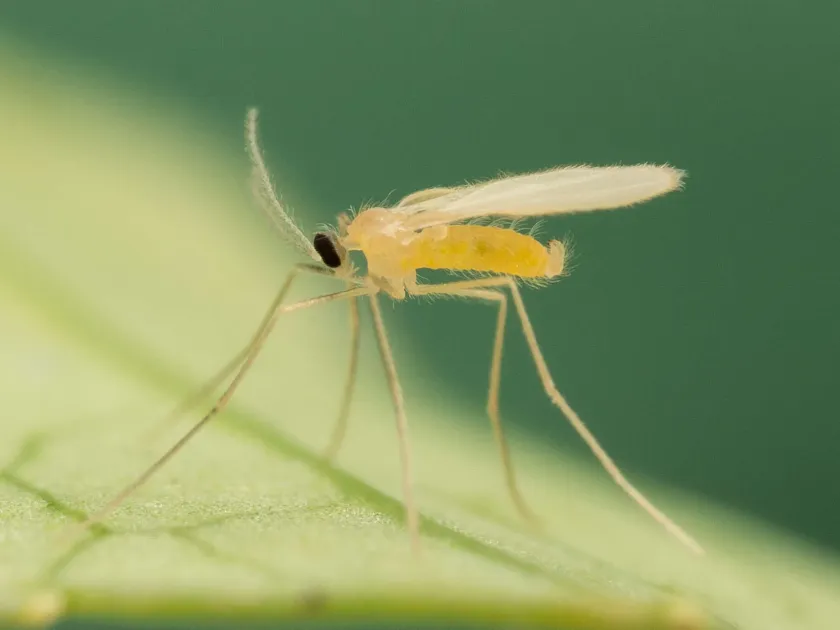
Adults are nocturnal and fragile, making them difficult to spot in the field. They resemble small mosquitoes but play a vital role as aphid predators.
The larvae are the active stage of this species, specifically targeting various aphid colonies on leaves and stems of diverse crops.
Taxonomically, the species is closely related to other predatory gall midges used worldwide for sustainable agriculture management.
Identification is primarily based on larval morphology, characterized by distinct coloration and behavior within aphid clusters.
What it damages
This species is not a plant pest; rather, it is a highly beneficial predator. Larvae feed exclusively on aphids, causing them to collapse and die.
Damage to crops is typically observed only when the predatory population is suppressed by chemical pesticides, leading to unchecked aphid growth.
Losses in yield occur indirectly due to the impact of the aphids they were supposed to control, highlighting the importance of conservation.
Aphidoletes basalis is safe for vegetable crops, fruit trees, and ornamental plants, serving as a natural regulator of sap-sucking pests.
Economic impact is positive, as this insect replaces synthetic pesticides in many greenhouse integrated pest management systems.
When it appears
The appearance of adults aligns with the rise of aphid populations during the warming spring months and active summer growth.
Multiple generations occur throughout the growing season, allowing for continuous suppression of pests if environmental conditions are favorable.
Temperature and humidity are critical factors for larval development, with optimal results seen in warm, humid greenhouse environments.
The species overwinters as pupae in the soil, which provides protection from cold temperatures during the dormant season.
Seasonal dynamics are strictly dependent on the availability of prey; as aphid populations rise, the midge activity follows suit.
Signs of infestation
Signs of presence include colonies of aphids that appear sickly, shriveled, or dead despite the lack of insecticide treatments.
Upon close inspection, small, orange-to-reddish larvae can be seen moving through aphid colonies, feeding on the pests.
Affected aphid groups show a significant decline in density, often leaving behind only the empty, dried-out skins of the aphids.
- Presence of predatory larvae in aphid clusters.
- Rapid decline in local aphid populations without chemical interference.
- Lack of honeydew residue on leaf surfaces.
The presence of predatory midges is an indicator of a balanced and healthy agroecosystem that does not require heavy chemical input.
Control measures
Protection strategies focus on conserving existing populations of Aphidoletes by avoiding broad-spectrum insecticides during peak seasons.
Integrated pest management (IPM) encourages the use of selective biorational pesticides that preserve beneficial insects like gall midges.
Providing a suitable soil environment for pupation, such as maintaining moisture and avoiding excessive disturbance, helps stabilize the population.
In commercial greenhouses, augmentation programs involve the intentional release of lab-reared midges to achieve immediate aphid control.
Collaboration with biological control experts ensures the effective use of these midges to maintain crop health throughout the production cycle.
Discussion
No discussions yet — be the first.