
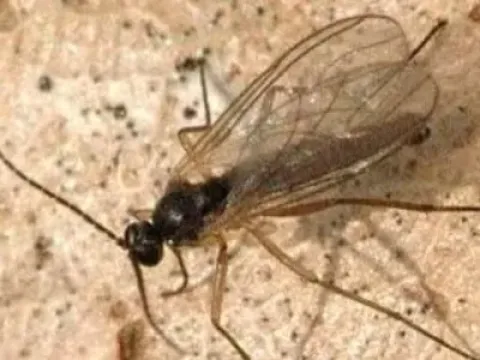
Aphidoletes aphidimyza
Phaenobremia fulva
Aphidoletes aphidimyza (formerly known as Phaenobremia fulva) is a beneficial predatory midge belonging to the family Cecidomyiidae. The adult is a small, mosquito-like fly measuring about 2–3 mm, with long legs and delicate wings, often difficult to spot in the field.
What the section contains
Aphidoletes aphidimyza
The larvae are the active predatory stage of the species. They are distinctly orange or reddish, making them easily distinguishable within an aphid colony. They have a segmented, spindle-shaped body without a visible head capsule.
The life cycle is closely synchronized with the aphid population. Female midges use specialized chemoreceptors to detect aphid honeydew, ensuring they lay eggs exactly where the food supply for their future offspring is abundant.
Upon hatching, the larvae inject a paralyzing toxin into the aphid, liquefying its contents. A single larva can consume dozens of aphids during its developmental stage, significantly reducing pest pressure.
Pupation occurs in the soil. The mature larvae drop from the foliage and burrow into the top layer of the ground, forming small, soil-covered cocoons to undergo metamorphosis safely.
In the context of agronomy, this insect is classified as an important entomophage rather than a pest. It preys on a wide range of aphid species, effectively protecting vegetables, fruits, and ornamental plants.
It is particularly effective in greenhouse environments, such as cucumbers and peppers, where it can be introduced to manage aphid outbreaks without the need for synthetic chemical insecticides.
By keeping aphid populations in check, the midge serves as a biological shield against various plant viruses transmitted by aphids. This is critical for maintaining crop yield and quality in professional farming.
Without the presence of this predator, aphid populations can explode in a very short time, leading to leaf curling, stunted plant growth, and the eventual destruction of entire crops.
Agricultural practices that favor the survival of Aphidoletes aphidimyza are essential for integrated pest management (IPM) strategies, reducing reliance on toxic chemical sprays.
The active season for Aphidoletes aphidimyza begins in spring once temperatures consistently exceed 15°C (59°F). Adults emerge from overwintering pupae and begin their search for suitable aphid colonies.
The midge can produce multiple generations throughout the growing season, provided there is a continuous supply of aphids. This allows for sustained protection across different crop development stages.
Peak activity typically occurs in mid-summer when aphid numbers are naturally high. The midge responds rapidly to these surges, ensuring the pest population is kept below economic injury levels.
As daylight duration decreases in autumn, the midges enter diapause. The final generation larvae bury themselves deeper in the soil to survive the winter months until the next spring.
Farmers and greenhouse managers monitor these seasonal patterns to avoid applying pesticides during peak midge activity, thus preserving this vital natural resource.
The primary sign of a healthy population is the presence of orange larvae moving within aphid colonies. Their distinct color makes them stand out against the green foliage or the darker bodies of the aphids.
Evidence of successful predation includes the presence of collapsed, empty aphid skins (exuviae) that remain stuck to the leaves after the predator has finished feeding.
A rapid decline in aphid colony density, especially when no chemicals have been applied, is a clear indicator that the predatory midges are doing their work effectively.
In greenhouse settings, yellow sticky traps can be used to monitor the presence of adult midges, although this method is primarily for research or observation purposes.
Lack of damage symptoms, such as curled leaves or stunted shoots, despite the initial presence of aphids, suggests the population of Aphidoletes aphidimyza is sufficient to control the pests.
The best strategy to encourage this predator is the implementation of IPM. This involves minimizing the use of broad-spectrum pesticides, which are highly toxic to the larvae and adults.
Planting nectar-rich companion plants around the field provides adults with the necessary energy sources to survive periods of low aphid availability, keeping the population on-site.
In commercial agriculture, growers often purchase and release laboratory-reared midges. This targeted biological intervention is highly effective and safe for the environment.
Maintaining adequate soil moisture is essential for the larvae. Dry, compacted soil can be detrimental to pupating larvae, potentially reducing the number of midges that emerge in the next generation.
- Reduce or eliminate broad-spectrum insecticide use.
- Incorporate nectar-producing flowers for adult midges.
- Monitor aphid colonies for the presence of orange larvae.
- Utilize biological control agents as a primary strategy.