
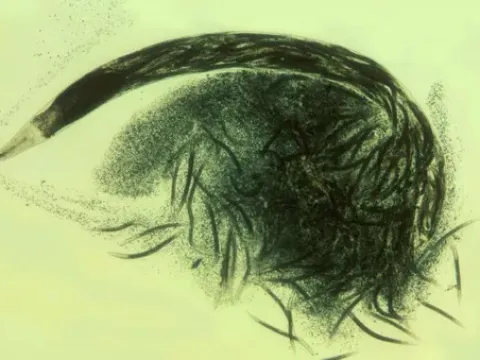
Neoaplectana bibionis
Neoaplectana bibionis
Neoaplectana bibionis is a microscopic soil-dwelling nematode belonging to the family Steinernematidae. As an entomopathogenic organism, it functions primarily as a parasite of insects living within the soil profile.
What the section contains
Neoaplectana bibionis
The nematode is invisible to the naked eye. In its infective juvenile stage, it is highly mobile and uses chemotaxis to detect the presence of potential insect hosts nearby in the soil.
The life cycle begins when the infective juveniles enter the host's body through natural openings. Upon entry, they release symbiotic bacteria that kill the insect, creating a substrate for the nematode's further development.
These organisms are known for their ability to persist in the soil for extended periods, waiting for suitable environmental conditions to resume activity and host seeking.
While they are natural enemies of insect pests, their presence in high densities can influence soil ecological processes and indirectly interact with plant root systems during their search for hosts.
The primary victims of Neoaplectana bibionis are soil-borne insect larvae, such as grubs or weevils, which are notorious agricultural pests affecting the root zones of various crops.
Indirect damage to plants can occur when nematode activity in the rhizosphere causes physiological stress or creates entry points for secondary plant pathogens like fungi and bacteria.
Sensitive crops, including potatoes, carrots, and various berry bushes, may experience stunted growth and nutrient uptake issues if the soil balance is disrupted by a surge in nematode populations.
The physical damage caused by the movement of these nematodes near root hairs can lead to necrotic spots on roots, reducing the plant's overall vigor and yield potential.
Understanding the impact involves distinguishing between the beneficial role of nematodes in controlling insect larvae and their potential to cause minor root stress in high concentrations.
The activity of Neoaplectana bibionis is heavily dependent on soil moisture and temperature. Spring provides the optimal environment as the soil warms and moisture levels are typically sufficient for movement.
During dry summer months, activity drops significantly. The nematodes retreat deeper into the soil profile to avoid desiccation and enter a period of reduced metabolic activity or dormancy.
Autumn brings a second peak of activity as soil moisture increases again, allowing the nematodes to seek hosts before the onset of winter conditions.
During the winter season, these organisms remain in a state of diapause deep in the soil, safely below the frost line until the next growing season begins.
Tracking these seasonal shifts is crucial for agronomic management, as it helps determine the optimal timing for monitoring or implementing control measures.
Agricultural management focused on maintaining soil health is the best preventative measure, as well-structured soil supports a balance of beneficial organisms that regulate nematode populations.
Implementing diverse crop rotation cycles is effective in interrupting the life cycle of the host insects that Neoaplectana bibionis relies on, leading to a natural decline in nematode numbers.
Biological control using fungi such as Beauveria or Metarhizium can help manage the soil ecosystem, providing a check on nematode populations without the use of harsh chemicals.
If chemical intervention is deemed necessary, only selective nematicides should be used, with caution taken to minimize impact on the broader soil microbiome and beneficial fauna.
Regular soil testing and professional monitoring of population densities are recommended for high-value crops to ensure that Neoaplectana bibionis remains a natural regulator rather than a contributor to crop stress.