
Neodrepta
Neodrepta
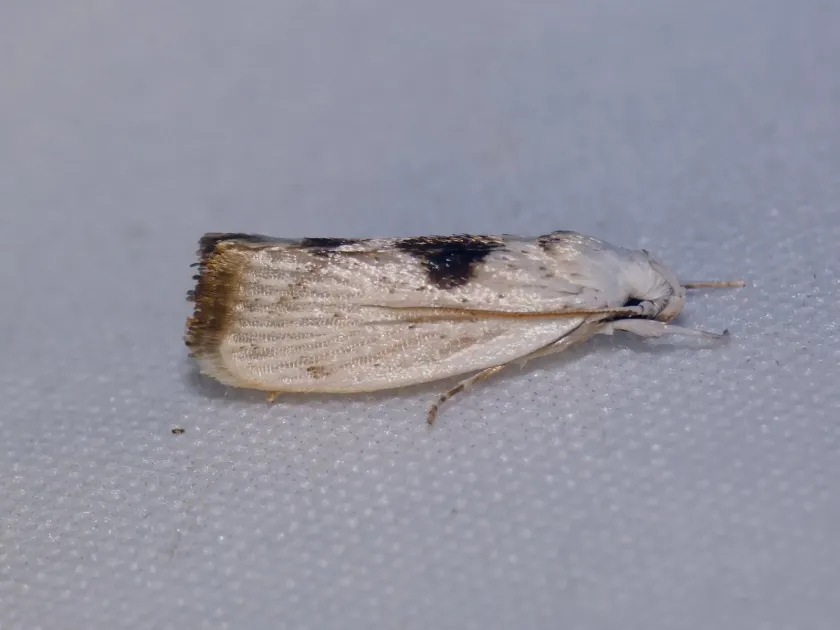
Description
How to identify
The genus Neodrepta belongs to the order Lepidoptera and the family Gracillariidae, commonly known as leaf-mining moths. These insects are small, with adults featuring narrow wings and a delicate pattern that provides camouflage against tree bark or leaves.
The life cycle of the pest involves complete metamorphosis: egg, larva, pupa, and adult. The larval stage is the most critical for agricultural purposes, as the larvae are specialized to feed internally within the plant tissues.
Identification often requires examining the characteristic damage pattern on the host plants. In the field, agronomists look for specific leaf-mining tracks, which are the signature of the larval feeding process during their development.
The population density is highly dependent on environmental factors, particularly temperature and humidity. Favorable seasons allow these moths to complete multiple generations, leading to significant outbreaks in susceptible plantations.
Accurate species identification may require laboratory analysis of adult morphology. However, for practical farm management, recognizing the early signs of infestation is sufficient for initiating necessary control measures.
What it damages
Neodrepta primarily affects deciduous trees and various shrub species. The damage is exclusively caused by the larvae, which create tunnels or 'mines' inside the leaf, consuming the mesophyll layer and destroying the photosynthetic tissues.
By disrupting the internal structure of the leaf, the pest impairs the plant's ability to produce energy. This leads to reduced growth rates, chlorosis, and, in severe cases, premature senescence and leaf drop.
The damage is not limited to the leaves; in some cases, the larvae can affect young shoots or buds, leading to structural deformity and stunted growth, which is particularly detrimental for young orchards and nursery stock.
Infested plants become weakened, making them significantly more susceptible to secondary environmental stresses, such as drought, and secondary pathogen attacks, including fungi and bacteria entering through damaged leaf surfaces.
The cumulative impact of Neodrepta includes yield reduction and long-term decline in plant vigor. If left unmanaged, the repeated infestation over several seasons can severely threaten the economic viability of a crop.
Signs of infestation
The most distinctive sign of Neodrepta presence is the formation of 'mines' on the foliage. These appear as irregular, translucent, or brown winding tracks created by larvae feeding between the upper and lower leaf epidermises.
Affected leaves may show signs of curling or wilting, changing color from healthy green to yellow or necrotic brown. In advanced infestations, the leaf surface may appear blistered due to the extensive mining activity beneath the skin.
Visible traces of larval frass (excrement) can often be found within the mines or scattered on the underside of the leaves, serving as a clear indicator of active feeding by the caterpillar stage.
Pupa cases or silken cocoons may be found in curled leaf edges or near the base of the leaves, indicating the stage of transformation from larvae to adult moth.
Premature leaf abscission during the growing season is a common symptom in heavy infestations, leaving the tree canopy sparse and vulnerable to sunscald and other negative impacts.
Control measures
Effective management of Neodrepta requires a combination of sanitation and targeted interventions. Clearing and destroying fallen leaves is essential, as many species within this family overwinter in leaf litter or soil near the host plant.
Biological control, including the use of entomopathogenic fungi or Bacillus thuringiensis, offers an environmentally friendly way to suppress caterpillar populations without disrupting the balance of beneficial insects.
Chemical control should be applied strategically, focusing on systemic insecticides that can reach the larvae hidden inside the leaf tissue. Timing is critical, and pheromone traps should be used to monitor adult moth activity and predict egg-laying periods.
Integrated Pest Management (IPM) practices, including the encouragement of natural predators like parasitic wasps and predatory bugs, are key to maintaining long-term control over pest populations.
- Implement strict sanitation by removing and composting infested leaves.
- Monitor adult flights with pheromone traps to schedule interventions.
- Apply systemic insecticides during periods of active larval feeding.
- Encourage the presence of natural enemies for biological suppression.
Discussion
No discussions yet — be the first.