
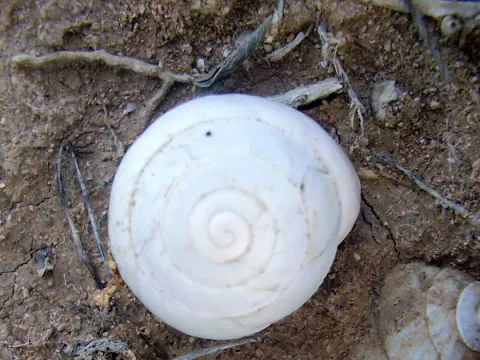
White desert snail
Leucochroa candissima
The white desert snail belongs to the Hygromiidae family, within the order Stylommatophora. This gastropod mollusk features a distinct globular shell of white or cream color, which is perfectly adapted to surviving in water-scarce environments.
What the section contains
White desert snail
The adult shell reaches 20–30 millimeters in diameter and has a robust structure. The light color of the shell helps the snail reflect intense solar radiation, preventing the overheating of soft tissues during periods of extreme heat.
The mollusk's body is typically grayish or light beige. Unlike many other snail species, this pest is capable of entering a deep diapause, sealing the shell opening with a calcareous film to conserve internal moisture.
The species is a typical representative of the xerophilic fauna, common in arid and semi-arid regions. Its natural range covers countries of the Mediterranean and the Middle East, where it has adapted to harsh temperature fluctuations.
Reproduction occurs during periods of increased humidity, when snails lay eggs directly into the soil or under plant debris. Juveniles are highly active upon hatching and immediately begin feeding on available vegetation.
This snail species is a polyphage and causes significant damage to various agricultural crops. Its host plant range includes many types of vegetables, ornamental flowers, and some field crops.
The pest poses a particular danger to young seedlings and the tender leaves of vegetable plants. By consuming juicy plant tissues, the mollusks reduce overall crop productivity and slow down plant development during critical growth phases.
In orchards and vineyards, the white desert snail can damage the skin of fruits, which opens pathways for fungal and bacterial infections. This leads to rapid decay of the harvest and loss of commercial quality.
Snails also feed on weeds, allowing them to successfully thrive on neglected land and migrate to cultivated fields, creating additional challenges for population control.
The most severe damage is observed on irrigated lands in arid zones, where artificial oases attract mollusks from the surrounding desert or semi-desert environments.
One of the first signs of snail presence in a garden is the appearance of characteristic silvery trails of dried mucus on leaves and stems.
Leaf blades of damaged crops show uneven, ragged edges or irregular holes. Often, pests consume entire sections of leaf tissue, leaving only the tough veins behind.
During evening or early morning inspections of garden beds, the mollusks themselves can be spotted sitting on the undersides of leaves or near the base of stems. During the day, they hide under soil clumps, mulch, or garden tools.
The presence of empty shells in the soil is often indicative of previous pest activity, as the snails may have died or migrated due to changes in humidity levels.
The contamination of produce with mollusk excrement is another direct indication that an active population of white desert snails is present in the area.
Effective snail protection is based on agronomic methods. It is crucial to perform regular soil cultivation to disrupt the mollusks' daytime shelters and damage their egg-laying sites.
It is recommended to limit evening irrigation, as high soil surface humidity attracts pests. Switching to drip irrigation, applying water directly to the root zone, is a more effective strategy.
Creating barriers with rough materials like wood ash, lime, or gravel around beds provides physical obstacles that snails are reluctant to cross.
- Manual collection of individuals during evening hours.
- Using traps filled with beer or fermented fruit juice.
- Removal of weeds and plant debris surrounding the planting area.
- Application of certified molluscicides based on metaldehyde or iron phosphate.
Using biological control methods, including encouraging natural predators like hedgehogs, frogs, and predatory birds, helps maintain a natural balance and reduce pest numbers.