
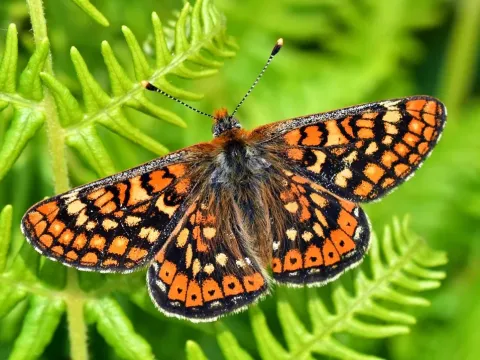
Eurodryas
Eurodryas
Eurodryas belongs to the order Coleoptera and the family Curculionidae. It is a small weevil characterized by the elongated snout typical of its family.
What the section contains
Eurodryas
The coloration of the adults is usually cryptic, ranging from gray-brown to dark shades, which allows the insect to effectively hide on the bark or leaves of host plants.
The pest's body is covered by a dense chitinous shell that is resistant to mechanical damage, complicating the application of certain contact-based control methods.
The larvae of Eurodryas have a legless, curved, whitish body with a distinct dark head capsule. They lead a concealed lifestyle within plant tissues, making early detection difficult.
Identification of this species in the field requires entomological techniques and inspection with a magnifying glass, as adult beetles tend to feign death when threatened.
This pest affects a wide range of wild and agricultural crops, including members of the Rosaceae family and other species distributed throughout Eurasia.
The greatest damage is caused by the larvae, which feed on the internal tissues of shoots, buds, or fruits, disrupting the plant's natural sap flow and nutrient transport.
Adult beetles feed primarily on young leaves and delicate vegetative tissues, leaving characteristic holes that reduce the overall photosynthetic area of the plant.
Damaged plant tissues become highly susceptible to secondary infections, including fungal and bacterial diseases that thrive in the wounds and tunnels created by the pest.
In cases of mass outbreaks, Eurodryas can cause premature shedding of flower buds and ovaries, leading to critical yield losses in orchards and plant nurseries.
The development cycle of the pest is closely linked to the phenological phases of the host plants. Adult activity begins in early spring as soon as the soil warms up.
The mass flight period coincides with the bud-break phase, when insects migrate to host crops for feeding and subsequent mating.
Eggs are deposited into small punctures made by the female in the tissues of buds or young shoots, where larvae develop for several weeks depending on temperature.
Pupation occurs in the summer, primarily within damaged plant parts or in the topsoil layer, after which a new generation of adults emerges.
By autumn, adult beetles seek overwintering sites, hiding in leaf litter or bark crevices to survive the unfavorable conditions until the next season.
A primary sign of infestation is the appearance of multiple small holes on leaf blades, often described as "streaking" due to the specific arrangement of the feeding marks.
During the budding stage, wilting or deformation of inflorescences may be observed, caused by larvae damaging the pedicels or inner parts of the flower.
The presence of pest frass, appearing as small dark granules, serves as an indicator of active larval feeding within the plant tissues.
- Stunted growth of young shoots.
- Darkening and necrosis of terminal buds.
- Curling of young leaves in response to mechanical injury.
Visual inspection during the early morning hours can reveal the adults, as they are less active then and can be easily dislodged onto a collection cloth.
The basis of Eurodryas control is an integrated approach involving the destruction of plant debris and deep soil cultivation around the base of the trees.
Chemical protection involves the use of systemic insecticides during the periods of highest vulnerability, specifically during the bud-swelling and early growth stages.
Biological control methods include the use of entomopathogens and specific fungal agents that safely suppress the pest population without accumulating residues.
Monitoring with pheromone or sticky traps allows for precise timing of pesticide applications, minimizing the overall impact on the agroecosystem.
Regular sanitary pruning and the removal of infested shoots are essential practices to prevent the spread of the pest within the orchard or field.