
Stick-tight flea
Echidnophaga myrmecobii
The stick-tight flea (Echidnophaga myrmecobii) belongs to the order Siphonaptera and the family Pulicidae. It is a small wingless insect with a body flattened laterally, allowing it to move easily through animal fur.
What the section contains
Stick-tight flea
Unlike common dog or cat fleas, this species is characterized by a unique head structure and mouthparts adapted for deep attachment into the host's skin. This gives them a distinct angular appearance when viewed closely.
A primary biological feature of this species is its sedentary nature. Unlike many other fleas that jump between hosts, adult females often remain permanently attached to a single site on the host's skin to feed.
The insects are typically light brown to dark brown in color, blending in with the skin of the host. Individual adults usually measure between 1.5 and 2 mm in length.
While this pest does not feed on plants, its presence is a significant concern for agricultural operations, as it directly impacts animal welfare and overall farm productivity.
The stick-tight flea is an obligate parasite that primarily affects mammals. In agricultural settings, it commonly infests livestock, poultry, and various wild rodents found in farm vicinities.
Although it does not damage crops directly, the economic impact is felt through reduced animal performance. Infested livestock may suffer from significant weight loss, anemia, and degraded hide quality.
Animals suffer from constant irritation and intense itching caused by the fleas' attachment. This often leads to self-mutilation, deep skin lesions, and secondary bacterial infections at the bite sites.
This species may also act as a vector for specific diseases in regional environments, posing a risk to the broader health and epidemiological status of a livestock enterprise.
Management costs associated with veterinary care, pharmaceutical treatments, and environmental sanitation constitute a substantial burden on farm management and animal husbandry budgets.
The activity of the stick-tight flea is highly dependent on environmental temperature and humidity. Warm, moist conditions are optimal for the rapid development and spread of the pest population.
In regions with temperate climates, the flea's lifecycle can continue throughout the year. Stable indoor environments, such as barns or stables, provide suitable conditions for their survival even during colder months.
The life cycle encompasses four stages: egg, larva, pupa, and adult. Adults favor warm environments, while larvae often develop in the debris, soil, or bedding material of animal enclosures.
The spread of this parasite is often facilitated by the migration of wild hosts. Farms located near wildlife habitats or areas with high rodent densities are at an increased risk of frequent infestations.
Population peaks are typically observed during humid summer periods, which provide the necessary moisture for larvae to complete their development into pupae within the soil or bedding.
The primary symptom of an infestation is the restless behavior of livestock. Animals will frequently scratch, rub against objects, or bite at irritated skin areas in an attempt to alleviate itching.
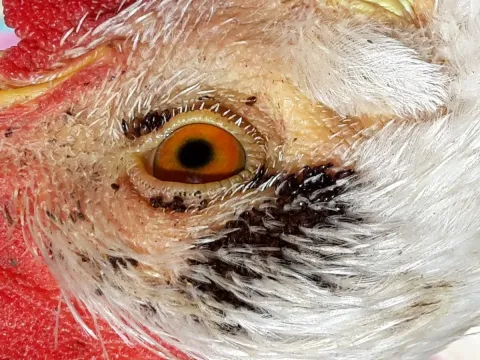
Visual inspection of the animal's skin, particularly around the eyes, ears, and underbelly, often reveals clusters of dark, flea-like protrusions — these are the attached female fleas.
Bite sites are characterized by redness, swelling, and papule formation. Due to the flea's sedentary behavior, dried scabs often form around the points of attachment, causing crusty skin patches.
Evidence of an infestation can also be found in the animal's bedding, where flea larvae or pupae may be present. Small black granules, which are the excrement of the adult fleas, are also a clear indicator.
General malaise, lethargy, and a weakened immune system in livestock, occurring without other obvious health issues, are common clinical signs of a chronic flea infestation.
Effective control of the stick-tight flea requires a multi-faceted approach, including rigorous sanitation and the professional disinfestation of housing facilities using appropriate insecticides.
Treatment of the infested animals is critical and must involve the use of veterinarian-approved products such as specialized sprays, topical applications, or medicated collars designed for long-term protection.
Regular replacement and thorough decontamination of bedding material are essential, as this is the primary location where larvae and pupae reside before seeking out new hosts.
It is strongly recommended to restrict contact between farm livestock and wild animals, as wildlife species often serve as natural reservoirs for these parasites.
- Conduct regular veterinary health screenings for all livestock.
- Apply contact insecticides to floors and walls of stables.
- Maintain dry and hygienic conditions in animal enclosures.
- Implement quarantine protocols for newly introduced or heavily infested animals.