
Sticktight flea
Echidnophaga
The sticktight flea (Echidnophaga gallinacea) is a species of flea in the family Pulicidae. Unlike common fleas, this species is sessile, meaning it remains attached to the host for an extended period.
What the section contains
Sticktight flea
Adult fleas are small, brownish insects with a laterally compressed body. Their most notable feature is their head, which has an angular shape, helping to distinguish them from other flea species.
Once they find a host, the females bury their mouthparts into the bird's skin, remaining firmly attached for weeks while they feed on blood and produce eggs.
Males, however, remain active and move freely across the host's body. They are much smaller than the engorged females and are easily missed during a casual examination.
The life cycle involves eggs dropping from the bird onto the ground, where larvae develop in organic debris, dirt, or cracks in the coop floor before pupating into adults.
The primary hosts are chickens, but these parasites can also infest turkeys, ducks, geese, and various wild birds. In some instances, they may even bite humans or other mammals.
Fleas congregate on areas with sparse feathers, such as the comb, wattles, earlobes, and around the eyes. Constant feeding by many fleas at these sites causes significant tissue damage.
Heavy infestations lead to severe anemia, stunted growth, and a drastic drop in egg production. Young chicks are especially vulnerable and may succumb to high parasite loads.
The feeding sites often develop into hard, ulcerated sores. These open wounds become susceptible to secondary infections, potentially leading to bacterial complications or death.
The economic impact on poultry operations is significant, involving not only bird losses but also increased veterinary costs and decreased overall flock performance and market quality.
Behavioral changes are the first indicators of infestation. Birds may appear listless, shake their heads frequently, or scratch their faces against their wings or the ground.
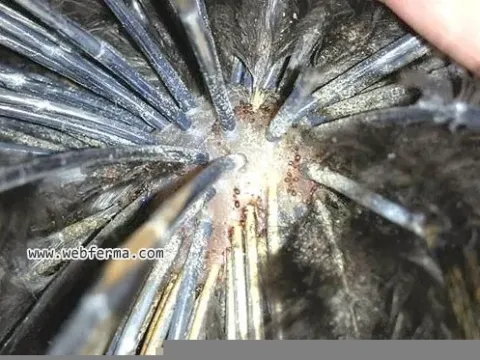
A close visual inspection of the bird's head and neck reveals clusters of dark brown or black nodules, which appear as if they are stuck to the skin. These are the embedded females.
The skin around the feeding area becomes inflamed, swollen, and sometimes necrotic. In extreme cases, the eyelids may become so swollen that the bird's vision is impaired.
Anemic birds will exhibit pale combs and wattles. If left untreated, the flock may appear dull, lose weight, and demonstrate a generally poor condition compared to healthy birds.
Checking the environment is also key. If fleas are present, they are often found in dry soil or deep litter inside the coop, especially in areas where organic waste accumulates.
Managing the sticktight flea requires a two-pronged approach: treating the infested birds and cleaning up the environment where the larvae develop.
Application of appropriate insecticides (powders, sprays, or dusts) is required. It is vital to use products explicitly labeled for poultry and to follow withdrawal periods for eggs and meat.
Sanitation is paramount. All old litter must be removed and destroyed. The coop must be cleaned thoroughly, followed by an application of insecticide to floor cracks and crevices.
- Maintain good hygiene by removing manure and spilled feed.
- Prevent contact between domestic poultry and wild birds.
- Use dust baths for chickens treated with poultry-safe diatomaceous earth or approved insecticides.
Long-term control involves preventing re-infestation. This includes sealing cracks in housing, controlling wild bird entry, and conducting regular inspections to catch new infestations early.