
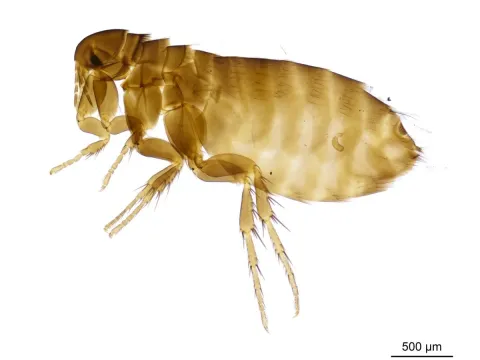
Sticktight flea
Echidnophaga perilis
The sticktight flea (Echidnophaga gallinacea) is a small, wingless insect belonging to the family Pulicidae, order Siphonaptera. It is known for its unique habit of staying permanently attached to its host's skin.
What the section contains
Sticktight flea
Adult females are dark brown and have a characteristic angular shape. Once they find a suitable host, they anchor themselves firmly into the epidermis using their specialised mouthparts.
Males are more mobile and move around the host's body to feed and mate. They are smaller than females and do not attach as permanently as the reproductive females do.
These parasites are most commonly found on featherless areas of poultry, such as the comb, wattles, earlobes, and the skin around the eyes and beak.
Unlike common fleas, sticktight fleas do not jump away when disturbed; they remain anchored, making them appear like small, hard crusts or dark bumps on the bird's skin.
This flea primarily infests domestic poultry, including chickens, turkeys, ducks, and geese. In warm climates, it can also affect wild birds, dogs, cats, rodents, and humans.
While the flea does not damage plants, it is a significant pest in poultry production. It causes physical trauma and physiological stress, leading to decreased weight gain and lower egg production.
Heavy infestations lead to extreme discomfort, itching, and restlessness in birds. This stress response often results in reduced feed intake and poor overall health.
The attachment points on the skin frequently become inflamed and infected. Secondary bacterial infections, abscesses, and deep ulcers are common consequences of severe flea bites.
Sticktight fleas can act as vectors for various diseases, including pasteurellosis and salmonellosis, posing a serious threat to the biosecurity of the entire farm.
The activity of the sticktight flea is strongly correlated with temperature and humidity levels. Development is most rapid during warm months when temperatures consistently exceed 20°C.
In temperate climates, the flea is most problematic during the summer. However, in enclosed, heated poultry houses, they can remain active and breed throughout the entire year.
The flea's life cycle involves eggs dropping from the host into the bedding, litter, or soil. Here, larvae develop by feeding on organic matter, including dried blood and feces.
After the larval stages, the flea pupates in a silken cocoon before emerging as an adult. The duration of the cycle is highly dependent on environmental conditions and sanitation levels.
Maintaining dry and clean environmental conditions can slow down or halt the developmental cycle, effectively reducing the population pressure in the poultry unit.
Initial signs of infestation include behavioral changes. Birds may shake their heads frequently, rub their faces against objects, or show signs of intense irritation around the head area.
Close examination of the bird's face, comb, and wattles reveals clusters of dark, static parasites. These bumps are immovable and are often mistaken for skin abnormalities.
The skin surrounding the flea attachment site is typically reddened, swollen, and sometimes necrotic. Removal of the flea often leaves a bleeding wound or a small crater in the skin.
Finding cocoons or adult fleas in the litter, floor cracks, or nesting boxes is a definitive sign that a large, active population of parasites is present.
A noticeable drop in production efficiency, stunted growth in chicks, and an overall poor appearance of the flock indicate that the infestation has reached a critical level.
The most effective strategy is a combination of good sanitation and targeted chemical treatment. Regular removal of manure and old bedding is essential to eliminate larval habitats.
Treating the poultry house with approved insecticides helps manage the flea population in the environment, especially in cracks and nesting areas where adults emerge.
Birds themselves can be treated with specific veterinary-approved powders or sprays. Careful application is necessary to avoid ingestion and to reach the areas around the eyes.
Quarantining new birds before introducing them to the main flock is a crucial biosecurity measure to prevent the accidental entry of the parasite into the facility.
- Regular litter replacement.
- Sanitation of nesting areas.
- Application of contact insecticides.
- Monitoring for bird behavior changes.