
Stinging catfish
Saccobranchus
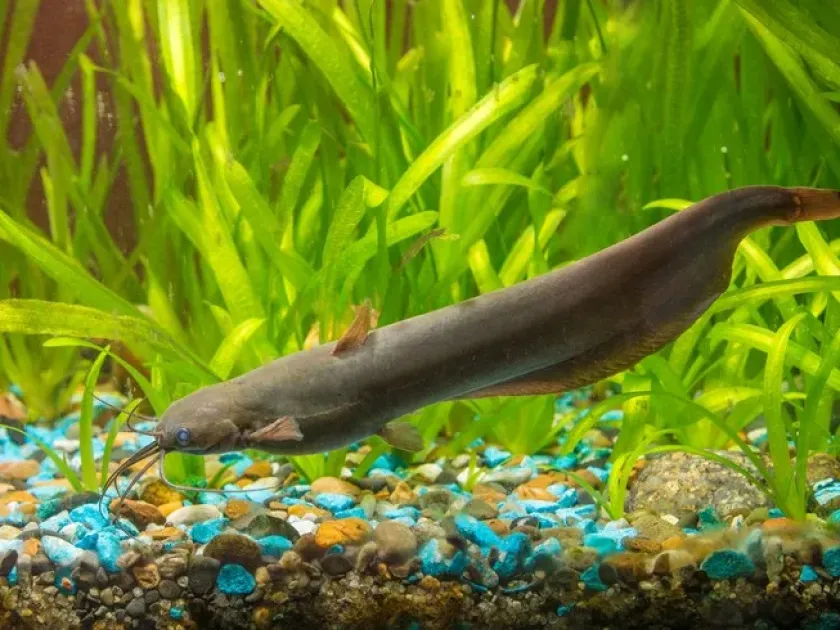
Description
How to identify
The stinging catfish, scientifically known as Heteropneustes fossilis (formerly Saccobranchus), belongs to the order Siluriformes. It is a highly resilient species characterized by tubular air sacs that extend from the gill chamber to the tail, allowing it to survive on land for short periods.
The body is elongated, scaleless, and generally dark brown or black in color. It possesses a distinct dorsal fin and sharp pectoral spines connected to venom glands, which can inflict painful wounds.
Biologically, it is an opportunistic feeder and a hardy survivor capable of thriving in polluted water with very low oxygen levels, making it difficult to eradicate once established.
The species has a high reproductive rate, laying thousands of eggs during the monsoon or wet season, which allows it to colonize irrigation canals and water systems rapidly.
Due to its specialized respiratory system, it can move across damp ground to invade adjacent ponds, posing a significant biosecurity risk to organized fish farms.
What it damages
In aquaculture and integrated farming systems, this fish acts as a significant predator, consuming fry, fingerlings, and the eggs of economically valuable species.
The presence of stinging catfish in aquaponic systems disrupts the delicate microbial balance, as the fish can consume beneficial organisms required for plant nutrient processing.
High populations of this fish lead to heavy organic waste production, which can degrade water quality, making it unsuitable for direct crop irrigation without prior treatment.
They are known to damage artificial physical barriers, such as nets and filters, in automated water supply systems, causing technical failures and maintenance costs.
Their aggressive territorial nature suppresses the growth of other fish species, reducing the overall productivity of the aquatic ecosystem within the agricultural facility.
Control measures
Effective management requires the installation of high-quality mesh screens at all water intake and outflow points to prevent the entry of fry or eggs into the system.
Physical barriers and concrete embankment walls are recommended around ponds to restrict the catfish's ability to migrate across ground surfaces between fields.
If an infestation occurs, complete drainage and mechanical removal of fish from the pond bottom are necessary, as they remain hidden in the mud during low-water conditions.
Regular monitoring of water bodies using test netting is advised to identify early signs of colonization by this invasive species.
- Tight inspection of all stocking materials for contamination.
- Construction of elevated boundaries for ponds.
- Prompt removal of captured specimens to avoid human injury from venomous spines.
Discussion
No discussions yet — be the first.