
Sticktight flea
Echidnophaga gallinacea
The sticktight flea (Echidnophaga gallinacea) is a member of the Pulicidae family within the order Siphonaptera. Unlike common cat or dog fleas, this species is noted for its stationary adult stage.
What the section contains
Sticktight flea
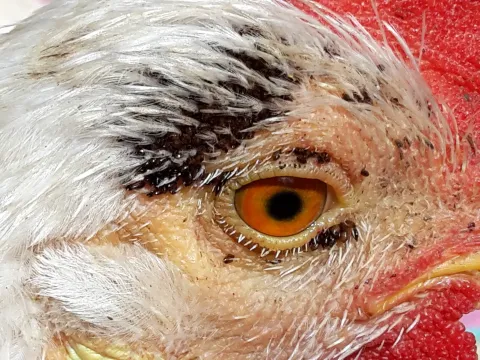
Adult females anchor themselves firmly to the skin of the host, particularly on the face, comb, wattles, and around the eyes. They remain in this fixed position for the duration of their adult life to feed on blood.
The body of the adult is dark brown, compressed, and features an angular, flattened head profile. This morphological adaptation allows them to bury their mouthparts deep into the poultry's skin, making them appear like dark, hard nodules or crusts.
The life cycle occurs off the host, primarily in the floor litter, dust, and crevices of poultry houses. Larvae feed on organic matter and dried blood/feces in the environment before pupating into adults.
These fleas are highly resilient and thrive in environments with warm, humid conditions. They are capable of infesting various species, including chickens, turkeys, and occasionally mammals, creating a significant nuisance in rural agricultural settings.
The sticktight flea causes extensive damage to poultry by attaching to the skin around the head. Frequent bites lead to severe irritation, inflammation, and pain for the infested birds.
In young birds and chicks, heavy infestations can lead to significant blood loss, causing severe anemia and, in many cases, death. The physical stress of constant irritation also stunts growth.
Adult birds show a marked decrease in productivity. Egg production in layers drops significantly, while meat birds show poor weight gain and overall lack of thriftiness due to the constant stress caused by the parasites.
The wounds created by the fleas are entry points for secondary bacterial infections. Furthermore, these fleas can serve as vectors for various pathogens, including intestinal tapeworms and bacteria that impact bird health.
Economic losses are often compounded by the persistent nature of the infestation. Since the fleas do not readily move, they cause localized tissue necrosis, which can lead to permanent damage to the bird's appearance and health.
The most obvious sign of infestation is the appearance of dark, clumped masses around the face, eyes, and beak of the birds. These look like warts or dry scabs at first glance.
Birds infested with sticktight fleas appear lethargic and stressed. You may observe them shaking their heads, scratching their faces, or attempting to rub their heads against objects to alleviate the intense itching.
Close inspection of the skin will reveal the embedded adult fleas. Attempting to manually remove them will reveal that they are deeply anchored, often leaving a bleeding wound once detached from the host.
In the coop, the presence of the pest is signaled by the accumulation of flea larvae and pupae in the litter. The environment may appear dusty, and dark specks of flea excrement might be visible in bedding materials.
Visible signs of anemia, such as pale combs and wattles, are common in severely infested flocks. The feather condition may also deteriorate as the birds become weaker and spend less time on grooming and social interactions.
Effective control requires a two-pronged approach: treating the infested birds and decontaminating the environment. All litter must be removed and disposed of, followed by thorough cleaning of the coop.
Chemical control involves applying poultry-safe insecticides specifically labeled for fleas to the coop walls, floors, and crevices. Pyrethrin-based treatments are commonly utilized for their effectiveness.
Individual treatment of the birds is necessary to remove embedded fleas. Careful application of veterinary-approved topical powders or sprays is required, ensuring they do not come into contact with the birds' eyes or respiratory tracts.
- Deep cleaning of poultry facilities
- Proper disposal of used bedding
- Individual bird treatment with topical insecticides
- Preventing wild birds from entering the coop
Environmental management is crucial to breaking the life cycle. Keeping the poultry house dry and regularly rotating bedding will significantly reduce the success of larval development, preventing future outbreaks.