
Amaranth cyst nematode
Cactodera amaranthi
Description
How to identify
The amaranth cyst nematode (Cactodera amaranthi) is a specialized plant-parasitic nematode within the Heteroderidae family. Its life cycle involves sedentary females that develop into brown, protective cysts, which serve as a resilient reservoir for eggs in the soil.
Identification typically requires expert analysis of root and soil samples. Under magnification, the morphology of the vulval cone of the cyst is a key diagnostic feature used to distinguish this species from other closely related cyst-forming nematodes.
As obligate parasites, these nematodes cannot complete their life cycle without a suitable host. Their ability to remain dormant within cysts for several years allows the population to survive even in the absence of a host crop.
The development of the nematode is temperature-dependent, with larvae hatching from the eggs in response to chemical signals released by the roots of host plants in the amaranth family.
Molecular diagnostics and microscopic examination are essential tools for agricultural specialists to monitor population levels and ensure the effective containment of this pest within infested fields.
What it damages
Cactodera amaranthi primarily attacks crops within the Amaranthaceae family, including various cultivars of amaranth grown for grain or forage. The parasite feeds by forming specialized syncytia within the root tissue, which diverts nutrients intended for plant growth.
Root damage manifests as stunted growth and a general loss of plant vigor. Because the root system is physically and physiologically compromised, the plant is unable to maintain adequate water and nutrient uptake, leading to visible stress.
The reduction in the root system capacity causes significant losses in total biomass and yield. In severe cases, the infestation leads to the total loss of the crop in localized patches, particularly in soils with high nematode density.
The physical damage caused by the nematode serves as an entry point for various secondary pathogens, such as root-rotting fungi and bacteria, which can accelerate the decline and death of the plant.
Agricultural fields that are subjected to continuous cropping of susceptible amaranth species are at the highest risk, as the nematode population accumulates rapidly over consecutive growing seasons.
Signs of infestation
Early signs of infestation are often observed as irregular patches of stunted, chlorotic plants throughout the field. These areas may appear drought-stressed, even when soil moisture is relatively sufficient.
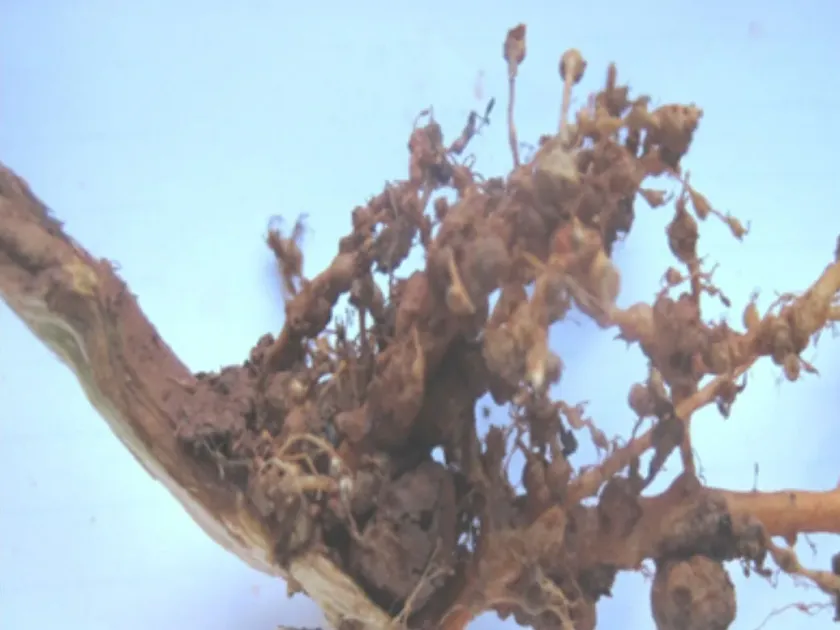
Root system analysis of infected plants will reveal a significant reduction in size and vitality. Instead of a robust root system, infected plants often show sparse, damaged roots that may appear to have small, granular cysts attached to them.
Wilted foliage, especially during the peak of the day or in hot, dry conditions, is a clear indicator that the root system is failing to meet the physiological demands of the plant.
In advanced stages of infection, plants may stop growing entirely and display signs of premature senescence, significantly reducing the quality and quantity of the harvestable product.
Visual symptoms should always be confirmed by laboratory analysis to rule out other factors such as nutritional deficiency or non-nematode root diseases, which can mimic the symptoms of nematode damage.
Control measures
Effective management begins with long-term crop rotation. Rotating away from amaranth crops for 3 to 4 years is necessary to reduce soil-borne nematode populations to levels that are less likely to cause significant damage.
Sanitation practices are critical, including the thorough cleaning of agricultural machinery before moving from infested fields to clean areas, to prevent the spread of soil-borne cysts.
Integrated pest management (IPM) strategies, including the use of trap crops or non-host rotation crops, can help disrupt the nematode life cycle and significantly reduce the number of viable cysts in the soil.
Biological control agents, such as specific fungi or bacteria that parasitize nematodes, are being researched as sustainable alternatives to chemical treatments, offering promising results in integrated systems.
- Monitor fields regularly and conduct soil testing before planting amaranth.
- Control weeds in the Amaranthaceae family that may serve as alternate hosts.
- Ensure the use of clean, certified seeds that are free from soil contamination.
Taxonomy
- Latin name
- Cactodera amaranthi
- Order
- Nematodes
- Family
- Heteroderidae
- EPPO code
- CACDAM
Discussion
No discussions yet — be the first.