
Pest · Diptera (flies) · affects Carrot, Tomato, Wild cabbage
Especially harmful
Carrot fly
Chamaepsila rosae
Description
How to identify
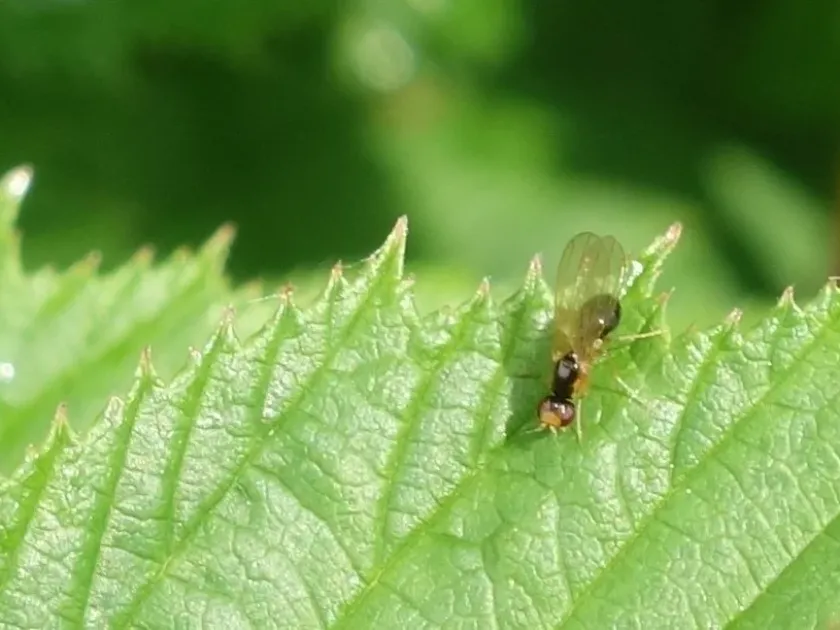
The carrot fly (Chamaepsila rosae) is a member of the Psilidae family within the order Diptera. The adult fly is approximately 4–5 mm long with a shiny black body and a yellowish-brown head.
These insects have transparent wings and yellow legs. They are generally weak fliers and tend to stay low to the ground near host plants, particularly in shaded or sheltered areas.
The larvae are legless, creamy-yellow maggots measuring up to 7 mm. They possess a characteristic cylindrical shape and are capable of burrowing deep into the taproots of host vegetables.
The life cycle typically spans two generations per year in temperate climates, with the emergence of adults highly dependent on the spring temperature soil threshold.
Female flies lay their eggs in the soil crevices near the base of host plants, where the hatched larvae migrate to find food.
What it damages
The primary host is the carrot. However, the pest also attacks related crops such as parsnip, celery, parsley, and other members of the Apiaceae family.
While reports occasionally suggest damage to crops like cabbage or tomatoes, such occurrences are incidental and usually result from extreme proximity to infested carrot fields.
The damage is caused exclusively by the larval stage. Larvae tunnel into the root, creating complex systems of channels that make the vegetable unsightly and inedible.
These tunnels provide entry points for pathogens, leading to secondary rot which can destroy the entire root quickly after harvest.
Heavy infestations can lead to substantial economic losses, often ruining a significant percentage of the harvest if management practices are not followed.
When it appears
The first generation of adults emerges in late spring, often synchronizing with the flowering of hawthorn or apple trees, which serves as a biological marker.
A second generation appears in late summer, which poses a significant threat to late-harvest carrot crops during their development.
The insect overwinters as a puparium (pupa) in the soil or occasionally within stored carrots that remain in the field during the winter months.
The total development cycle from egg to adult takes approximately one month, although this varies greatly depending on the surrounding temperature and soil moisture levels.
Adults are most active during calm, humid evenings or early mornings, avoiding midday heat and strong winds.
Signs of infestation
Initial signs of an infestation include the foliage of the carrot turning a dull reddish-purple or bronze color instead of a healthy green.
As the larvae feed, the infested plants become stunted, yellow, and may wilt significantly during dry periods due to the damaged root system.
When pulling an affected root from the ground, you can clearly see the characteristic brown, jagged tunnels or galleries created by the larvae.
Surface blemishes, distorted growth, or deep decay pits are often present on the skin of the carrots where the larvae have entered the tissue.
In cases of advanced damage, the inside of the carrot may be completely hollowed out and filled with larval debris and soft rot.
Control measures
Integrated Pest Management (IPM) is the best approach. Crop rotation is essential; do not grow carrots in the same area for at least four years.
Physical barriers like fine-mesh insect netting are highly effective at preventing adult flies from reaching the soil to lay eggs.
Cultural methods include thinning crops in the evening to avoid releasing volatile odors that attract the flies during their peak activity hours.
Using companion planting, such as intercropping carrots with onions or leeks, helps mask the scent of the carrots, making them harder for the flies to locate.
- Deep autumn plowing to bring pupae to the surface for frost exposure.
- Consistent removal of weeds that can serve as alternative hosts.
- Deployment of yellow sticky traps to monitor adult fly populations.
- Early harvesting of carrots to avoid the peak second generation.
- Selection of resistant carrot varieties that produce fewer attractant chemicals.
In brief
3
Damages crops
Content graph
Damages crops · 3
Content graph
Connections · Carrot fly
Most often together:
Marketplace
Products · 13





Biology
Taxonomy
- Latin name
- Chamaepsila rosae
- Order
- Diptera (flies)
- Family
- Psilidae
- EPPO code
- PSILRO
Community
Discussion
No discussions yet — be the first.