
Zygaena purpuralis
Zygaena purpuralis
Description
How to identify
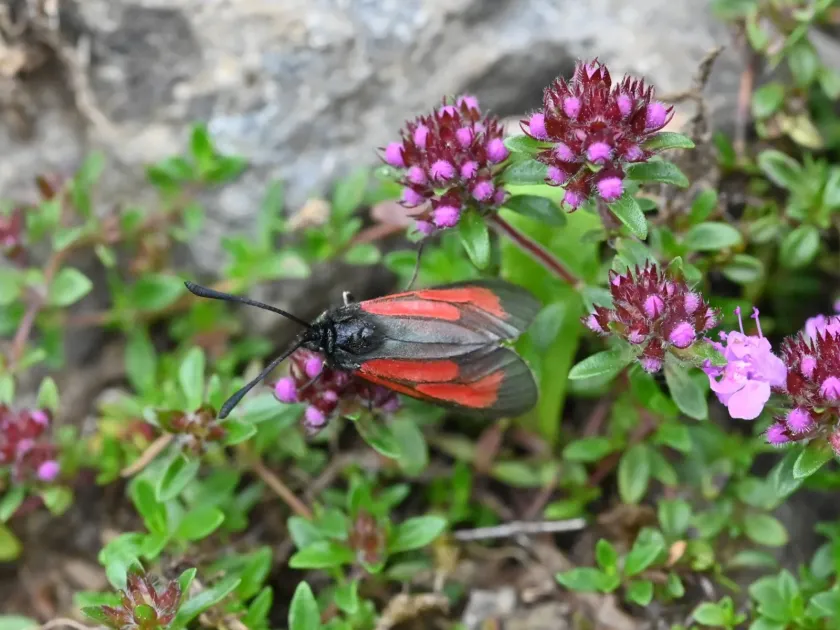
Zygaena purpuralis, known as the transparent burnet, is a day-flying moth belonging to the Zygaenidae family.
The adult moth has a wingspan of approximately 30–35 mm, with metallic black forewings and bright red, elongated spots.
The body is robust and dark-scaled, with club-shaped antennae that are characteristic of the burnet moth group.
The larvae are typically pale green with two rows of black spots along the body, covered with short, sparse hairs.
Pupation occurs in a tough, parchment-like cocoon, which is usually attached to the stems of host plants.
##damage##The primary hosts for this species include perennial legumes, such as clover, alfalfa, and sainfoin.
Larvae feed actively on the foliage, causing significant defoliation that weakens the overall vigor of the host plant.
Besides leaves, the larvae may consume buds and flowers, reducing the reproductive potential of the crop and subsequent seed yield.
In high populations, the feeding activity leads to stunted growth and premature yellowing of the vegetation.
The damage is often clustered, creating patches of degraded vegetation within the field.
##season##This species typically undergoes one generation per year, with larvae hibernating through the winter in soil litter or near the roots.
Feeding resumes in spring as temperatures rise, with larvae growing rapidly before entering the pupal stage.
Adult moths are generally active in summer, with the peak flight period occurring throughout June and July.
Females deposit eggs in small batches on the underside of leaves, ensuring larvae have immediate access to food.
By late summer, the new generation of larvae emerges, feeds briefly, and prepares for winter dormancy.
##signs##Key signs include skeletonized leaves and irregular holes appearing in the leaflets of legume crops.
Finding the parchment-like cocoons on plant stems is a definitive indicator of the moth's life cycle being completed in the area.
Direct observation of larvae feeding on the undersides of leaves or within floral clusters confirms an infestation.
Visible reduction in biomass in specific sections of the field serves as a warning for pest management intervention.
- Skeletonized leaves.
- Presence of pupal cocoons on stems.
- Stunted plant development.
- Larvae presence on foliage.
Crop rotation is an effective preventive measure to disrupt the life cycle of the moth and reduce host availability.
Timely mowing of legume fields can physically eliminate a large portion of the larval and pupal population.
Chemical control should be applied strictly when monitoring reveals that the pest population exceeds economic thresholds.
Biological control agents, such as specialized bacterial or fungal pathogens, offer an environmentally friendly alternative to traditional pesticides.
Regular field scouting and the use of pheromone traps help track moth activity and time control measures accurately.
Taxonomy
- Latin name
- Zygaena purpuralis
- Order
- Lepidoptera (butterflies)
- Family
- Zygaenidae
- EPPO code
- ZYGAPU
Discussion
No discussions yet — be the first.