
Narrow-bordered five-spot burnet
Zygaena lonicerae
Description
How to identify
The Narrow-bordered five-spot burnet (Zygaena lonicerae) is a diurnal moth belonging to the family Zygaenidae, order Lepidoptera.
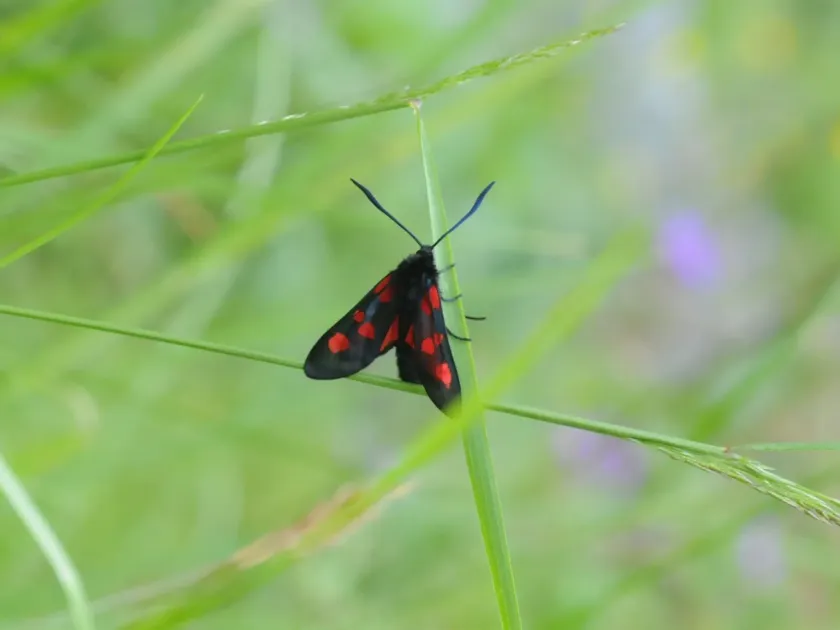
Adult moths are easily recognized by their metallic blue-black wings featuring five distinct, bright crimson spots, which serve as a warning to predators.
The caterpillars are pale yellow or light green with black spots arranged in rows along their bodies, often blending into the foliage of their host plants.
Pupation occurs within a tough, parchment-like spindle-shaped cocoon, which is typically secured to plant stems or tall grasses.
This species is univoltine, meaning it produces one generation per year, with caterpillars overwintering in the soil or under plant debris.
What it damages
Damage is primarily caused by the larvae, which feed voraciously on the foliage of leguminous plants during the vegetative season.
The preferred host plants include clover, bird's-foot trefoil, and various vetch species, which are vital for pasture and forage production.
Heavy feeding by caterpillars reduces the photosynthetic capacity of the plant, leading to stunted growth and reduced biomass yield.
In high densities, the larvae can cause partial defoliation of forage stands, affecting the overall quality and quantity of the harvest.
While often considered a secondary pest, its impact can be significant in regions where its host plants are managed for intensive agricultural use.
When it appears
Adult moths are most active during the summer months, with the primary flight period occurring between late June and early August.
Eggs are laid in batches on the underside of host leaves, providing the emerging larvae with immediate access to food sources.
Larval development spans throughout the late summer and autumn, after which they enter a period of diapause during the winter months.
Spring temperatures trigger the resumption of feeding and subsequent pupation, which typically takes place in late May or early June.
The synchronization of the lifecycle with the peak growth period of legumes makes the spring and early summer crucial for monitoring activities.
Signs of infestation
The most evident sign of infestation is irregular chewing patterns along the edges of leaves or holes within the leaf blades.
Frass (larval droppings) found on the foliage is a key indicator of recent feeding activity by the caterpillars in the immediate vicinity.
Visible silk cocoons attached to grass stems or plant leaves serve as clear evidence that the pest has successfully completed its larval stage.
Stunted plant growth or premature yellowing of leaves in localized patches often indicates an underlying infestation of larvae.
Regular visual inspections of the lower canopy of leguminous crops help in identifying the presence of caterpillars before significant damage occurs.
Control measures
The most effective management strategy involves timely mowing of forage crops, which disrupts the larval development and pupation cycle.
Maintaining clean fields by removing wild host plants along the borders can significantly reduce the local population density of this moth.
Biological control options, such as the use of specific entomopathogenic bacteria, can be employed to manage larvae without harming the ecosystem.
Chemical intervention should be restricted to cases of severe infestation, utilizing targeted applications to minimize impact on beneficial insects.
Integrated Pest Management (IPM) practices, including monitoring and threshold-based decisions, are recommended for long-term agricultural success.
Taxonomy
- Latin name
- Zygaena lonicerae
- Order
- Lepidoptera (butterflies)
- Family
- Zygaenidae
- EPPO code
- ZYGALO
Discussion
No discussions yet — be the first.