
Zygaena ephialtes
Zygaena ephialtes
Description
How to identify
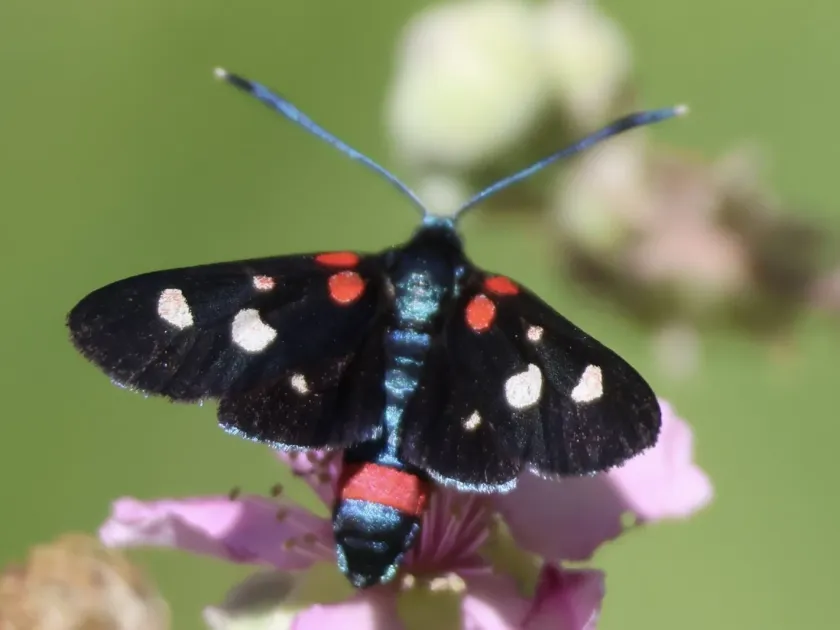
Zygaena ephialtes is a species of moth belonging to the Zygaenidae family. It is recognized by its distinct warning coloration, which serves as a defense mechanism against avian predators.
The adult moth has a wingspan of 30–40 mm and displays high variability in its appearance, featuring black wings with metallic sheen and red, white, or yellow spots.
The larvae are yellowish-green with rows of black spots, helping them blend into the foliage of their host plants while feeding during the day.
Pupation occurs in a durable, parchment-like cocoon that is typically attached to the stems of the host plants, ensuring protection during the transformation stage.
Adults are diurnal, meaning they are active during the day, which makes them relatively easy to spot when they visit flowers for nectar.
What it damages
The primary damage is caused by the larvae, which feed on the leaves of various leguminous plants, leading to significant defoliation if populations are high.
Favored hosts include plants such as clover, lucerne (alfalfa), and crown vetch, which are crucial forage crops in many agricultural regions.
Larval feeding results in the skeletonization or complete consumption of leaves, hindering the photosynthetic capacity and overall development of the plants.
While often considered a secondary pest, outbreaks in dense stands of clover or lucerne can lead to a measurable reduction in biomass production.
Repeated feeding cycles over the growing season can impact the quality of harvested hay, making it less nutritious and desirable for livestock consumption.
When it appears
The flight period of adult Zygaena ephialtes moths generally occurs during the summer months, specifically from June through August.
The species overwinters in the larval stage, hiding near the base of plants or within debris to survive the colder winter months before resuming activity.
In spring, as temperatures rise, the larvae emerge from hibernation and begin to feed actively on the young, developing foliage of leguminous weeds and crops.
The life cycle is closely synchronized with the growth of host plants, ensuring that the larval stage coincides with the peak availability of food resources.
There is typically one generation per year, and the timing of emergence is highly dependent on local weather conditions and the regional microclimate.
Signs of infestation
Evidence of infestation is usually detected by observing chewed or skeletonized leaves on legume crops during the late spring and early summer.
Since the larvae feed openly, they are often visible during daytime inspections of the field, especially on the underside or edges of leaf blades.
The presence of yellow or brownish papery cocoons fixed to the stems of plants is a clear indicator that the larval stage has concluded and pupation is underway.
Stunted growth or chlorosis in localized patches of clover or lucerne fields may indicate heavy larval grazing that has stressed the plant population.
The presence of vibrant adult moths fluttering over flowery meadows or crop fields indicates a potential for future larval populations if host plants are abundant.
Control measures
Effective management begins with cultural practices, such as timely harvesting or mowing of fodder crops, which disrupts the larval development cycle.
Crop rotation is an essential strategy to prevent the buildup of pest populations in fields consistently dedicated to leguminous crops.
Biological control agents, including entomopathogenic fungi, can be used to manage larval numbers without relying on broad-spectrum chemical insecticides.
Chemical intervention should be restricted to high-value seed crops where economic thresholds are exceeded, ensuring minimal impact on beneficial pollinators.
Maintaining clear field borders and managing weed populations that serve as alternative hosts can significantly reduce the risk of infestation in commercial crops.
Taxonomy
- Latin name
- Zygaena ephialtes
- Order
- Lepidoptera (butterflies)
- Family
- Zygaenidae
- EPPO code
- ZYGAEP
Discussion
No discussions yet — be the first.