
Carniolan burnet
Zygaena carniolica
Description
How to identify
The Carniolan burnet (Zygaena carniolica) belongs to the order Lepidoptera, family Zygaenidae. It is a diurnal moth recognized by its striking appearance and bright warning colors which signal its chemical defenses.
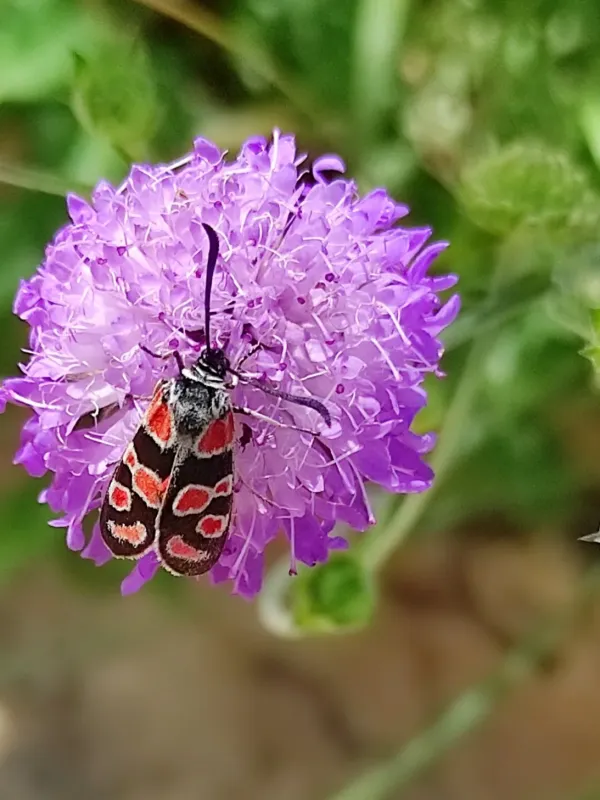
The adults are small moths with dark, metallic-colored wings adorned with bright red spots, often ringed with white. They possess thickened, club-shaped antennae which are characteristic of this genus.
The larvae, or caterpillars, have a yellowish-green body dotted with small black spots. They are generally slow-moving and are typically found on the underside of leaves or within the canopy of host plants.
The life cycle is typically univoltine, meaning one generation per year. Adult moths are most active during warm, sunny days, frequently visiting flowers to feed on nectar, which facilitates their spread.
They overwinter as larvae in the soil or among organic debris at the base of plants, emerging in the spring to complete their larval development before pupating.
What it damages
The primary host plant for this pest is sainfoin, a leguminous forage crop. Larvae feed voraciously on the leaves and tender shoots, causing significant foliar loss during the peak growing season.
Heavy infestations can lead to severe defoliation, which reduces the plant's ability to photosynthesize. This results in decreased biomass production and lower nutritional quality of the forage.
The feeding damage creates entry points for various pathogens, potentially increasing the incidence of plant diseases within the field and weakening the overall vigor of the crop.
During outbreak years, the larval population can be dense enough to substantially reduce hay yields and interfere with seed production, impacting the profitability of the sainfoin crop.
Prolonged stress from feeding, especially in drought conditions, can cause early wilting and stunted growth, negatively impacting the establishment of perennial stands.
Signs of infestation
The presence of adult moths, easily identified by their characteristic red-spotted wings, flying over the fields is the first observable sign of a potential infestation.
Visible feeding damage consists of irregular holes in the leaves, which expand as the larvae grow. In severe cases, they may skeletonize the leaves, leaving only the veins intact.
Searching the lower canopy or the base of stems often reveals the larvae, as they seek refuge from direct sunlight and predators during the hottest parts of the day.
Small, granular dark excrement found on leaves or at the base of the plant is a clear indicator that the larvae are actively feeding on the crop.
Uneven stand density and stunted development of the sainfoin plants are typical signs that indicate significant population pressure from the burnet larvae.
Control measures
Cultural control practices, such as deep autumn plowing, are highly effective as they disturb the soil and destroy the overwintering larvae, reducing the population for the following year.
Implementing a proper crop rotation strategy helps to prevent the buildup of pest populations, ensuring that the same fields do not remain continuous hosts for the species.
When economic thresholds are exceeded, the application of selective insecticides can provide rapid control, provided they are applied during the early stages of larval development.
Promoting natural biological control agents, such as parasitoid wasps and various predatory insects, can help maintain the population below damaging levels without excessive chemical usage.
Regular monitoring using light or pheromone traps allows for precise timing of interventions, which is critical for maximizing control efficacy while minimizing environmental impact.
Taxonomy
- Latin name
- Zygaena carniolica
- Order
- Lepidoptera (butterflies)
- Family
- Zygaenidae
- EPPO code
- ZYGACA
Discussion
No discussions yet — be the first.