
Nevada dampwood termite
Zootermopsis nevadensis
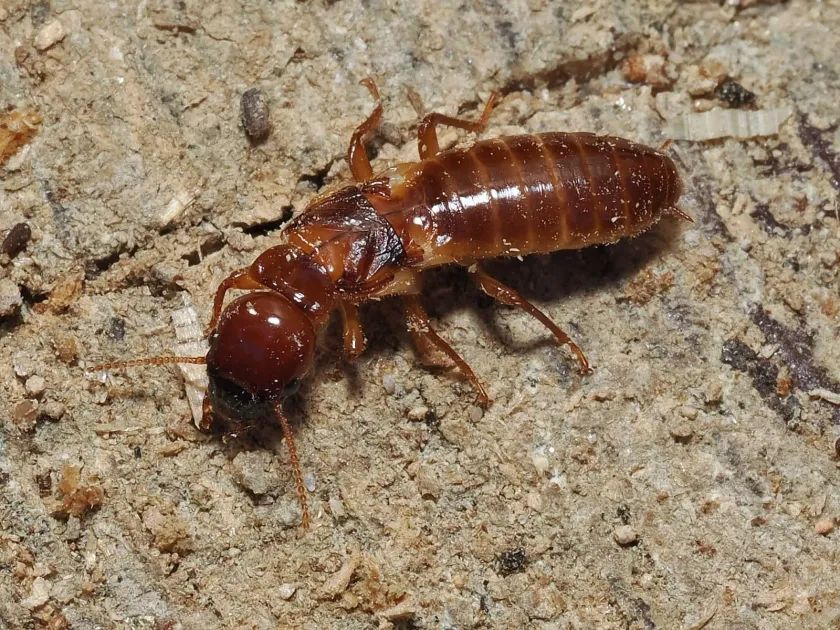
Description
How to identify
The Nevada dampwood termite (Zootermopsis nevadensis) is a prominent wood-destroying insect belonging to the family Termopsidae. It is one of the largest species of termites found in North America.
The winged reproductive adults are typically brownish in color and can reach lengths of up to 20 mm. The soldier caste is characterized by a large, dark brown head and powerful mandibles used for colony defense.
Unlike subterranean termites, dampwood termites live exclusively within the wood they consume, provided the environment is sufficiently humid.
Their colony structure consists of nymphs which perform the work of workers, as this species lacks a true worker caste found in other termite families.
These termites are highly dependent on wood moisture, and they thrive in environments where wood decay fungi are present.
What it damages
This species primarily targets coniferous wood that is damp or decaying. They are frequently found in logs, stumps, and fallen trees in moist forest environments.
In urban and agricultural settings, they attack structural wood that is in contact with soil or has been exposed to water leaks and excessive humidity.
The damage is severe because they excavate extensive, irregular galleries within the timber, compromising the structural integrity of the affected wood.
Because they leave the surface of the wood mostly intact while consuming the interior, signs of infestation often remain hidden until structural failure occurs.
They are a significant concern for utility poles, wooden foundation elements, and lumber stored in damp, unventilated conditions.
Signs of infestation
The most diagnostic sign of infestation is the presence of hard, fecal pellets that are oval with slightly flattened sides and are typically found near the colony site.
Termites seal their galleries with plugs made of fecal material and wood particles, which can often be seen as small dark patches on the wood surface.
The sound of hollow wood when tapped is a common indicator of significant internal damage caused by these insects.
The emergence of winged termites, usually in the late summer or fall, is a clear sign that a mature, established colony is present nearby.
Surface moisture, wood discoloration, or the presence of fungal growth on timber surfaces are key attractants for these termites to begin an infestation.
Control measures
The primary method of prevention is to eliminate moisture sources that allow wood to become damp and susceptible to decay.
Proper drainage around buildings and the removal of wood-to-soil contact are essential steps in protecting structures from dampwood termite colonization.
When constructing in susceptible areas, the use of pressure-treated or naturally rot-resistant heartwood is highly recommended.
Infested areas should be treated with appropriate insecticides capable of penetrating deep into the wood to ensure the entire colony is neutralized.
- Regular inspection of damp basement areas.
- Removal of wood debris and rotting logs near foundations.
- Installation of proper ventilation systems to keep wood dry.
Taxonomy
- Latin name
- Zootermopsis nevadensis
- Family
- Termopsidae
- EPPO code
- ZOOTNE
Discussion
No discussions yet — be the first.