
Porotermes adamsoni
Porotermes adamsoni
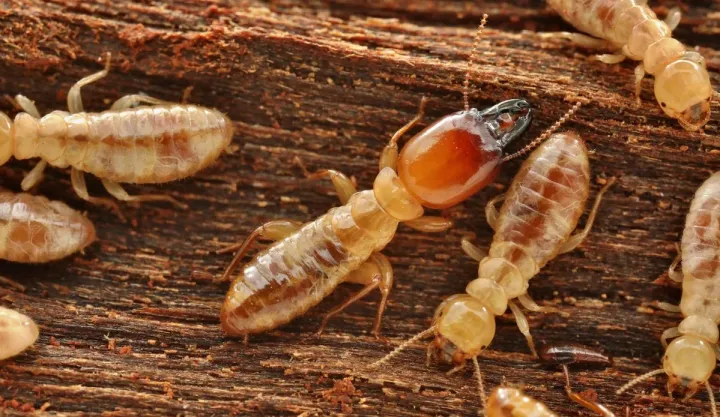
Description
How to identify
Porotermes adamsoni, commonly known as a dampwood termite, belongs to the family Termopsidae. They are primarily found in Australia, inhabiting diverse forest ecosystems.
These termites do not rely on soil contact, making them distinct from subterranean species. They colonize moist wood directly, including standing trees and logs.
The colony structure includes castes such as workers, soldiers, and nymphs. Soldiers are identifiable by their large, dark heads and prominent mandibles used for defense.
Development involves a gradual metamorphosis, where nymphs gradually transition into adult forms based on the colony's current requirements.
Their life cycle is closely linked to wood moisture levels, as they require damp environments to sustain their internal galleries and reproductive success.
What it damages
This species primarily infests eucalyptus and other hardwood trees. It can attack both living trees that are stressed or decayed and dead timber.
Damage is characterized by the consumption of the heartwood, leaving the outer sapwood intact until the internal structure is significantly hollowed out.
In forest environments, the cumulative impact of termite galleries weakens the trunk, causing trees to be susceptible to breakage during windstorms.
Economically, they devalue timber by causing internal honeycombing, which renders the wood unsuitable for high-quality construction purposes.
Structural damage is also a risk if buildings are constructed near infested forest areas without proper preventative measures against wood-boring pests.
Signs of infestation
The most diagnostic sign is the presence of frass, which consists of small, wood-colored, six-sided pellets discarded from the colony galleries.
External openings in the bark, often covered with mud or debris, act as ventilation holes through which the termites push out their excrement.
A hollow sound when tapping a tree trunk indicates that the wood has been compromised by the internal galleries of the termite colony.
Seasonal swarming of alates (winged reproductive termites) indicates the presence of a mature colony and represents the dispersal phase of the insect.
Visible decay patches on the wood surface often suggest internal moisture retention, which attracts termites and facilitates the establishment of new galleries.
Control measures
Sanitation is the most effective management strategy. This involves removing infested timber and pruning severely weakened branches to limit the pest's spread.
For structural protection, ensure that wood components are not in direct contact with the ground and are treated with appropriate chemical preservatives.
- Utilizing bait stations containing slow-acting insecticides that are carried back to the colony.
- Regular inspection of forest stands and wood piles for signs of termite activity.
- Applying systemic insecticides to individual high-value trees to prevent colonization.
Maintaining tree health through proper thinning and fertilization reduces the vulnerability of forests to successful termite infestation.
Future management often relies on integrated pest management (IPM) practices, combining biological monitoring with targeted chemical control interventions.
Taxonomy
- Latin name
- Porotermes adamsoni
- Family
- Termopsidae
- EPPO code
- POREAD
Discussion
No discussions yet — be the first.