
Dampwood termite
Zootermopsis
Description
How to identify
The dampwood termite (Zootermopsis) belongs to the family Termopsidae. Unlike subterranean termites, they do not require contact with the soil, provided the wood they inhabit is sufficiently damp.
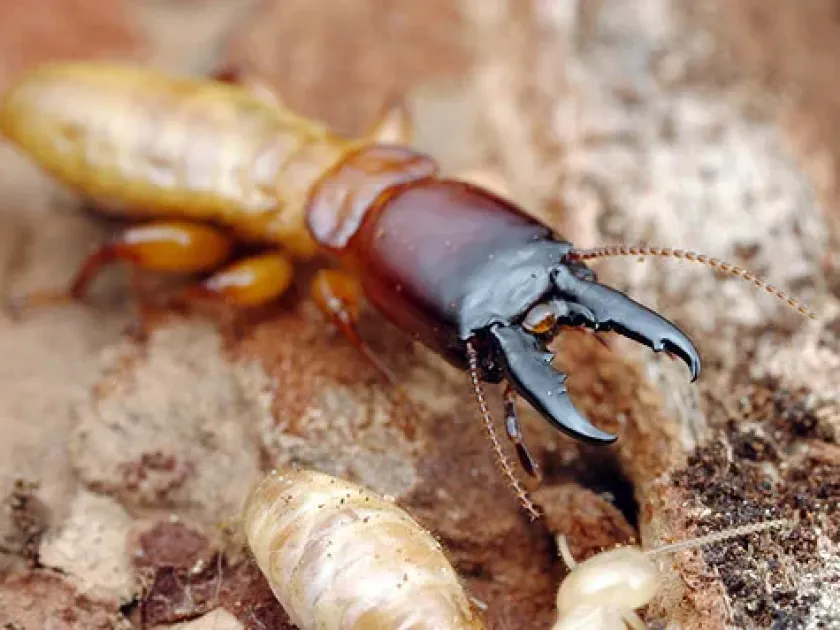
These insects are generally larger than other termite species. Workers are light-colored and soft-bodied, while soldiers are easily identified by their large, brownish, rectangular heads and powerful mandibles.
Reproductive individuals are dark-colored and have two pairs of wings of equal size, which they shed after their nuptial flight to establish a new colony.
The colony structure is relatively simple compared to more advanced termite species, and they do not create complex mound systems above ground.
They are primarily found in moist or decaying wood, making them a common sight in forest areas, and occasionally, in residential buildings with moisture issues.
What it damages
These termites feed exclusively on damp or decaying wood. In nature, they are crucial for forest decomposition, breaking down dead logs and stumps.
In a human environment, they attack structures with high moisture levels, such as leaking roofs, foundations in contact with damp soil, or poorly ventilated crawl spaces.
They hollow out the wood along the grain, leaving behind smooth galleries. They often leave the outer shell of the wood intact, making the damage hard to detect early.
While they rarely harm healthy, dry agricultural crops, they can devastate wooden structures, decking, and fencing that have been softened by rain or fungal decay.
If left unaddressed, the structural integrity of the timber can be significantly compromised, leading to the collapse of affected wooden elements.
Signs of infestation
The presence of fecal pellets is a primary indicator. These pellets are small, hard, and six-sided, often found piled near the site of termite activity.
Hollow-sounding wood when tapped is a sign of extensive internal galleries excavated by the colony over time.
The presence of shed wings on window sills or near wooden structures indicates that a colony has reached maturity and has recently dispersed reproductive termites.
External openings or "kick-out holes" through which the termites push out their waste are visible signs of an active colony working within the timber.
Fungal growth on the wood surface often accompanies dampwood termite infestations, as they prefer the same environment that supports wood-decaying fungi.
Control measures
The most effective control method is moisture management. Fixing leaks, ensuring proper drainage, and keeping wood away from soil contact prevents the colony from thriving.
Using pressure-treated wood or applying borate-based preservatives during construction provides a strong deterrent against termite colonization.
Replacing severely damaged timber with new, treated wood is recommended to restore the structural strength and remove the source of the infestation.
In cases where infestations are localized, direct application of professional-grade insecticidal dusts or liquids into the galleries can successfully eliminate the colony.
Professional inspection should be scheduled annually, especially in areas where dampwood termites are known to be native, to catch activity before significant damage occurs.
Taxonomy
- Latin name
- Zootermopsis
- Family
- Termopsidae
- EPPO code
- ZOOTSP
Discussion
No discussions yet — be the first.