
Porotermes
Porotermes
Description
How to identify
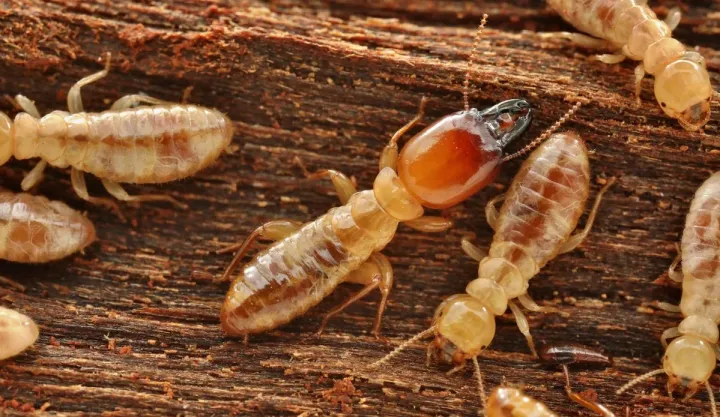
Porotermes belongs to the family Archotermopsidae. These are primitive insects that, unlike many other termite species, do not build complex mounds but live directly inside the wood they consume.
Worker termites have strong mandibles adapted for breaking down cellulose. Soldiers of this genus are characterized by large heads and powerful jaws, used primarily to defend the colony against predators like ants.
The life cycle of these insects includes egg, nymph, and adult stages. The colony maintains a strict caste system that divides labor between reproductive individuals, soldiers, and workers.
Reproduction occurs through swarming, after which winged individuals shed their wings and establish a new colony in a suitable substrate, entering through bark fissures or tree wounds.
These termites are extremely cryptic insects, which makes them difficult to detect during the early stages of infestation in tree trunks or structural timber.
What it damages
The primary food source for Porotermes is the wood of various species, predominantly moist or decaying wood, although healthy but weakened trees are also frequently infested.
In their natural habitat, they inhabit the trunks of old forest trees, playing a role in the decomposition processes of woody mass within the ecosystem.
In agricultural and industrial contexts, this pest poses a significant threat to tree plantations as well as to timber used in wooden buildings and infrastructure.
When live trees are infested, the pest burrows into the heartwood, leading to a significant loss of structural integrity and increasing the risk of windfall.
The pest is capable of damaging both coniferous and deciduous species, with selection often depending on wood moisture levels and the overall physiological state of the plant.
Signs of infestation
The first sign of infestation is often the appearance of excrement in the form of small granules, ejected by the insects through holes in the bark or wood.
Small entry holes may be visible on the trunk surface, often sealed with a mixture of wood dust and excrement to insulate the colony from the outside environment.
Internal damage is accompanied by stunted tree growth, yellowing of foliage or needles, and progressive crown dieback as the colony expands inside the trunk.
Tapping the infested trunk areas often produces a hollow sound, indicating the presence of internal cavities and tunnels created by the termite colony.
Sometimes, the pest is only noticed when winged reproductive adults emerge from the infested tree during the swarming season.
Control measures
The primary protection strategy involves strict adherence to forest sanitation protocols, including the timely felling and removal of diseased or damaged trees.
To prevent the spread of the pest, it is recommended to avoid stacking firewood or timber near live plantings, as this creates favorable conditions for insect migration.
During lumber processing, wood should be treated with antiseptic preservatives that prevent insects from penetrating deep into the fibers.
Biological control methods involve supporting natural termite predators, although this approach has limited effectiveness in large-scale field conditions.
In cases of severe infestation in valuable ornamental trees, specialized insecticides can be injected directly into the galleries created by the pests.
Taxonomy
- Latin name
- Porotermes
- Family
- Termopsidae
- EPPO code
- PORESP
Discussion
No discussions yet — be the first.