
Pacific dampwood termite
Zootermopsis angusticollis
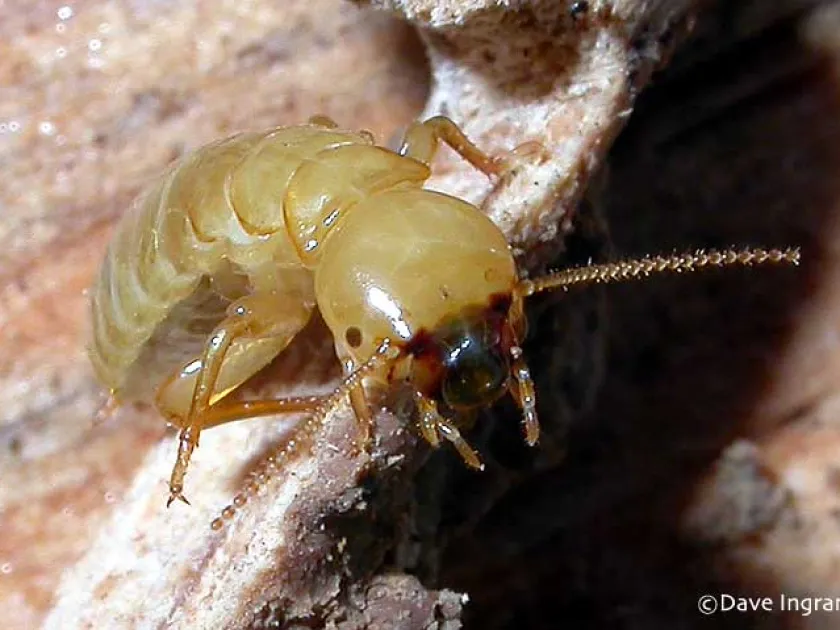
Description
How to identify
The Pacific dampwood termite (Zootermopsis angusticollis) is a member of the Termopsidae family, known for being one of the largest termite species in North America.
These insects exhibit caste differentiation, with soldiers having distinct, large heads and powerful mandibles, while workers remain pale and soft-bodied.
Unlike subterranean termites, this species does not create expansive underground networks, as they live almost exclusively within their food source.
Their colonies are generally smaller compared to other species, but their large individual size allows them to consume significant amounts of damp wood.
Their life cycle is strictly dependent on high humidity, which makes them highly vulnerable to desiccation outside of damp wooden environments.
What it damages
These termites primarily infest wood with high moisture content, such as rotting logs, stumps, and fallen trees in damp forests.
In orchards or gardens, they target trees that are already weakened by disease, fungal infections, or poor drainage, accelerating their decomposition.
They damage the wood by creating irregular, wide galleries, which often remain filled with damp wood frass and fungal mycelium.
While they usually avoid healthy, dry wood, they may extend their activity into sound timber if the structure has direct contact with moist soil.
Economic damage is most significant when they infest wooden structures, fence posts, or landscape timber that has been poorly maintained against moisture.
Signs of infestation
The most reliable sign of an infestation is the presence of fecal pellets, which are characteristically hexagonal and appear in small piles near the wood.
A hollow sound when tapping on tree trunks or wooden posts often indicates that the interior has been heavily excavated by termite activity.
The galleries created by these termites appear smooth but are notably damp, differing from the soil-packed tunnels of subterranean species.
The swarming of winged reproductive adults during warm, humid months is a clear indicator of a mature, thriving colony in the vicinity.
Visible surface damage may be minimal, but structural weakness in trees or timbers often reveals the extent of internal damage only after failure occurs.
Control measures
The most effective strategy for managing these pests is to eliminate all sources of damp and decaying wood from the garden or premises.
Structural wood should be elevated using concrete or metal piers to ensure there is no direct contact with damp soil, preventing termite entry.
Proper drainage systems in gardens and the maintenance of dry wood piles are crucial preventative steps to make the environment unsuitable for them.
Chemical control involves the application of borate-based wood preservatives that remain effective in preventing colonization by wood-boring insects.
Regular inspections and prompt removal of infested debris or trees help to curb the development of new colonies before they cause severe damage.
Taxonomy
- Latin name
- Zootermopsis angusticollis
- Family
- Termopsidae
- EPPO code
- ZOOTAN
Discussion
No discussions yet — be the first.