
Blue shield bug
Zicrona caerulea
Description
How to identify
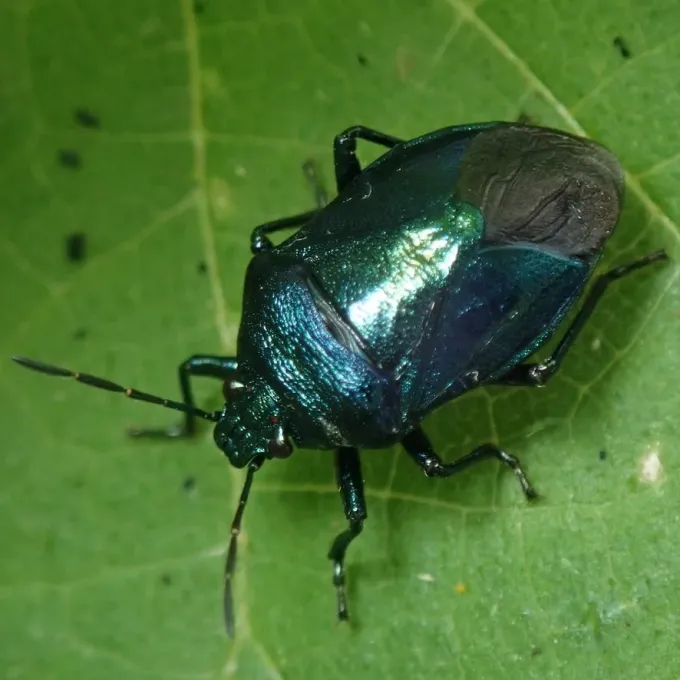
The blue shield bug is a striking insect known for its vibrant metallic blue or greenish-blue coloration, which makes it easily recognizable in the field.
Adults typically measure between 7 and 10 millimeters in length and possess a characteristic shield-shaped body typical of the Pentatomidae family.
The head is elongated, and the pronotum often displays a glossy, metallic finish that can shift in appearance depending on the angle of natural light.
Nymphs of this species look quite different from adults, often displaying reddish and black patterns that serve as a warning sign to potential predators.
Zicrona caerulea is primarily a predatory insect, playing a vital role in natural ecosystems by keeping populations of other insects in check.
What it damages
In most agricultural settings, the blue shield bug is considered a beneficial organism rather than a pest, as it feeds on the larvae of various harmful beetles.
It is a well-known predator of the Colorado potato beetle, actively consuming larvae and significantly reducing the population of this crop-destroying pest.
While primarily carnivorous, these bugs may occasionally feed on plant sap if their preferred prey is unavailable, potentially causing minor leaf damage.
Plant damage, when it occurs, is usually characterized by tiny necrotic spots on foliage caused by the piercing of plant tissues by the bug's proboscis.
The overall impact on crops is overwhelmingly positive, as the beneficial predatory behavior far outweighs the minimal risk of incidental plant consumption.
When it appears
The life cycle of the blue shield bug begins in early spring when adults emerge from their overwintering sites, such as leaf litter, bark crevices, or garden debris.
Following a period of active feeding, mating occurs, and females deposit clusters of eggs on the undersides of leaves of various host plants.
Nymphs hatch and go through several developmental stages throughout the summer, actively hunting and feeding on smaller insects in their environment.
Typically, there is one generation per year, although favorable climatic conditions can sometimes influence the duration of developmental stages.
As temperatures begin to drop in autumn, adult bugs seek out sheltered locations to survive the winter, entering a state of dormancy until the following spring.
Signs of infestation
Presence of the blue shield bug can be identified by the visual sighting of the metallic blue adults patrolling plant stems in search of prey.
Clusters of eggs on the undersides of leaves are a clear indicator of a breeding population present within the vicinity of the infested plants.
Observing the predatory behavior, where the bug holds a victim with its proboscis, is a definitive sign that these beneficial insects are active.
Minor spotting or slight discoloration on leaves can indicate instances where the bug has resorted to sap-feeding due to a lack of available insect prey.
A noticeable decrease in the population of local insect pests, such as leaf beetle larvae, often signals the successful control work of these predators.
Control measures
Because the blue shield bug is an important natural predator, it is generally recommended to avoid any control measures that would harm its population.
Integrated Pest Management strategies should prioritize selective pesticides to ensure that beneficial insects like Zicrona caerulea remain protected.
Maintaining diverse habitats with wildflower borders can help sustain a healthy population of this bug, ensuring long-term biological control of pests.
If incidental plant damage becomes a localized issue, physical removal of individual bugs in the morning is a sufficient and eco-friendly approach.
Education on distinguishing between garden pests and beneficial predators is key to preventing the unnecessary elimination of this valuable insect ally.
Taxonomy
- Latin name
- Zicrona caerulea
- Order
- Hemiptera (bugs, aphids, leafhoppers)
- Family
- Pentatomidae
- EPPO code
- ZICRCA
Discussion
No discussions yet — be the first.