
Blue shieldbug
Zicrona
Description
How to identify
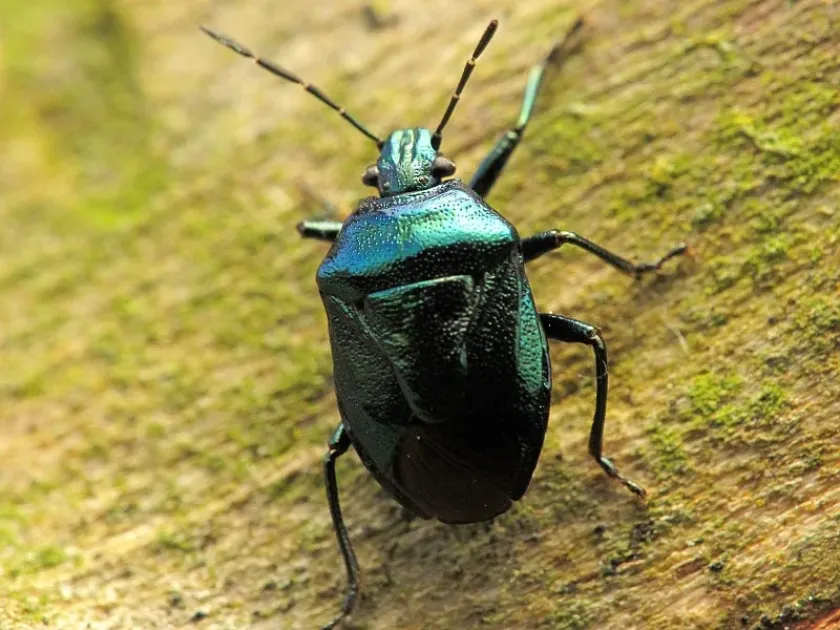
The blue shieldbug, scientifically known as Zicrona caerulea, is a predatory insect belonging to the Pentatomidae family, recognizable by its metallic blue or green sheen.
Adult bugs typically measure between 7 and 10 millimeters in length and possess a flattened, oval-shaped body that is covered in fine, dense punctation.
The larvae exhibit a distinct appearance compared to adults, often featuring vibrant colors such as orange and black, which makes them stand out among foliage.
Equipped with a robust piercing-sucking rostrum, the insect is highly efficient at subduing prey by penetrating its exoskeleton and consuming its body fluids.
Unlike many of its relatives in the shieldbug family, Zicrona caerulea is primarily carnivorous, playing a key role as a natural predator in various habitats.
What it damages
Zicrona caerulea is strictly considered a beneficial insect rather than a pest, as it specializes in hunting various agricultural pests.
Its primary prey includes larvae of the Colorado potato beetle, various caterpillars, and other soft-bodied larvae that consume crops like potatoes, beans, and berries.
Because the bug does not feed on plant tissues to any significant extent, it poses no threat to the commercial yield of agricultural produce.
Instead, its predatory activity assists gardeners and farmers by naturally suppressing pest populations without the need for additional synthetic interventions.
Protecting this species is highly recommended as it contributes to the overall health and sustainability of the vegetable garden ecosystem.
When it appears
The lifecycle of the blue shieldbug is tied to the arrival of spring, when adults emerge from their overwintering sites to begin their annual activity.
The development proceeds through five larval stages before reaching the adult phase, with reproduction occurring primarily during the warmer months of summer.
Their active hunting phase perfectly aligns with the emergence of major pests like the Colorado potato beetle, ensuring an abundant food supply for growth.
Overwintering is achieved by adults seeking shelter in debris, leaf litter, or loose soil, where they survive the cold winter period in a state of diapause.
Depending on the climatic zone, the bug may produce one or two generations per year, with activity levels peaking during peak pest infestation windows.
Control measures
As a valuable predator, Zicrona caerulea requires no control measures aimed at population reduction; instead, efforts should focus on its preservation.
The use of broad-spectrum insecticides is highly detrimental, as these chemicals often eliminate beneficial predators alongside the targeted pest populations.
To encourage the presence of blue shieldbugs, growers should minimize chemical applications and maintain natural habitats or hedgerows around the garden.
Integration of biological control strategies and selective, environmentally friendly pesticides is the best approach for maintaining a healthy and productive garden.
- Avoid indiscriminate use of broad-spectrum pesticides.
- Maintain patches of natural vegetation for shelter.
- Monitor pest levels to justify any chemical application.
- Preserve leaf litter to provide overwintering sites.
Taxonomy
- Latin name
- Zicrona
- Order
- Hemiptera (bugs, aphids, leafhoppers)
- Family
- Pentatomidae
- EPPO code
- ZICRSP
Discussion
No discussions yet — be the first.