
Zelleria
Zelleria
Description
How to identify
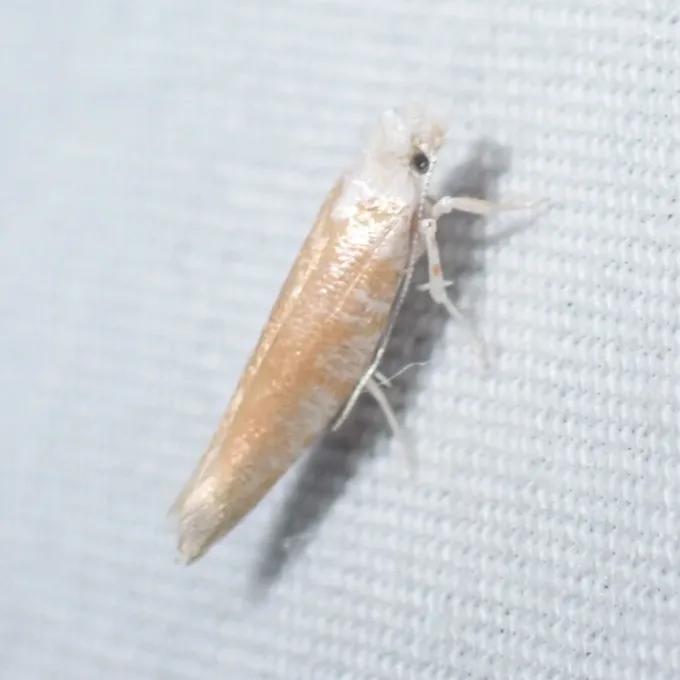
Zelleria is a genus of moths belonging to the family Yponomeutidae, order Lepidoptera. These small moths are primarily nocturnal or crepuscular, meaning they are most active during twilight hours.
Adult moths possess narrow wings with a characteristic fringe along the edges. Their coloration often serves as camouflage, blending perfectly with tree bark or leaf surfaces to remain inconspicuous to predators.
The larvae, or caterpillars, have spindle-shaped bodies and well-developed chewing mouthparts. Their color ranges from light green to yellowish-brown, allowing them to hide efficiently among the foliage of host plants.
The life cycle follows complete metamorphosis: egg, larva, pupa, and adult. They typically overwinter as pupae within dense cocoons attached to branches or hidden in bark crevices.
Agronomists use pheromone traps to monitor adult flight activity, which is crucial for determining the optimal timing for implementing control measures.
What it damages
Zelleria species primarily target various fruit and ornamental plants. The most well-known species, Zelleria oleastrella, is a significant pest known for damaging olive trees.
The larvae feed predominantly on leaf tissues, young shoots, and developing buds. During outbreaks, they can cause extensive damage to both commercial orchards and home gardens.
Young larvae skeletonize the leaf blades, leaving only the veins behind, which disrupts photosynthesis and significantly weakens the overall health of the plant.
Damage also occurs in terminal buds, effectively halting shoot growth and resulting in decreased crop yields for both the current and future seasons.
Severe infestations can lead to premature leaf drop, reduced plant immunity, and increased susceptibility to secondary infections or fungal diseases.
When it appears
The activity of Zelleria is closely tied to regional climatic conditions. The flight of the first generation usually begins in spring once stable, warm temperatures are established.
Caterpillars cause the most damage during the active growing season when plants produce succulent, young tissues that serve as the primary food source for the larvae.
Depending on the latitude, the pest may produce several generations per season, making control difficult and requiring multiple targeted treatments.
The summer generation is typically the most destructive because high temperatures accelerate the metabolic rate of the caterpillars, leading to rapid foliage destruction.
By autumn, larval activity begins to decline as the insects transition into the pupal phase, preparing for the winter resting period under bark or within plant debris.
Signs of infestation
The primary indicators of a Zelleria infestation include the presence of characteristic silken webs, where young larvae live and feed.
Damaged leaves appear curled or skeletonized, often showing visible frass (excrement) tangled within the silk webbing.
Inspection of shoots may reveal nibbled or desiccated tips that eventually darken and die back, disrupting the natural architectural structure of the tree canopy.
Observing adult moths fluttering around trees during twilight serves as an early warning sign of impending egg-laying and a new larval hatch.
In advanced cases, infested trees exhibit symptoms of stress, such as sparse canopy foliage and stunted growth due to the prolonged larval feeding.
Control measures
Effective management of Zelleria requires an integrated approach combining agrotechnical, biological, and chemical control methods.
Agrotechnical measures focus on regular sanitary pruning of branches and the removal and destruction of infested shoots where eggs or pupae may be located.
Biological control involves promoting natural enemies such as entomophagous insects, birds, and predatory bugs that actively feed on the larvae.
Chemical control is applied using systemic and contact insecticides during periods of peak larval emergence when the pests are most vulnerable.
- Adhere strictly to application timings based on the pest's developmental stage.
- Utilize biopesticides like Bacillus thuringiensis for environmentally friendly control.
- Conduct consistent monitoring of orchard health using light and pheromone traps.
Taxonomy
- Latin name
- Zelleria
- Order
- Lepidoptera (butterflies)
- Family
- Yponomeutidae
- EPPO code
- ZELLSP
Discussion
No discussions yet — be the first.