
Plum moth
Argyresthia albistria
Description
How to identify
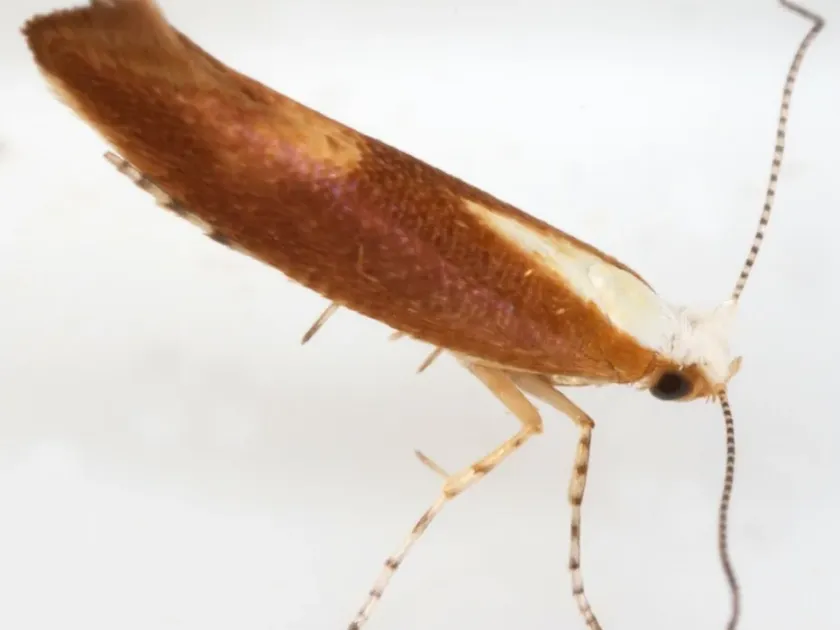
The plum moth (Argyresthia albistria) is a small moth belonging to the Yponomeutidae family. The adult wingspan reaches approximately 10–12 mm.
Its forewings have a mottled appearance with white, brown, and ochre patterns, providing excellent camouflage against tree bark.
The larvae are typically greenish with a brown head and sparse bristles, making them somewhat difficult to detect among buds.
Pupation occurs within a white, silken cocoon often hidden in bark crevices or near the base of the buds.
Eggs are very small, oval-shaped, and are laid by females in close proximity to the fruit tree buds, where they overwinter.
What it damages
The primary hosts for this pest include plum, sloe, and damson trees. The damage is caused strictly by the larvae during the spring growth phase.
Upon hatching, the larvae bore into the unopened buds, consuming the inner tissues and destroying both vegetative and floral parts.
As the larvae develop, they often tunnel into young, tender shoots, which results in the wilting and eventual death of the branch tips.
Severe infestations significantly reduce fruit yield by destroying potential blossoms before they have a chance to bloom.
Continuous pest pressure weakens the trees, making them more susceptible to cold stress and other secondary opportunistic pathogens.
When it appears
The insect overwinters as an egg on the branches near the buds. Larval emergence coincides with the early spring bud-burst period.
The feeding period is relatively short, lasting from the green tip stage until the end of the plum tree's blooming season, when pupation begins.
Adult moths emerge during mid-to-late summer (July and August) to mate and lay eggs for the following year's generation.
The entire lifecycle is tightly synced with the phenology of stone fruit trees, ensuring the larvae have immediate access to high-energy food sources.
There is typically one generation per year, though specific environmental conditions can slightly influence the timing of emergence.
Signs of infestation
Early spring observations often reveal hollow, dried-out buds that fail to open during the normal growing season.
Close inspection shows tiny entry holes at the base of the buds, where the larvae have successfully penetrated the tissue.
Withered or blackened tips on young shoots are a clear indicator of larval boring activity within the branch structure.
Fine webbing around buds or damaged leaves is a characteristic sign of the presence of горностаєва moth larvae.
During the flight period in summer, adults can be spotted resting on the leaves or flying near the canopy at dusk.
Control measures
Sanitation is the most critical control measure; prune and destroy infested shoots as soon as damage is noticed to kill larvae inside.
Chemical control should be applied before the larvae burrow deep into the buds, ideally targeting the early bud-burst stage with contact insecticides.
- Apply biological insecticides based on Bacillus thuringiensis as an eco-friendly management option.
- Encourage beneficial predatory insects that prey on moth eggs and larvae.
- Monitor trees annually to assess population levels and determine if intensive treatment is necessary.
Maintaining orchard health through proper fertilization and thinning helps trees recover faster from pest-related stress.
Taxonomy
- Latin name
- Argyresthia albistria
- Order
- Lepidoptera (butterflies)
- Family
- Yponomeutidae
- EPPO code
- ARGYAL
Discussion
No discussions yet — be the first.