
Twenty-spotted ermine moth
Yponomeuta vigintipunctata
Description
How to identify
The twenty-spotted ermine moth is a species of moth belonging to the Yponomeutidae family within the order Lepidoptera.
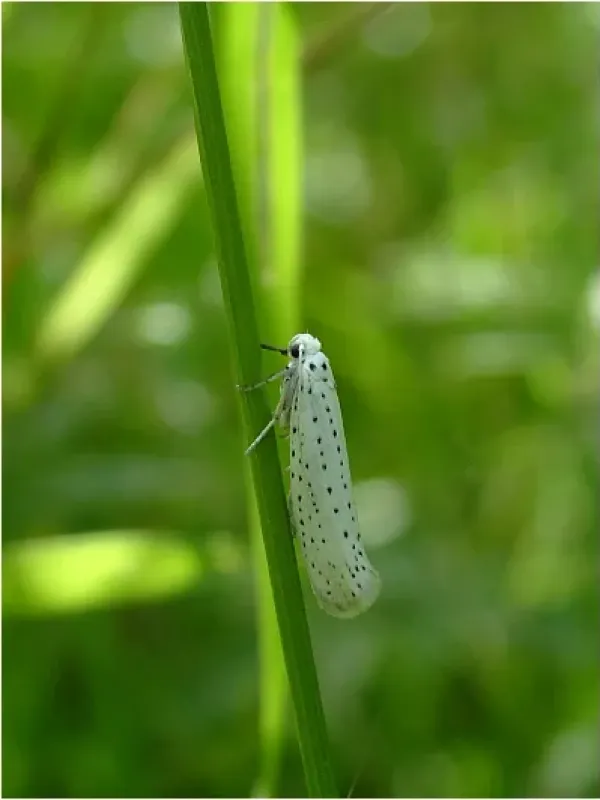
The adult moth has a wingspan of approximately 18–22 mm, featuring white or cream-colored forewings adorned with distinct black spots arranged in longitudinal rows.
Its larvae, known as caterpillars, grow up to 20 mm in length and possess a yellowish-green body marked with dark spots and sparse light hairs.
Pupae are typically encased in dense, white silken cocoons often clustered together on the leaves or stems of the host plant.
Adult moths are primarily nocturnal, making them difficult to spot during the day, as they rest concealed within the foliage of plants.
What it damages
The primary hosts for the larvae of this species are plants within the Crassulaceae family, particularly those of the genus Sedum.
Larvae consume the leaf tissue extensively, often leaving only the veins behind, which leads to severe skeletonization of the plant foliage.
Heavy infestations can result in total defoliation of the host plant, significantly reducing its aesthetic appeal and photosynthetic capacity.
Weakened plants become susceptible to opportunistic pathogens, which can cause secondary infections, further damaging the host's vitality.
The damage is most severe during high-density larval phases, which can occur rapidly if environmental conditions are favorable.
When it appears
The life cycle of the twenty-spotted ermine moth typically involves multiple generations per year depending on the regional climate.
Larval activity usually begins in late spring or early summer, corresponding with the active growth phase of its host plants.
Feeding intensity reaches its peak during the mid-summer months, when caterpillars rapidly accumulate biomass before pupating.
Adult moths emerge towards the end of summer to mate and lay eggs, which serves as the overwintering stage for the next population.
Monitoring should start in May, as early detection of egg batches or young larvae is crucial to preventing larger infestations later in the season.
Signs of infestation
The most visible sign of infestation is the presence of silk webbing spun by the caterpillars around the leaves and stems of sedums.
Leaves appear skeletonized, and the presence of dark larval droppings within the web confirms the active presence of the pest.
Plants affected by the moth often show signs of stunted growth, color fading, and potential wilting if the damage to stems and leaves is severe.
Colonies of larvae can often be spotted on the undersides of leaves or within folded leaf clusters, especially during the early morning hours.
Persistent presence of webbing combined with visible leaf loss provides a clear diagnostic indicator of an ermine moth outbreak.
Control measures
Small-scale infestations can be managed effectively by manually removing and destroying the infested webs and larvae by hand.
Biological control using Bacillus thuringiensis is highly effective against young larvae while remaining safe for beneficial insects in the garden.
Systemic insecticides may be used as a last resort in severe outbreaks to ensure the protection of valuable ornamental sedum varieties.
Practicing good garden hygiene, such as clearing debris and weeds, helps eliminate potential shelter and breeding sites for the moths.
- Regular inspection of host plants.
- Pruning and destroying heavily infested plant parts.
- Using environmentally friendly biological pesticides.
Taxonomy
- Latin name
- Yponomeuta vigintipunctata
- Order
- Lepidoptera (butterflies)
- Family
- Yponomeutidae
- EPPO code
- HYPNVI
Discussion
No discussions yet — be the first.