

Pest · Lepidoptera (butterflies) · affects Maize, Common sunflower, Tomato
Especially harmful
Cotton bollworm
Helicoverpa armigera
Description
How to identify
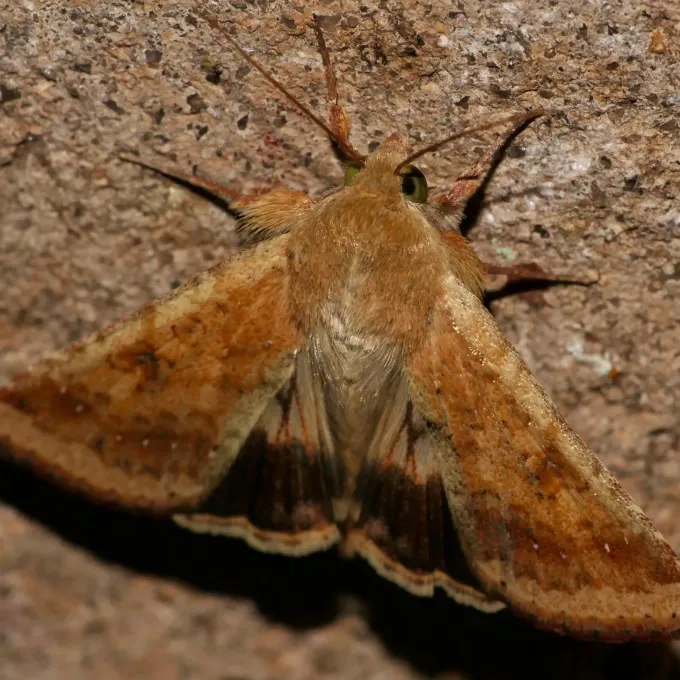
The cotton bollworm (Helicoverpa armigera) is a member of the Noctuidae family and order Lepidoptera. The adult moth has a wingspan of 30-40 mm, with colors ranging from yellowish-grey to reddish-brown, depending on the environment.
The larvae, or caterpillars, are the primary cause of crop damage. They can grow up to 40 mm in length and exhibit significant color variation, often displaying dark stripes along their back and a lighter lateral stripe.
The eggs are small, hemispherical, and yellowish, usually laid singly on the tender parts of the host plant. The pupal stage occurs in the soil, which serves as a protective environment for overwintering.
The life cycle encompasses four stages: egg, larva (with six instars), pupa, and adult. Multiple generations can occur within a single growing season, making it a highly prolific pest.
Due to their high mobility and reproductive rate, these moths can quickly spread across large agricultural areas, posing a constant threat to farm productivity.
What it damages
The cotton bollworm is a polyphagous pest, meaning it feeds on over 120 different plant species. Key crops affected include fodder beet, winter rapeseed, cabbage, hemp, winter barley, apple, and alfalfa.
Larvae primarily target the reproductive parts of plants, such as flower buds, blooms, and fruits. By consuming these essential organs, they drastically reduce yield potential and crop quality.
In crops like sunflower, larvae feed on developing seeds within the flower head. This direct damage is often compounded by secondary infections, such as mold and rot, which compromise the entire head.
For fruit-bearing trees like apples, larvae bore into the fruit, causing premature fruit drop and significant decay, rendering the crop unmarketable for both fresh consumption and processing.
On vegetable crops, the damage to fruit leads to deformation and loss of commercial value, making integrated pest management essential for maintaining high market standards.
When it appears
Adult moths typically emerge in late spring when temperatures consistently reach above 18-20°C. They are nocturnal insects, making them most active during dusk and throughout the night for egg-laying.
During the summer months, the rapid development of successive generations means that populations can overlap. It is common to find various developmental stages of the pest in the same field simultaneously.
Peak damage generally coincides with the flowering and fruit-setting stages of the host plants. Increased humidity and moderate heat are ideal for larval survival and development.
As autumn approaches, the final generation of larvae pupates in the soil. Proper soil management at the end of the season is crucial for disrupting the overwintering success of the pupae.
Monitoring the pest population throughout the growing season is critical because the speed of generation turnover varies significantly based on local climatic conditions.
Signs of infestation
The first indicator of infestation is the capture of adult moths in pheromone traps, which are essential tools for agricultural monitoring programs.
Visible signs of feeding damage include irregular holes in leaves, often referred to as "windowing." As the larvae mature, they shift their focus to reproductive organs, causing visible destruction to buds and flowers.
The presence of larval excrement on leaves is a clear visual marker of pest activity. Finding these droppings often indicates that larvae are actively feeding nearby in the canopy.
Infested fruits or flower heads will show boreholes where the larvae have entered. In the case of sunflower, the loss of seed kernels is an obvious sign of severe infestation.
Early identification of these symptoms is vital to prevent the larvae from reaching the later instars, which are significantly more resistant to standard chemical control measures.
Control measures
Cultural control is the first line of defense; deep autumn plowing helps expose pupae to winter temperatures and natural predators, significantly reducing the starting population for the next year.
Biological control, such as the strategic release of Trichogramma wasps, can be highly effective in parasitizing the eggs and suppressing the population before the larvae hatch.
Chemical control must be applied with precision, targeting larvae during their early instars. Modern insecticides, including biologicals like Bacillus thuringiensis, offer effective and environmentally safer options.
Weed management is a vital component of control, as non-crop plants often serve as early-season hosts for the first generation of bollworms before they migrate to primary crops.
Integrated Pest Management (IPM) strategies, utilizing thresholds determined by trap counts, allow farmers to optimize chemical usage while ensuring effective protection of the harvest.
In brief
17
Damages crops
Content graph
Damages crops · 17
Content graph
Connections · Cotton bollworm
Most often together:
Marketplace
Products · 1
Biology
Taxonomy
- Latin name
- Helicoverpa armigera
- Order
- Lepidoptera (butterflies)
- Family
- Noctuidae
- EPPO code
- HELIAR
Community
Discussion
No discussions yet — be the first.