
Rabbit flea
Xenopsylla vexabilis
Description
How to identify
The rabbit flea (Xenopsylla vexabilis) belongs to the order Siphonaptera and the family Pulicidae, representing a highly specialized ectoparasite.
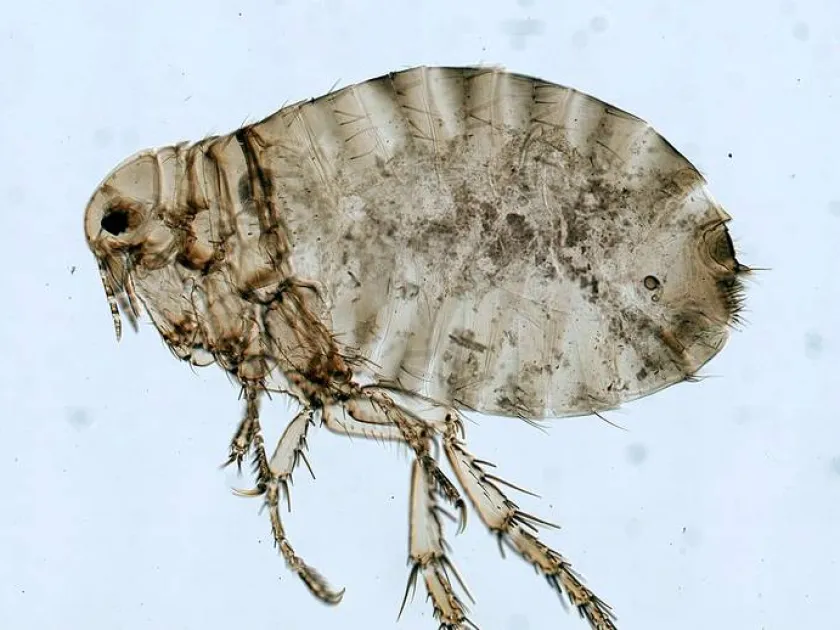
Adult fleas are wingless, laterally compressed insects, typically 2–3 mm in length, with a hard, brownish exoskeleton adapted for moving through fur.
Equipped with powerful hind legs, these insects are capable of jumping significant distances to reach their host for feeding.
Their mouthparts are specifically designed for piercing skin and sucking blood. They also feature distinct combs of spines known as ctenidia.
The life cycle involves a complete metamorphosis: egg, larva, pupa, and adult. Larvae are typically found in the nest material or soil rather than on the host.
What it damages
These pests primarily target rabbits, though they can parasitize other small mammals depending on environmental conditions and host availability.
The direct damage involves blood loss, which, in cases of severe infestation, leads to anemia, lethargy, and poor growth rates in rabbits.
Rabbit fleas are significant vectors for serious diseases, including myxomatosis and Rabbit Hemorrhagic Disease (RHD), which can devastate colonies.
Feeding causes intense skin irritation, hypersensitivity, and secondary bacterial infections due to constant scratching and skin injury.
Economic losses are reflected in degraded pelt quality, reduced reproductive performance, and increased costs for veterinary intervention.
When it appears
Flea activity is heavily influenced by ambient temperature and humidity, which dictate the success rate of larval development in the environment.
In warm, temperate climates or during summer months, population levels often peak as environmental conditions favor rapid reproduction.
Inside controlled, heated environments such as commercial rabbitries, the flea life cycle can persist throughout the entire year.
Spring and autumn typically mark periods of increased parasite pressure, coinciding with the breeding cycles of the wild hosts.
The spread of infestations is often linked to the introduction of new stock or contact with wild rabbit populations near the farmstead.
Signs of infestation
Common clinical signs of infestation include noticeable restlessness, excessive grooming, and scratching directed at the ears and neck.
Small, red, inflamed bite marks are often visible on the skin, particularly around the face, inner ears, and belly areas.
Flea excrement, appearing as fine dark specks or "flea dirt" within the fur, is a definitive indicator of an active population.
Fur thinning and alopecia (hair loss) frequently occur as a result of the animal's self-trauma from persistent biting and scratching.
In heavy infestations, pale mucous membranes may be noted during physical examination, indicating secondary anemia due to chronic blood feeding.
Control measures
Integrated control involves a combination of environmental sanitation and direct treatment of the animals with approved veterinary insecticides.
Premises must be thoroughly cleaned and disinfected, focusing on the removal of bedding and nesting material where flea larvae develop.
Application of systemic or topical antiparasitic treatments, such as drops or sprays, is essential to interrupt the adult stage of the flea.
- Regular cleaning and disposal of bedding.
- Use of veterinary-approved parasiticides.
- Strict quarantine protocols for new rabbits.
- Implementation of rodent control measures.
Prevention relies on limiting exposure to wild rabbits and maintaining a rigorous health surveillance program for all captive individuals.
Taxonomy
- Latin name
- Xenopsylla vexabilis
- Family
- Pulicidae
- EPPO code
- XENOVE
Discussion
No discussions yet — be the first.