
Cat and dog flea
Ctenocephalides
Description
How to identify
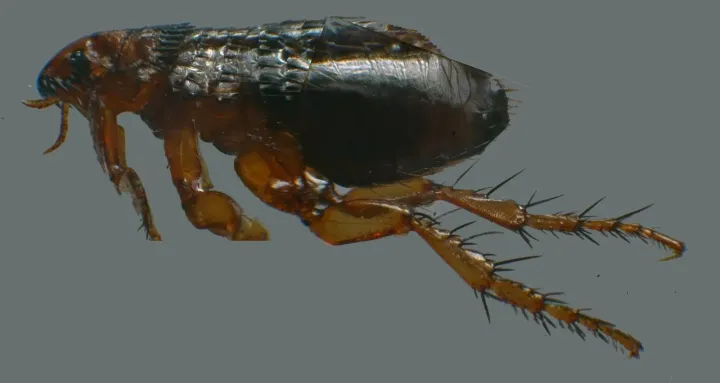
The dog flea (Ctenocephalides canis) and cat flea (Ctenocephalides felis) are wingless insects classified under the order Siphonaptera.
These insects possess a laterally compressed body, which allows them to move efficiently through the fur of their hosts.
Adults typically measure 1 to 3 mm in length and are dark brown, providing camouflage in their natural habitat.
They are equipped with specialized hind legs, allowing for powerful jumps that enable them to move between host animals.
Their larvae are legless and worm-like, living in debris and feeding on organic material found in their environment.
What it damages
It is critical to note that Ctenocephalides species are not agricultural or horticultural plant pests.
They are obligate blood-feeding parasites that subsist entirely on the blood of warm-blooded animals, such as cats, dogs, and livestock.
Because they do not consume plant tissues, they do not cause any direct damage to crops, seedlings, or ornamental plants.
Their presence does not result in yield losses or the degradation of the health of agricultural vegetation.
Therefore, they are not a target for plant protection products or integrated pest management programs in cropping systems.
When it appears
The lifecycle of these fleas is highly dependent on ambient temperature and relative humidity levels in their environment.
Warmer temperatures significantly accelerate the rate of development from eggs to adult fleas, leading to population surges.
In climate-controlled animal housing or barns, flea reproduction can occur throughout the year without seasonal interruptions.
Larval stages require stable, humid microclimates with organic debris to successfully reach the pupal stage.
Cold, freezing temperatures in outdoor environments can be fatal to eggs and larvae, effectively curbing population growth.
Signs of infestation
The primary indicators of a flea infestation include persistent scratching, skin irritation, and restlessness among farm animals.
Visible signs often include the presence of flea dirt (excrement) on bedding, which appears as small dark specks resembling pepper.
In cases of high infestation, live adult fleas can be observed jumping on floors or in areas frequented by animals.
Human encounters with high flea populations typically result in localized skin irritation or bite marks on the lower legs.
Flea eggs are small and white, often accumulating in floor crevices, carpets, or soil where animals frequently rest.
Control measures
Since fleas do not damage plants, using agricultural insecticides on crops to control them is unnecessary and ecologically harmful.
Control efforts should focus entirely on veterinary health, regular grooming of animals, and maintaining strict sanitation in housing.
Mechanical cleaning, such as thorough vacuuming and washing of bedding, is highly effective at reducing the population density.
If chemical control is necessary, it should be limited to veterinary-approved treatments or specific indoor insecticides.
Improving ventilation and reducing humidity levels in animal facilities can significantly hinder the survival and development of flea larvae.
Taxonomy
- Latin name
- Ctenocephalides
- Family
- Pulicidae
- EPPO code
- CTECSP
Discussion
No discussions yet — be the first.