
Cat flea
Ctenocephalides felis
Description
How to identify
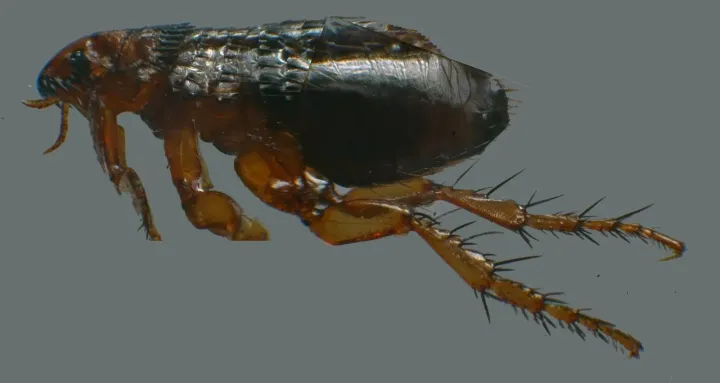
The Ctenocephalides felis, commonly known as the cat flea, is an insect belonging to the order Siphonaptera and the family Pulicidae. They are wingless parasites that possess powerful hind legs for jumping.
Adult fleas are laterally flattened and brown in color, ranging from 1 to 3 mm in size. Their mouthparts are designed specifically to pierce mammalian skin and feed on blood.
The life cycle is characterized by complete metamorphosis, including eggs, larvae, pupae, and adults. The entire life cycle occurs in the environment, usually in sheltered areas.
Larvae develop in organic debris, feeding on feces dropped by adult fleas and other organic matter. They do not require a host until they reach the adult stage.
The pupal stage is enclosed in a resilient cocoon, which acts as a protective barrier against environmental fluctuations and many chemical treatments.
What it damages
The cat flea is not a plant pest. It does not feed on any agricultural crops, foliage, roots, or fruits. It lacks the biological capacity to damage plant tissues.
In an agricultural setting, its presence is strictly considered a sanitary issue rather than an agronomic one. Its economic impact is limited to livestock health and animal husbandry.
The presence of fleas in warehouses or granaries is an indicator of poor sanitation and usually points to an infestation of rodents or feral animals.
Unlike true agricultural pests such as beetles or aphids, cat fleas do not pose a threat to crop yields, quality, or plant development in the field.
Farmers should focus on treating the primary carriers (animals) rather than attempting to apply plant protection products to crops, which would be entirely ineffective.
Control measures
Control measures for Ctenocephalides felis in agricultural environments focus primarily on sanitation and integrated pest management (IPM) for facility maintenance.
The most effective strategy involves rodent control programs, as rodents often serve as intermediate vectors for fleas in storage facilities and barns.
Maintaining cleanliness is essential; frequent removal of organic debris and waste prevents larvae from finding suitable conditions to develop and pupate.
In areas where animals are housed, the use of veterinary-approved insecticides is necessary to break the parasite cycle and prevent re-infestation of the environment.
By preventing the entry of stray animals into production areas, agricultural businesses can significantly reduce the risk of flea population establishment.
Taxonomy
- Latin name
- Ctenocephalides felis
- Family
- Pulicidae
- EPPO code
- CTECFE
Discussion
No discussions yet — be the first.