
Rabbit flea
Spilopsyllus
Description
How to identify
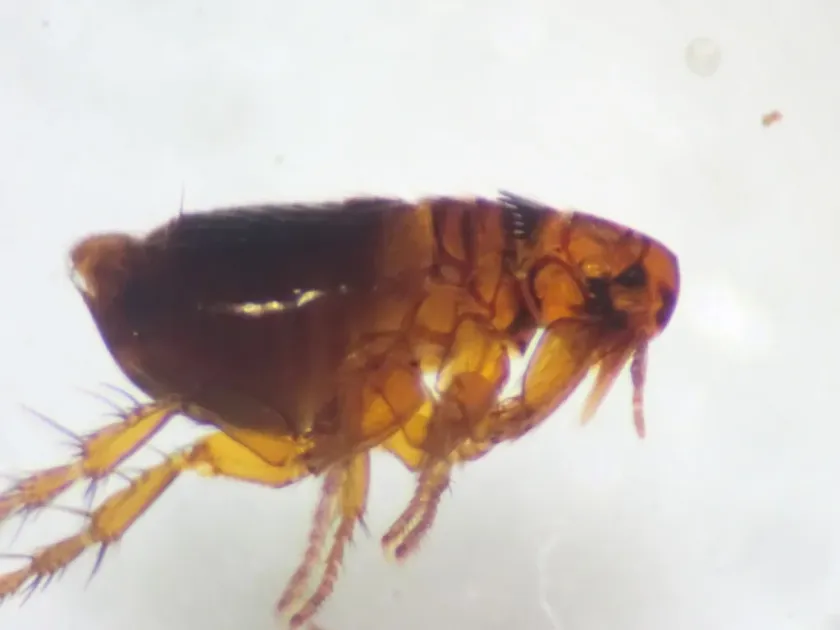
The rabbit flea (Spilopsyllus cuniculi) belongs to the order Siphonaptera, family Pulicidae. This small wingless insect measures between 1.5 to 2.5 mm in length and is laterally compressed.
The species is characterized by its powerful hind legs, which enable the flea to jump long distances, facilitating movement between rabbit hosts.
Its coloration ranges from dark brown to black, allowing it to blend effectively into the dense fur of the rabbit.
The body is covered with backward-pointing bristles, a structural adaptation that helps the flea navigate through the hair without falling off.
The mouthparts are specialized for piercing skin and sucking blood, with the flea often remaining fixed in one location, particularly on the ears of the host.
What it damages
The rabbit flea primarily affects rabbits, acting as an ectoparasite in commercial and wild rabbit populations. It is not a plant pest, but rather a significant economic burden in animal husbandry.
Excessive flea bites cause intense irritation and pruritus, leading to constant scratching, skin inflammation, and potential secondary bacterial infections.
Chronic infestation results in significant blood loss, which weakens the animal and causes a reduction in growth rates and overall physical condition.
The most severe threat posed by this species is its role as the primary vector for myxomatosis, a fatal viral disease that can devastate entire rabbit colonies.
Damage to the hide and skin caused by chronic infestation lowers the quality of rabbit pelts, resulting in financial losses for farmers.
When it appears
The life cycle of Spilopsyllus cuniculi is intrinsically linked to the hormonal cycles of the rabbit, specifically the breeding season.
Flea reproduction peaks when the host's reproductive hormones are at their highest, ensuring that the next generation of fleas finds plenty of hosts.
While seasonal in nature, fleas can maintain continuous breeding in controlled indoor environments, such as barns or heated rabbitries.
During winter, the survival of the flea population relies on the presence of adult rabbits and stable microclimates within their nesting sites.
The flea population dynamics are highly dependent on the availability of a host, as they require blood meals to mature and reproduce efficiently.
Signs of infestation
Frequent scratching, head shaking, and restless behavior are the most common indicators that a rabbit is infested with fleas.
Visual inspection, particularly of the ear margins, often reveals visible clusters of fleas attached firmly to the skin.
The presence of 'flea dirt' — small, black, granular waste found in the fur — confirms an infestation even if the fleas themselves are not immediately visible.
In cases of severe infestation, young rabbits may appear lethargic, pale, and exhibit signs of stunted growth due to anemia.
Skin lesions, crusts, and swellings on the ears are strong indicators of a heavy parasite load and the potential risk of transmitted diseases like myxomatosis.
Control measures
Managing rabbit flea infestations requires a combined approach of treating the host and sanitizing the environment.
Veterinary-approved spot-on treatments containing selamectin or similar active ingredients are highly effective for killing adults on the rabbit.
Environmental sanitation is critical; regular cleaning of hutches is necessary to remove organic debris where flea larvae undergo their development.
- Treating all rabbits in the colony simultaneously.
- Cleaning and disinfecting hutch bedding regularly.
- Implementing strict quarantine protocols for new rabbits.
Using physical barriers or insect-proof netting in rabbit enclosures can prevent wild rabbits from introducing fleas to the domestic population.
Taxonomy
- Latin name
- Spilopsyllus
- Family
- Pulicidae
- EPPO code
- SPLPSP
Discussion
No discussions yet — be the first.