
Oriental rat flea
Xenopsylla cheopis
Description
How to identify
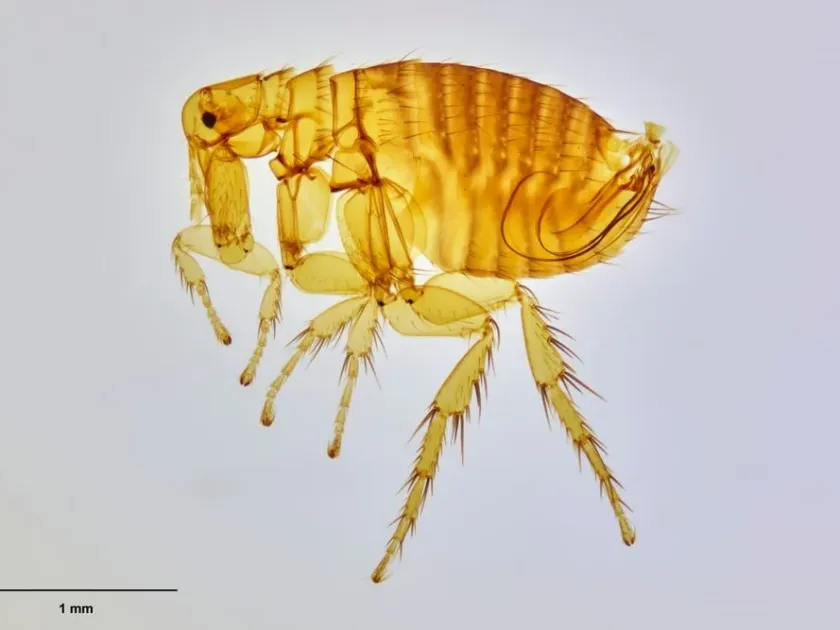
The Oriental rat flea (Xenopsylla cheopis) belongs to the order Siphonaptera and the family Pulicidae. It is a small, wingless insect typically measuring between 1.5 and 2.5 mm in length.
The body is laterally compressed, allowing the flea to move easily between the hairs of its host. It possesses a piercing-sucking mouthpart adapted for blood feeding, which is its primary source of nourishment.
The flea undergoes a complete metamorphosis: egg, larva, pupa, and adult. Strong hind legs are a distinctive feature, enabling the flea to jump considerable distances to find new hosts.
These fleas are closely associated with rodents. Unlike some other species, they spend a significant amount of time on the host's body, which is critical for their survival and egg-laying cycle.
The optimal environment for their development includes high humidity and warm temperatures, conditions frequently found in grain stores, warehouses, and damp agricultural buildings.
What it damages
While the Oriental rat flea does not consume plant crops, it is a dangerous agricultural pest due to its role as a vector for various zoonotic diseases, including the plague and murine typhus.
In an agricultural context, its presence causes severe sanitary issues. Finding these fleas in warehouses or grain storage facilities triggers mandatory quarantine and disinfection protocols.
The economic impact is significant as it disrupts supply chains and requires expensive professional pest control services. Products found to be infested may be condemned or restricted for sale.
Furthermore, the flea negatively impacts farm operations by threatening the health of staff and livestock. Management must invest heavily in site hygiene to prevent the spread of the parasite.
Since the flea is primarily transported by rats and mice, it serves as a biological indicator of poor rodent control, which indirectly leads to further damage of stored agricultural commodities.
Control measures
The most effective strategy for managing the Oriental rat flea is aggressive rodent control. By eliminating the host population, the life cycle of the flea is disrupted at its root.
Regular sanitation of storage facilities using residual insecticides is necessary to treat surfaces, floor cracks, and areas where organic debris accumulates and larvae develop.
Professional fumigation of warehouses is recommended when infestations are detected. This ensures that even hidden stages of the flea life cycle, such as pupae in cocoons, are eradicated.
Facility maintenance, including sealing entry points for rodents and keeping the surrounding perimeter clean, is essential for long-term prevention of flea infestations.
Consistent monitoring using sticky traps and periodic professional audits are vital components of a successful integrated pest management program to protect stored harvest quality.
Taxonomy
- Latin name
- Xenopsylla cheopis
- Family
- Pulicidae
- EPPO code
- XENOCH
Discussion
No discussions yet — be the first.