

Pest · Lepidoptera (butterflies) · affects Apple, Winter wheat, Grapevine
Especially harmful
Pyralid moths
Pyralidae
Description
How to identify
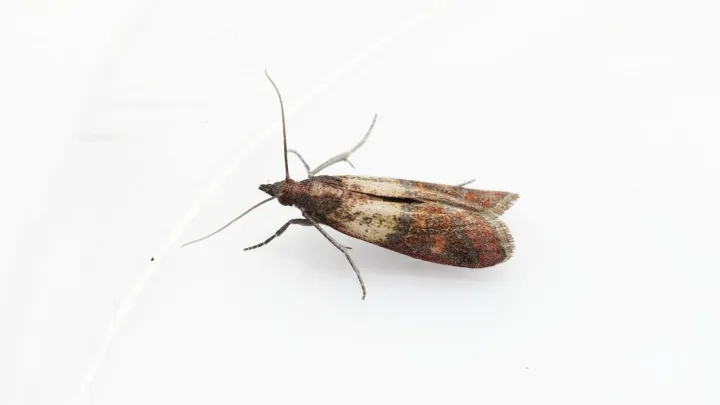
Pyralid moths (family Pyralidae) constitute a large and diverse group of Lepidopteran insects. Adults are generally small to medium-sized moths, characterized by their habit of resting with wings held in a triangular or elongated cylindrical position, which serves as a primary field identification trait.
The larvae, often referred to as caterpillars, are the destructive stage of the life cycle. They possess well-developed mandibles suitable for chewing through various plant tissues, including stems, leaves, roots, and fruits, depending on the specific host plant.
Morphologically, these larvae typically have a distinct head capsule and three pairs of thoracic legs. Their coloration is quite variable, often blending with the host plant's environment, which provides effective camouflage against predators like birds or parasitic wasps.
The life cycle encompasses a complete metamorphosis: egg, larva, pupa, and adult. Many species are nocturnal or crepuscular, meaning they are most active during the twilight hours or at night, which often masks their presence from casual field observation.
Overwintering usually occurs in the pupal stage, encased in durable, silk-lined cocoons. These pupae are typically hidden within crop residues, soil cracks, or beneath the bark of host trees, ensuring survival through harsh winter conditions until temperatures rise in spring.
What it damages
Pyralids are highly polyphagous, meaning they feed on a broad range of agricultural commodities. Significant host plants include fodder beet, cabbage, industrial hemp, soybeans, winter barley, apples, alfalfa, and tobacco, among others.
The larvae inflict damage by consuming foliage, which reduces the plant's photosynthetic capacity. In crops like cabbage or beet, they can strip leaves down to the midribs, severely stunting plant growth and reducing the overall quality of the harvest.
In fruit production, such as apples, larvae frequently bore into the fruit, creating internal tunnels filled with frass. This not only causes the fruit to rot but also makes it commercially unacceptable, leading to significant economic losses for growers.
Stem-boring species are particularly damaging as they disrupt the vascular transport of nutrients and water within the plant. This structural damage can lead to lodging, wilting, or complete plant death before the crop reaches maturity.
Furthermore, the damage caused by these larvae acts as an entry point for secondary pathogens, such as bacteria and fungi. These infections spread rapidly throughout the crop, often causing more loss than the direct feeding of the caterpillars themselves.
##season##The seasonal appearance of Pyralid moths is strictly temperature-dependent. Adults typically emerge in late spring or early summer when sustained temperatures exceed the developmental threshold, usually around 15–18°C.
Depending on the latitude and climate, these moths can produce multiple generations per year. Successive generations often overlap, making the pest presence continuous throughout the growing season and complicating standard control schedules.
Eggs are commonly laid on the undersides of leaves or in crevices near potential food sources. This strategic placement protects the eggs from both environmental stressors and predation, ensuring higher survival rates for emerging neonate larvae.
Peak activity often occurs in late summer, coinciding with the maturation phase of many crops. During this time, the larvae are particularly voracious, consuming large amounts of biomass to fuel their transition into the pupal stage.
As autumn approaches and temperatures decline, the final generation of larvae prepares for hibernation. Understanding these specific phenological events is critical for farmers to deploy control measures at the most vulnerable stage of the pest's life cycle.
Signs of infestation
One of the first signs of a Pyralid infestation is the presence of silk webbing on the leaves or flower heads. This silk serves to protect the larvae while they feed and is often littered with small, dark fecal pellets (frass).
Leaf skeletonization or irregular, ragged holes in the foliage are common visual indicators. In many cases, the larvae pull leaves together with silk, creating "nests" where they remain hidden throughout the day.
For stem-boring species, signs include wilting of the terminal shoots or abnormal twisting of the stem. A closer inspection may reveal entry or exit holes, often surrounded by accumulated sawdust-like debris on the plant surface.
Infested fruits often show browning or sunken areas around the entry hole. Internally, the tissue will be hollowed out or tunnelled, rendering the fruit soft to the touch and prone to early drop before the scheduled harvest time.
- Silk webbing on leaves or floral parts.
- Accumulation of frass (droppings) near feeding sites.
- Leaves tied together with silk to form shelters.
- Exit or entry holes in stems and fruit.
- Premature wilting or stunted growth of the main shoot.
Control measures
Cultural control is the first line of defense. Deep autumn plowing is highly effective at destroying overwintering pupae by burying them or exposing them to natural enemies and cold weather, thereby breaking the pest's life cycle.
Sanitation is equally vital; removing crop residues and controlling weeds—which serve as alternative hosts—reduces the carrying capacity of the field, effectively lowering the overall population density of the moths.
Pheromone traps are excellent tools for monitoring. By identifying the exact timing of adult emergence, growers can precisely apply treatments at the egg-hatching stage, preventing the larvae from boring into plant tissue where they become protected.
Biological control, including the release of egg parasitoids like Trichogramma, is a sustainable option. These beneficial insects target the pest's eggs, significantly reducing population growth without the negative impacts of broad-spectrum pesticides.
Chemical intervention should be reserved for scenarios where economic thresholds are exceeded. It is crucial to rotate insecticides with different modes of action to prevent the development of resistant populations, ensuring that control measures remain effective long-term.
In brief
24
Damages crops
Content graph
Damages crops · 24
Content graph
Connections · Pyralid moths
Most often together:
Weeds
1 contact
Marketplace
Products · 2

Biology
Taxonomy
- Latin name
- Pyralidae
- Order
- Lepidoptera (butterflies)
- Family
- Pyralidae
- EPPO code
- 1PYRAF
Community
Discussion
No discussions yet — be the first.