
Vimba
Vimba vimba
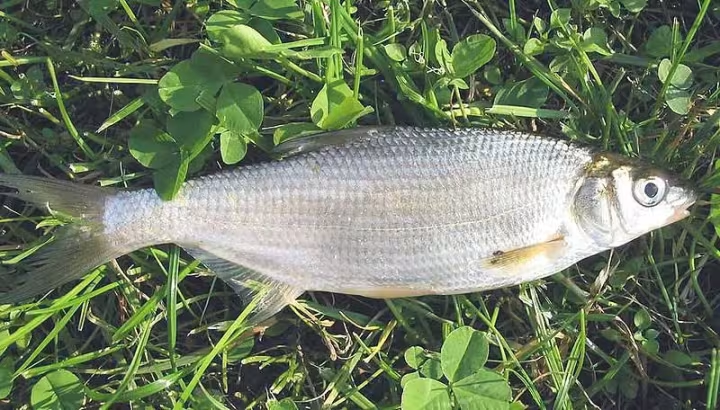
Description
How to identify
The Vimba, scientifically known as Vimba vimba, belongs to the Cyprinidae family within the order Cypriniformes. This fish is characterized by a slender body with small scales and a prominent snout that overhangs its subterminal mouth.
Adult Vimba typically grow between 30 and 40 centimeters in length. Their dorsal coloration ranges from grey-blue to dark brown, while their sides possess a bright silvery sheen. During the spawning season, males develop vivid orange or reddish colors on their ventral area.
This species prefers rivers with flowing water and sandy or stony beds. It is known for its environmental adaptability, capable of inhabiting both freshwater rivers and slightly brackish estuarine waters.
It is crucial to emphasize that Vimba vimba is not an agricultural pest. It is an aquatic organism that has no interaction with terrestrial crops or farming infrastructures.
From a biological standpoint, the Vimba is classified as a benthivorous fish, playing a vital role in maintaining the trophic balance of freshwater ecosystems.
What it damages
Vimba bream causes no damage to agricultural plants. Its diet consists of benthic invertebrates such as insect larvae, mollusks, and worms, which are found on the riverbed.
There are no recorded instances of Vimba causing harm to crops, roots, or fruits. It does not possess the biology or feeding habits to consume or destroy land-based agricultural products.
In aquaculture, the Vimba is viewed as a beneficial species that contributes to the ecological health of ponds and river systems. It acts as a natural control for population explosions of certain benthic invertebrates.
Agro-agronomical assessments do not list Vimba as a threat. Any concerns regarding "damage" are biologically unfounded and stem from a lack of understanding of the species' ecological niche.
Therefore, farmers and agronomists do not need to implement any monitoring or control measures against this fish species, as it is entirely harmless to agricultural operations.
When it appears
The biological cycle of the Vimba is dominated by seasonal migration. In the spring, they migrate from larger bodies of water to the upper reaches of rivers to spawn.
Feeding activity peaks during the warmer months when water temperatures allow for active metabolism. During winter, Vimba become dormant and aggregate in deep river holes to endure the cold period.
The spawning period typically occurs from late spring to early summer. The development of eggs is temperature-dependent and lasts about a week, after which larvae begin their development in the river.
These seasonal phases are entirely independent of agricultural cycles. The migratory movements occur within the river system and have no impact on field work, planting, or harvesting.
Understanding these biological phases is relevant only for fisheries management and environmental protection, rather than for agricultural crop management.
Control measures
Since Vimba is not a pest, there are no agricultural control measures required or recommended. Any attempt to eliminate this fish from water bodies would be detrimental to the local ecology.
Instead of control, conservation efforts are often prioritized for this species. These include protecting spawning grounds from pollution and ensuring water quality remains high in natural river ecosystems.
For irrigation systems that draw water from rivers, fish protection screens are installed to prevent juvenile fish from entering pumps. This is a standard procedure to safeguard aquatic wildlife without interfering with water supply.
It is important for the agricultural community to distinguish between real crop pests and neutral aquatic species. The Vimba is a protected and valuable species in many jurisdictions.
In summary, the best practice is to coexist with this species by maintaining healthy water quality, which supports both the natural environment and agricultural water needs.
Taxonomy
- Latin name
- Vimba vimba
- Family
- Cyprinidae
- EPPO code
- VIMBVI
Discussion
No discussions yet — be the first.