
Common bleak
Alburnus
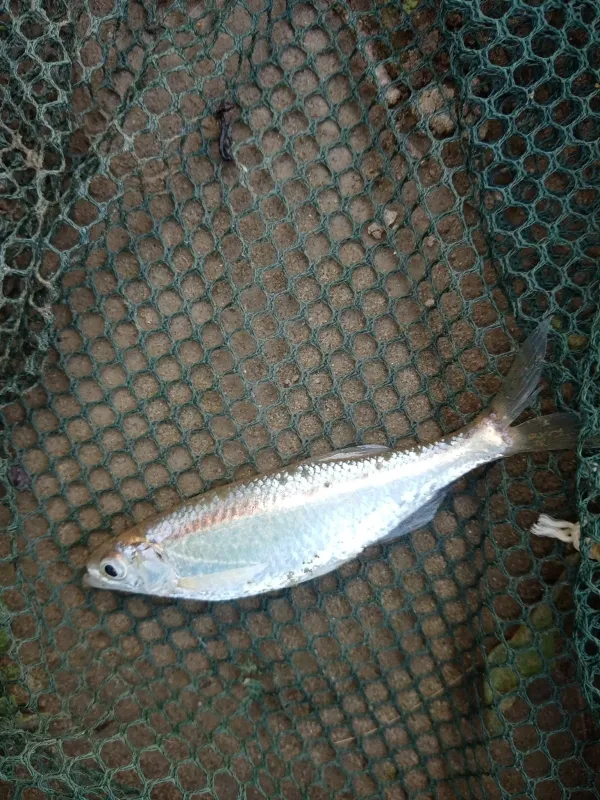
Description
How to identify
The common bleak (Alburnus alburnus) is a small, schooling freshwater fish belonging to the Cyprinidae family. It is widely distributed across European water bodies.
This fish features a slim, compressed body covered in silvery, deciduous scales. It typically reaches a length of 10 to 15 centimeters as an adult.
Its mouth is directed upwards, an adaptation for feeding on zooplankton and small insects found on the water's surface, which is its primary habitat.
The species is known for its high reproductive capacity, allowing it to colonize new water bodies, including irrigation canals and storage ponds, very quickly.
While not a pest to terrestrial crops, it is a significant element in aquatic environments that interact with agricultural irrigation systems.
What it damages
The common bleak causes no damage to cultivated plants; however, it acts as a competitor for food resources in aquaculture and commercial fish ponds.
By consuming large amounts of zooplankton, it depletes the primary food source for juvenile carp, trout, and other commercially valuable species.
In managed ponds, a large population of bleak can significantly reduce the growth rates of target fish stocks, leading to economic losses for the farm.
In irrigation systems, a high density of this fish can contribute to imbalances in water quality and biological stability of the aquatic environment.
Fishery managers consider it a nuisance species that requires active population control to ensure the productivity of the main fish stock.
When it appears
The activity of the common bleak begins in early spring when water temperatures rise above 10 degrees Celsius following the winter thaw.
Spawning occurs throughout May and June, characterized by highly active schooling behavior near the shorelines and on shallow substrates.
During the summer months, the fish remains active near the surface, constantly moving in search of plankton and surface-dwelling insects.
As autumn temperatures drop below 7 degrees Celsius, the bleak gathers into dense schools to migrate towards deeper, warmer parts of the reservoir.
Winter behavior involves a slow-down in metabolic processes, although they remain mobile and do not enter a state of complete hibernation.
Signs of infestation
The presence of a large population is often indicated by frequent surface splashes, especially during calm and sunny weather conditions.
Visual identification is easy due to the distinct silver flash of the schooling fish as they move just below the water's surface.
Hydrobiological analysis of the water, showing a sharp decline in zooplankton density, often serves as a sign of an overpopulated bleak colony.
In experimental or commercial netting, a high catch rate of small, silvery fish in fine-mesh nets clearly indicates a dominant population.
The lack of juvenile development of valuable fish species in ponds often points to the excessive pressure exerted by bleak competition.
Control measures
Biological control through the introduction of predatory fish such as pike (Esox lucius) or perch is the most effective management strategy.
Mechanical removal using fine-meshed seines during the pre-spawning period is highly recommended for keeping population levels in check.
Managing the nutrient input into ponds helps limit the growth of the zooplankton population, thereby reducing the available food supply for the bleak.
- Introduction of apex predators for natural population control.
- Regular netting to reduce total fish biomass.
- Control of water eutrophication to limit food resources.
Effective management requires integrated efforts to maintain the ecological balance and protect the profitability of the aquatic facility.
Taxonomy
- Latin name
- Alburnus
- Family
- Cyprinidae
- EPPO code
- ALBRSP
Discussion
No discussions yet — be the first.