
Common bleak
Alburnus alburnus
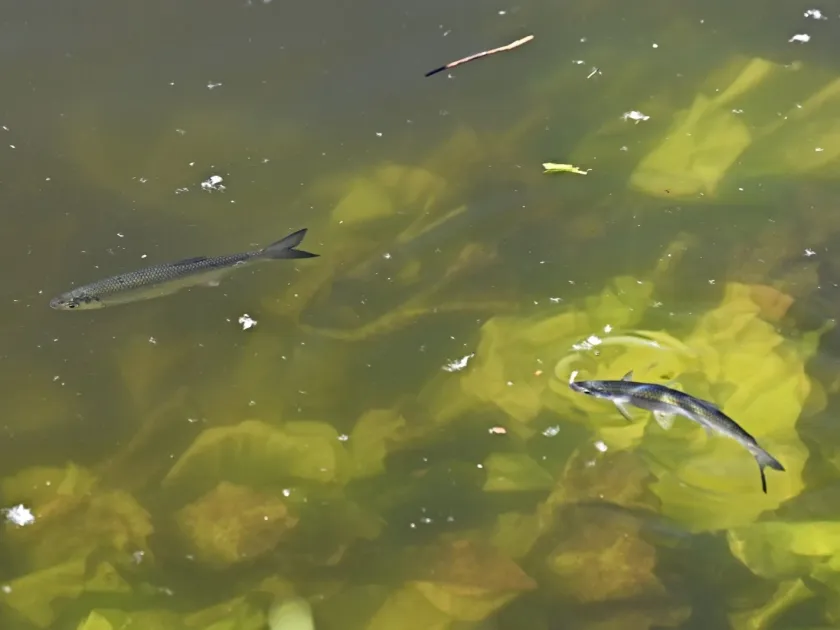
Description
How to identify
The common bleak (Alburnus alburnus) is a species of the Cyprinidae family. It is a small, gregarious fish known for its elongated, compressed body and delicate, deciduous silvery scales that easily detach when handled.
A distinctive feature of this species is its superior mouth, which is adapted for feeding on plankton and insects from the water surface. Adults typically measure 15–20 cm in length and are exceptionally agile, moving in large, dense schools.
Biologically, the bleak is highly adaptable to various freshwater environments, including lakes, reservoirs, and slow-moving rivers. It is most active during daylight hours, preferring warm, shallow areas where food is abundant.
The reproduction cycle starts in the spring when water temperatures reach approximately 15°C. Eggs are laid in batches on aquatic vegetation or firm substrates, ensuring high survival rates for the offspring.
The species is highly prolific, and its ability to rapidly multiply makes it a persistent presence in many ecosystems, often outcompeting other species for limited space and resources.
What it damages
In the context of aquaculture, the common bleak is considered a nuisance species due to its high efficiency in consuming zooplankton. This places it in direct competition with the fry of commercial fish species like carp.
Massive populations of bleak can deplete the natural food supply of a pond, leading to stunted growth rates for the primary stock. This significantly reduces the overall profitability and biological efficiency of the farm.
The bleak acts as a vector for various fish parasites and pathogens. By moving between different parts of a pond system, it can facilitate the spread of diseases among high-value fish stocks.
Furthermore, in spawning ponds, the bleak may consume fish eggs and early-stage larvae, directly hindering the reproduction of commercially valuable fish and causing economic losses for the fishery.
The presence of bleak also complicates the management of ponds, as their small size makes them difficult to remove during standard netting procedures, requiring specific management interventions.
Control measures
Prevention is the most effective strategy against bleak. Installing fine-mesh screens on all water inlets is essential to prevent the introduction of eggs or fry into the pond system from surrounding canals.
Drain-down and wintering of ponds are standard agricultural practices for managing pests. By completely draining the pond, the bleak population is eliminated, allowing for a fresh start during the next season.
Biological control involves stocking predatory fish such as pike or zander. These predators act as natural regulators, keeping the population of bleak suppressed and preventing them from reaching problematic densities.
Regular pond maintenance, including the removal of dense submerged vegetation where bleak eggs are deposited, can further disrupt their reproductive cycle and reduce the rate of colonization.
- Fine-mesh water filtration systems.
- Full pond drainage for winter sanitization.
- Stocking with predatory fish species.
- Removal of excess aquatic vegetation.
- Strategic netting with fine-mesh equipment.
Taxonomy
- Latin name
- Alburnus alburnus
- Family
- Cyprinidae
- EPPO code
- ALBRAL
Discussion
No discussions yet — be the first.