
Jamaican slug
Veronicella sloanei
Description
How to identify
The Jamaican slug (Veronicella sloanei), also known as the leatherleaf slug, is a significant agricultural pest belonging to the family Veronicellidae.
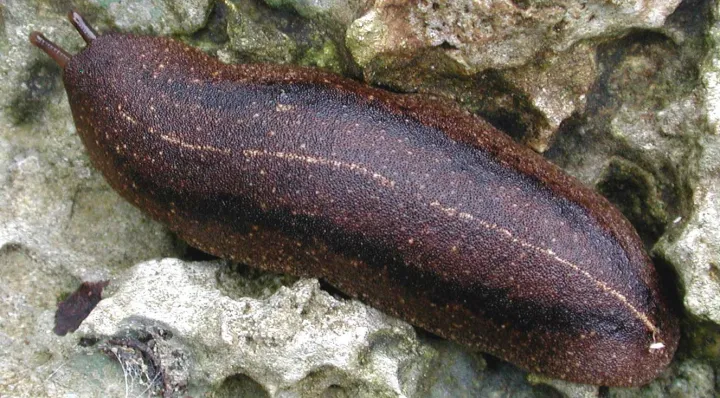
Adult slugs typically measure between 10 and 12 centimeters in length. They are characterized by a leathery, brown or gray mantle often marked with a dark central stripe.
Unlike common garden slugs, their body surface appears textured and bumpy. They possess two pairs of retractable tentacles, with the eyes located on the longer upper pair.
This species is hermaphroditic, meaning every individual can lay eggs, which facilitates rapid population growth in favorable moist environments.
They are strictly nocturnal animals, spending daylight hours hiding under debris, mulch, or deep within soil crevices to prevent dehydration.
What it damages
The Jamaican slug is a highly destructive polyphagous pest, meaning it feeds on a vast array of agricultural crops, ornamentals, and native plants.
Vegetable gardens are particularly susceptible, with crops like lettuce, cabbage, beans, and young tomato plants being favorites for these slugs.
They consume leaves, shoots, and young seedlings, often stripping plants entirely and leaving behind only skeletal veins and damaged stems.
Besides direct physical damage, their mucus trails and fecal matter contaminate the produce, rendering it unmarketable and lowering harvest quality.
They are also known to serve as vectors for various plant pathogens and can harbor parasites that may affect humans and domestic animals.
When it appears
The activity of the Jamaican slug is heavily dependent on moisture levels, making them most problematic during rainy seasons and in humid climates.
They thrive when temperatures are moderate to warm, which allows them to remain active throughout most of the year in tropical and subtropical regions.
In temperate climates or greenhouse settings, they can maintain continuous activity as long as the humidity remains high and food sources are available.
Spring and early summer are critical periods for control, as this coincides with the planting of young seedlings that are easily decimated by slug feeding.
Population surges often follow periods of prolonged rain, as moisture is essential for their movement across the soil surface and respiration.
Signs of infestation
The most telltale sign of a Jamaican slug infestation is the presence of dried, glistening mucus trails on plant leaves, stems, and the surrounding soil.
Leaves often exhibit large, irregular holes with smooth edges, which is a classic indicator of molluscan feeding rather than insect leaf-chewing.
In heavily infested areas, you may notice that small seedlings disappear overnight, with only the base of the stem remaining visible.
During the day, turning over pots, damp wood, or garden waste will often reveal the slugs congregating in dark, moist spots.
- Silvery slime trails on foliage.
- Large holes in vegetable leaves.
- Sudden loss of young vegetable seedlings.
- Clumps of eggs found in damp soil or mulch.
Control measures
Integrated pest management is essential, starting with the removal of habitat refuges such as piles of debris, boards, and excessive weed cover.
Mechanical control involves the use of beer traps or other fermentation-based baits that attract and drown the slugs in shallow containers.
Chemical control using molluscicides containing iron phosphate is an effective, environmentally safer option compared to traditional methaldehyde pellets.
Physical barriers like crushed eggshells, coarse sand, or copper tape can be placed around sensitive plants to discourage slugs from crossing the perimeter.
Encouraging natural predators such as frogs, toads, and beetles to populate the garden provides a sustainable way to suppress slug numbers over time.
Taxonomy
- Latin name
- Veronicella sloanei
- Order
- Molluscs
- Family
- Veronicellidae
- EPPO code
- VERNSL
Discussion
No discussions yet — be the first.