
Diplosolenodes slug
Diplosolenodes
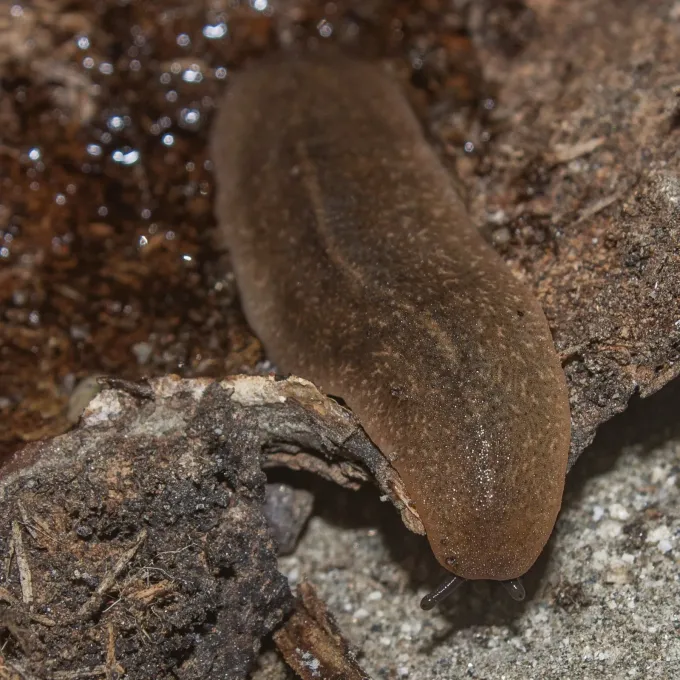
Description
How to identify
Diplosolenodes is a genus of terrestrial mollusks belonging to the family Veronicellidae, commonly known as leatherleaf slugs. Unlike typical slugs, they lack a shell and possess a thick, leathery mantle covering their entire dorsal surface.
Adult specimens can grow to significant sizes and exhibit a streamlined, flattened body shape. Their skin texture is often granulated, and their coloration typically ranges from light brown to dark gray, often featuring dark longitudinal stripes or mottled patterns.
Their biology is highly dependent on humidity. These slugs are hermaphroditic, allowing for rapid population growth under favorable moist conditions. They deposit clusters of eggs in damp, sheltered areas such as soil cracks or under debris.
They are primarily nocturnal creatures, remaining inactive during the daylight hours in cool, dark spots. They avoid direct sunlight, which causes them to seek refuge under garden equipment, mulch, or dense vegetation.
Human activity is a primary vector for their spread, as they are frequently transported between regions via contaminated potted plants, landscaping materials, and nursery stock.
What it damages
Diplosolenodes species are generalist feeders, known as polyphagous pests that affect a wide range of agricultural crops and ornamental plants. Their feeding behavior can be devastating for delicate seedlings.
Vegetable crops such as lettuce, cabbage, tomatoes, and beans are particularly susceptible. The slugs consume leaves, creating irregular holes and often leaving only the toughest veins behind, severely stunting plant growth.
Fruit damage is also common, especially when produce comes into contact with the ground. Deep, crater-like cavities eaten into fruits reduce marketability and often act as entry points for secondary bacterial and fungal infections.
Ornamental plants are often targeted for their succulent leaves and blossoms, leading to significant cosmetic damage. In high densities, these mollusks can defoliate entire beds within a few nights.
The presence of these slugs in greenhouse environments is particularly problematic due to the consistently high humidity, which enables them to breed throughout the year and sustain high feeding pressure.
Signs of infestation
The most diagnostic sign of a Diplosolenodes infestation is the presence of shiny, silvery mucus trails found on leaves, stems, and the surrounding soil surface, which remain after the slugs have moved.
Feeding damage is identified by large, irregular holes in the leaves, often starting at the edges. Unlike insect damage, the edges of these holes are typically smooth and lack the sharpness associated with mandibles.
Dark, elongated fecal pellets (frass) found near the base of the plant or in the surrounding mulch serve as a reliable indicator of recent slug activity and high local density.
Daytime inspections may reveal the pests resting in cool, damp crevices, under wooden boards, stones, or thick layers of organic mulch that provide necessary moisture protection.
Wilting of young plants without visible stem lesions may suggest that the slugs are feeding on the roots or the tender base of the stem just below the soil line.
Control measures
Cultural management is the first line of defense. Keeping the area free of weeds, fallen leaves, and unnecessary garden debris removes the essential daytime hiding spots for the slugs.
Mechanical barriers, including the application of rough materials like crushed eggshells, coarse sand, or diatomaceous earth around plants, can deter slugs by making movement across the surface difficult.
Trapping is an effective non-chemical control method. Simple containers filled with beer or a fermented yeast mixture, buried at ground level, can effectively attract and trap large numbers of the slugs.
Biological control options often involve the use of iron phosphate-based bait products. These are highly effective against mollusks while remaining safe for pets, birds, and beneficial garden insects.
Chemical control should be reserved for severe infestations. When using molluscicides, it is critical to apply the granules according to the manufacturer's label to ensure efficacy and minimize environmental impact.
Taxonomy
- Latin name
- Diplosolenodes
- Order
- Molluscs
- Family
- Veronicellidae
- EPPO code
- DIPXSP
Discussion
No discussions yet — be the first.