
Vaginulus
Vaginulus
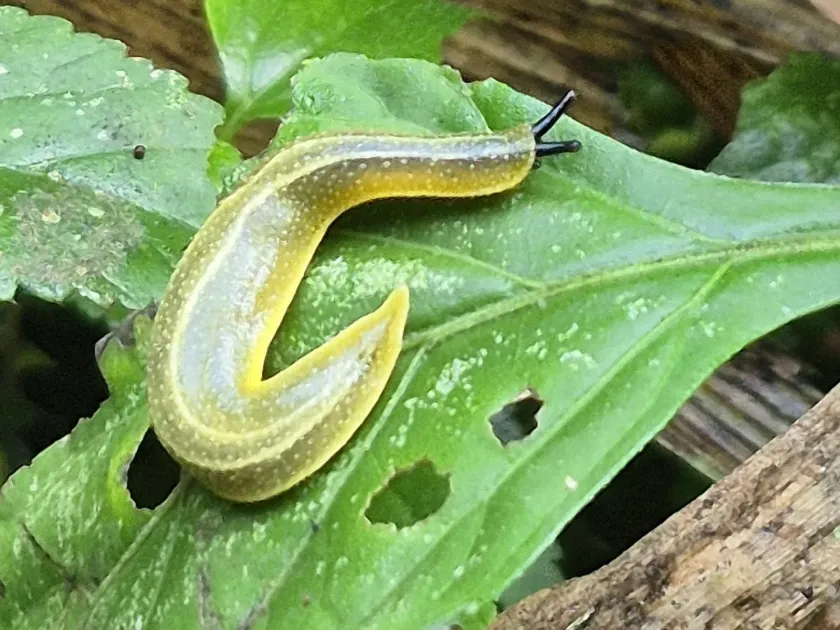
Description
How to identify
Vaginulus is a genus of air-breathing land slugs in the family Veronicellidae. These slugs are commonly referred to as leatherleaf slugs because their backs are covered by a thick, leathery mantle that entirely obscures the shell, which has been lost through evolution.
They possess a streamlined, elongated body that can change shape significantly. Their coloration is typically cryptic, ranging from tan and brown to black, often with mottled patterns that help them blend into soil and decaying organic matter during the daylight hours.
As hermaphrodites, Vaginulus slugs have high reproductive potential. They lay eggs in clusters within moist soil or beneath debris. The young hatch as miniature versions of the adults, meaning there is no larval stage, which allows them to colonize new areas rapidly.
These mollusks are nocturnal, hiding during the day to avoid desiccation. They require high levels of humidity to survive, making them most active during the night or periods of rainfall, which are optimal times for their movement and feeding.
Their distribution is primarily tropical and subtropical, but they have become significant greenhouse pests in various parts of the world, thriving in the controlled, humid, and temperate environments provided by human-made structures.
What it damages
Vaginulus slugs are voracious generalist feeders. They consume a wide variety of plant tissues, including leaves, stems, flowers, and fruits. Their feeding habits make them a serious threat to both vegetable gardens and ornamental plant nurseries.
Seedlings are particularly vulnerable; a high density of Vaginulus can wipe out a newly planted crop overnight. They selectively feed on the most succulent parts, often leaving behind only the veins of the leaves or cutting the stem at the base.
In addition to direct tissue loss, these slugs contaminate produce with their mucus secretions. This slime trail is not only aesthetically unappealing but can also harbor harmful bacteria and fungi that lead to secondary decay of the fruit or leaves.
Ornamental plants suffer reduced growth and aesthetic damage, which can lead to significant economic losses for nurseries. The constant grazing prevents the plants from establishing a proper canopy, limiting their ability to photosynthesize effectively.
Because they are capable of surviving in greenhouses, they can cause year-round damage. Unlike outdoor pests that may enter diapause during cold winters, these slugs continue to feed and reproduce as long as the temperature and humidity remain stable.
Signs of infestation
The most reliable sign of Vaginulus presence is the occurrence of irregular, jagged holes in leaves. Unlike insects that may leave pinholes, slugs consume larger areas of the leaf blade, starting from the edges or creating large central gaps.
A shiny, silvery trail of dried mucus left on plant surfaces, pots, or soil is a telltale indicator. These trails are particularly noticeable in the morning before the sun dries them out completely.
During the day, search for these slugs under moisture-retaining objects such as wooden boards, rocks, bricks, or dense piles of mulch. They cluster in these spots to maintain their internal moisture balance.
Observing a crop at night with a flashlight is the most accurate way to detect them. You will likely find them actively feeding on the plants, revealing the extent of the infestation which may otherwise seem mysterious during the daytime.
Wilted or dying seedlings, especially those that show signs of being partially eaten at the soil line, are strong indicators that Vaginulus slugs are operating in the immediate vicinity of your vegetable patch.
Control measures
Sanitation is the first line of defense. By removing garden debris, tall weeds, and dense ground cover, you eliminate the daytime refuges that Vaginulus slugs rely on to survive the heat of the day.
Physical trapping is highly effective for smaller infestations. Setting up boards, damp cardboard, or melon rinds at night provides an attractive hiding spot. Each morning, collect and destroy the slugs found underneath these traps.
Implementing barrier methods can deter slugs from reaching plants. Materials like coarse sand, wood ash, or crushed eggshells can be spread around the base of plants; these abrasive substances irritate the soft underside of the slugs.
Chemical control, specifically using molluscicides, can be used as a last resort. Metaldehyde or iron phosphate-based baits are effective, but they must be applied in a way that minimizes exposure to pets and non-target wildlife.
Promoting a healthy ecosystem by attracting natural predators like toads, snakes, hedgehogs, and ground beetles can provide biological suppression. These creatures are proficient hunters of slugs and can help keep populations in check naturally.
Taxonomy
- Latin name
- Vaginulus
- Order
- Molluscs
- Family
- Veronicellidae
- EPPO code
- VAGISP
Discussion
No discussions yet — be the first.