
Sarasinula plebeia
Sarasinula plebeia
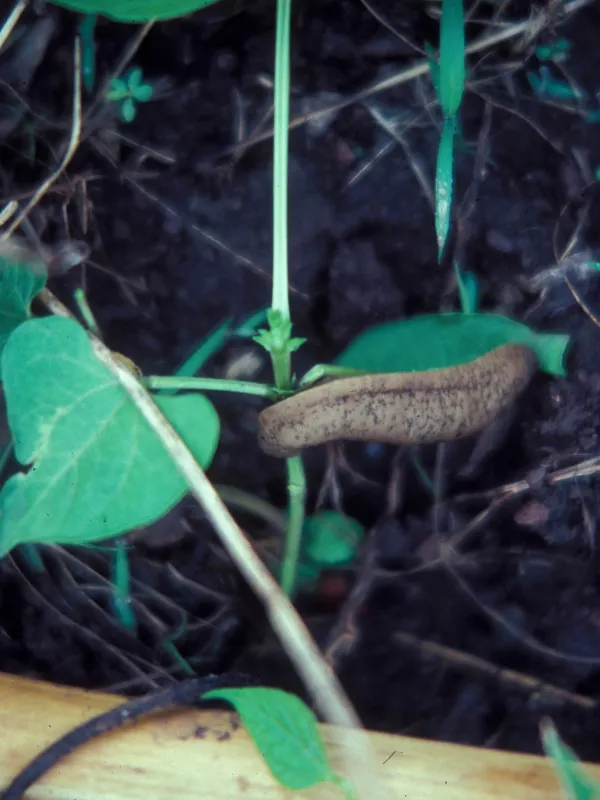
Description
How to identify
Sarasinula plebeia, commonly known as a land slug, belongs to the family Veronicellidae. Unlike common garden snails, these mollusks lack a shell, making them highly dependent on high-humidity environments.
The adult slug is elongated and flattened in shape, typically measuring 5 to 7 centimeters in length. Its body color varies from light brown to dark gray, often patterned with darker mottling or stripes.
They possess two pairs of tentacles on their head, used for sensing their surroundings. Their skin is covered in a specialized mucus that facilitates movement and protects the organism from dehydration.
Biologically, they are classified under the order Systellommatophora. They are simultaneous hermaphrodites, meaning each individual can reproduce, which leads to rapid population explosions in suitable habitats.
Due to their nocturnal behavior, identifying them during the day requires searching under debris, leaf litter, or moist soil surfaces where they take refuge from sunlight.
What it damages
Sarasinula plebeia is a notorious polyphagous pest, capable of feeding on a wide range of agricultural crops. It is particularly devastating in tropical and subtropical farming regions.
Primary host plants include soybeans, beans, corn, various types of lettuce, cabbage, and solanaceous crops like tomatoes and peppers. Seedlings are the most vulnerable stage, often decimated overnight.
Damage occurs primarily through the rasping of plant tissues with their radula. They consume leaves, stems, and sometimes even the roots of tender plants, causing severe yield losses.
Beyond direct feeding, these slugs are vectors for various plant pathogens. Their presence and the trails of slime they leave behind can lead to secondary bacterial or fungal rot on damaged plant tissues.
- Defoliation of seedlings and young plants
- Irregular holes in leaves and stems
- Destruction of root systems in young transplants
- Contamination of harvest with slime and excrement
When it appears
The activity of Sarasinula plebeia is strictly tied to moisture levels. They are most active during the rainy season or in fields with consistent irrigation, which provides the humidity they require.
They are strictly nocturnal, emerging from their daytime shelters after sunset to feed. High humidity or rainfall encourages mass movement and increased feeding activity across fields.
During dry periods or periods of low soil moisture, they burrow into the ground, often reaching depths of several inches to escape desiccation. They remain inactive until favorable conditions return.
Their life cycle involves depositing eggs in clusters within moist soil or organic matter. A single individual can contribute significantly to the total population, ensuring rapid colonization.
Managing soil moisture and maintaining clean field borders can significantly reduce the potential for a massive infestation by limiting the availability of shelter and breeding sites.
Signs of infestation
The most recognizable sign of an infestation is the presence of silvery, dried mucus trails left on leaves, stems, and soil surfaces. These trails are evidence of their nocturnal routes.
Leaves appear ragged, with large, irregular holes eaten through the blades. In severe cases, only the main veins of the leaves may remain, leading to rapid plant decline.
Early morning scouting is the best way to confirm their presence. Look under mulch, stones, or irrigation pipes near areas where plant tissue damage has been observed.
Young plants may suddenly wilt and fall over, which is a symptom of the slug consuming the stem at or just below the soil surface, causing the collapse of the plant.
Identifying these signs early is crucial for implementing control measures before the population reaches an uncontrollable level and causes irreparable damage to the crop.
Control measures
Integrated pest management (IPM) is essential for controlling Sarasinula plebeia. Cultural practices, such as removing weeds and organic debris, reduce the number of daytime shelters available.
Tillage is an effective mechanical method for disrupting their breeding sites. Turning the soil exposes eggs and young slugs to predators and desiccation by the sun.
Physical traps, such as moistened boards or traps using fermented bait, can be strategically placed to gather and manually remove slugs from the fields.
Chemical control usually involves the use of molluscicides containing metaldehyde or iron phosphate. These are applied as baits in areas of high activity to minimize direct contact with crops.
Iron phosphate-based baits are often preferred for organic or integrated farming systems as they are less toxic to pets and wildlife compared to traditional metaldehyde baits.
Taxonomy
- Latin name
- Sarasinula plebeia
- Order
- Molluscs
- Family
- Veronicellidae
- EPPO code
- SARAPL
Discussion
No discussions yet — be the first.