
Sarasinula
Sarasinula
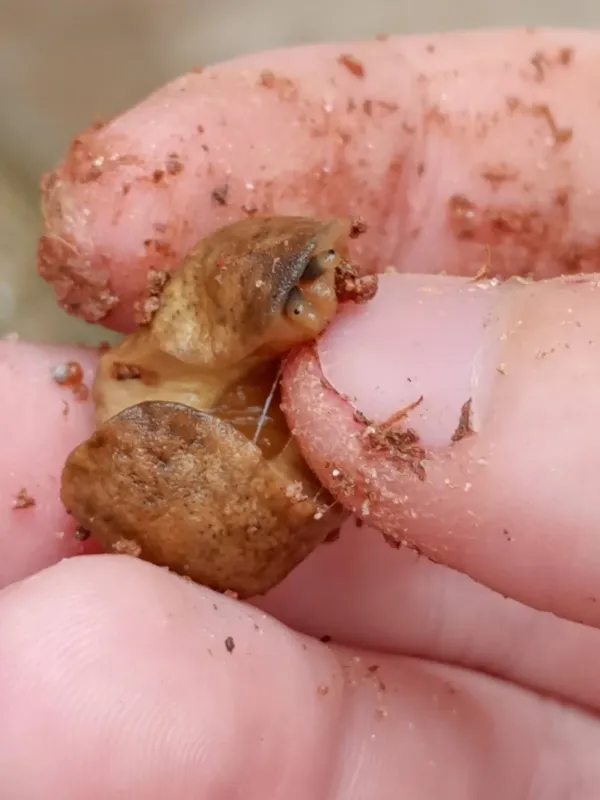
Description
How to identify
Sarasinula is a genus of terrestrial gastropod mollusks in the family Veronicellidae, commonly known as leatherleaf slugs. Unlike common slugs, they lack a shell and possess a smooth, oval-shaped body that can reach significant sizes.
The coloration of these mollusks varies from light brown to almost black, often featuring dark spots or stripes. Their skin is covered in a thick layer of protective mucus, which helps them retain moisture, making them extremely resilient in harsh environments.
A key distinguishing feature is the location of the breathing pore and their unique method of movement. These mollusks are primarily nocturnal, spending the daylight hours hidden in the soil, under mulch, or within decomposing plant debris.
The biology of Sarasinula is closely linked to tropical and subtropical climates, where high humidity provides optimal conditions for reproduction. They are hermaphrodites, allowing for rapid population growth when environmental factors are favorable.
The life cycle includes laying eggs in moist soil or damp organic matter. Juveniles begin feeding immediately upon hatching, undergoing several growth stages before reaching sexual maturity.
What it damages
This pest is a polyphage, meaning it feeds on almost all types of agricultural crops. Vegetables, berries, and ornamental plants grown in greenhouses or damp open fields are particularly susceptible to infestation.
Commonly damaged crops include lettuce, cabbage, beans, tomatoes, and young seedlings of various flowering plants. The slug can destroy entire batches of seedlings overnight by consuming tender leaves and stems down to the base.
In addition to eating vegetative mass, Sarasinula damages fruits resting on the ground or those growing close to it. By leaving deep ulcers and thick slime trails, they render the produce unsellable and unsuitable for storage.
The pest also acts as a vector for various phytopathogens and nematodes, which are transported onto plants via their mucus. This leads to the development of secondary infections, rots, and diseases that can destroy crops faster than the feeding itself.
Economic losses caused by Sarasinula are significant in commercial vegetable farming, as damaged fruits lose their marketability. Controlling them is complicated by their secretive behavior and ability to migrate over long distances.
Signs of infestation
The first sign of the pest's presence is the characteristic silvery trail of dried mucus left on leaves and soil. This trail is a reliable indicator of nocturnal mollusk activity.
On the plants themselves, one can find ragged leaf edges, often consumed down to the veins. In severe infestations, only the stem may remain, which is a clear sign of high slug population density.
While difficult to find during the day, these slugs can be located under wooden boards, stones, wet sacks, or deep within mulch layers. These sheltered, damp areas are where they spend most of their time during daylight hours.
The presence of small, clustered egg masses in the soil is also a diagnostic sign. The eggs are typically pale, semi-transparent, and grouped in small batches within damp, shaded environments.
Fruit damage manifests as deep, crater-like cavities. These wounds often become entry points for secondary fungal diseases, leading to the rapid spoilage of the entire harvest.
Control measures
The primary control method is maintaining garden hygiene: regular removal of weeds, plant debris, and items that serve as shelters. Ensuring proper drainage to reduce excess soil moisture is also critical.
Manual collection in the evening or the use of traps (beer traps, damp cloths, wooden boards) can significantly reduce population density in small areas.
The use of barriers such as gravel, coarse sand, or wood ash around garden beds hinders mollusk movement. Copper tape is also effective as it creates small, unpleasant electrical shocks for the slugs.
Chemical control involves products based on metaldehyde or iron phosphate. The latter is safer for the environment and pets, as it acts selectively on gastropods.
- Regular evening monitoring of the garden plot.
- Creating unfavorable conditions using dry physical barriers.
- Applying biological agents, such as entomopathogenic nematodes.
- Timely disposal of organic waste and debris.
Taxonomy
- Latin name
- Sarasinula
- Order
- Molluscs
- Family
- Veronicellidae
- EPPO code
- SARASP
Discussion
No discussions yet — be the first.