
Veronicella moreleti
Veronicella moreleti
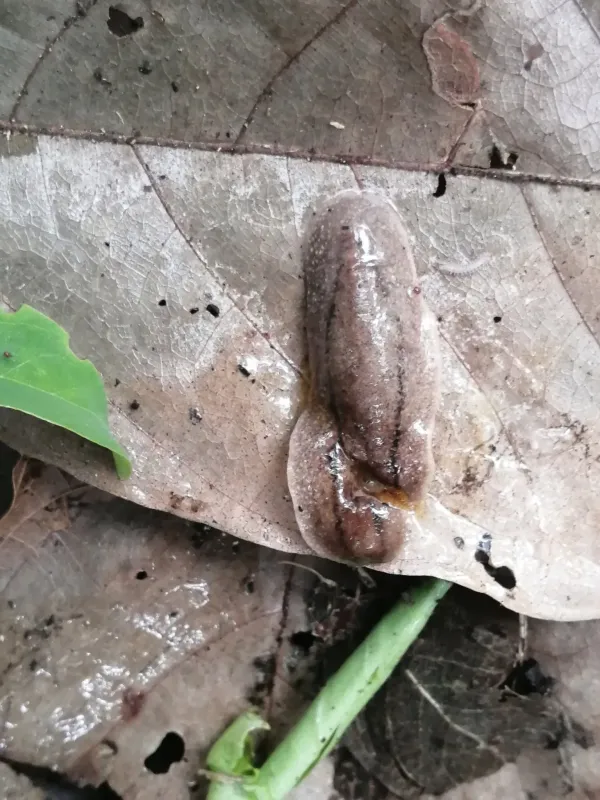
Description
How to identify
Veronicella moreleti is a species of air-breathing land slug belonging to the family Veronicellidae, commonly known as leatherleaf slugs. They are distinct for lacking a visible shell at any stage of their life.
Adult slugs have a smooth, leathery, and elongated body, typically ranging in color from light brown to deep dark shades, often featuring subtle longitudinal stripes.
The mantle covers the entire dorsal surface of the slug, which serves as a protective layer and a key anatomical feature for identification within the family.
They are primarily adapted to tropical and subtropical climates, making them significant pests in humid environments, greenhouses, and high-moisture agricultural settings.
The breathing pore is situated on the right side of the body, a biological characteristic used by experts to distinguish them from other terrestrial gastropods.
What it damages
Veronicella moreleti is a generalist herbivore (polyphage) that attacks a wide variety of cultivated plants, including vegetables, ornamental species, and fruit crops.
Seedlings and young plants are particularly vulnerable, as the slugs can rapidly strip away succulent tissues, leading to complete plant failure overnight.
Older plants suffer from significant defoliation, where the slugs consume large sections of leaves, which ruins the plant's aesthetic value and photosynthetic capacity.
Beyond direct feeding, these slugs are known to transmit various plant pathogens and bacteria, as the mucus trail can introduce infections into the plant's open wounds.
In nursery settings, Veronicella moreleti can cause substantial economic losses, forcing farmers to implement strict sanitation and pest management protocols.
When it appears
The activity level of Veronicella moreleti is highly dependent on humidity levels and soil moisture content; they thrive during rainy seasons and intensive irrigation cycles.
These slugs are strictly nocturnal and crepuscular, spending the daylight hours concealed under mulch, plant debris, stones, or within cracks in the soil.
Reproduction occurs in moist substrates where eggs are deposited in clutches. Development is rapid when temperatures remain warm and moisture is constant.
High levels of infestation are typically observed during periods with persistent rain, which enables the slugs to travel longer distances to find food sources.
During dry or stressful periods, they retreat deeper into the soil or find cool, damp microhabitats to survive until conditions become favorable again.
Signs of infestation
Irregular, ragged holes in leaves are the primary indicator of slug activity, as they scrape away plant tissue rather than cleanly cutting through leaves.
Silvery, dried mucus trails left on soil surfaces, stems, or foliage are tell-tale signs that these mollusks have been active in the area.
Small, dark, pellet-like fecal matter found near the base of the plant confirms their presence and helps identify the location of their daytime shelters.
Nighttime observation using a flashlight is the most reliable way to spot individuals, as they are typically most active feeding on foliage or around the stem base.
- Stem damage near the soil line.
- Leaves appearing as skeletons or lacking large patches of tissue.
- Fruit damage with visible rasp marks or rotting entry points.
Control measures
Effective management begins with sanitation: clearing debris, removing weeds, and eliminating daytime resting sites are crucial steps in reducing the local slug population.
Optimizing irrigation practices to reduce surface soil moisture can significantly limit the slug's ability to survive and move across the growing area.
Physical barriers, such as copper tape, sharp sand, or diatomaceous earth applied around vulnerable plants, can deter slugs from crossing into protected zones.
For more severe infestations, commercial molluscicides containing metaldehyde or iron phosphate can be utilized, provided they are applied according to label safety guidelines.
Encouraging natural predators, such as specific beetles, frogs, or birds, can provide a level of biological control that keeps slug populations within manageable limits.
Taxonomy
- Latin name
- Veronicella moreleti
- Order
- Molluscs
- Family
- Veronicellidae
- EPPO code
- VERNMO
Discussion
No discussions yet — be the first.