
Cuban slug
Veronicella cubensis
Description
How to identify
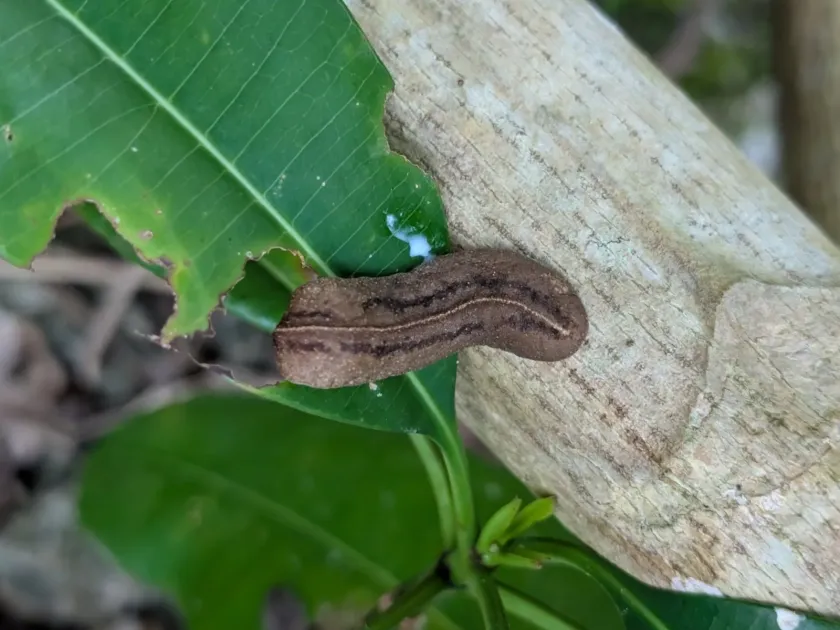
The Cuban slug (Veronicella cubensis) is a land slug belonging to the family Veronicellidae. It is a shell-less mollusk known for its significant size and nocturnal behavior.
Adult slugs typically measure between 5 and 12 centimeters in length. Their bodies are elongated and slightly flattened, with a color profile ranging from light tan to dark gray, often featuring a dark dorsal stripe.
A key diagnostic feature is the smooth texture of their skin and the placement of the pneumostome, which is located on the right side of the mantle near the posterior end.
This species is highly adaptable and can thrive in various tropical and subtropical environments, making it a persistent pest in gardens and agricultural settings.
Younger individuals may exhibit a mottled or spotted pattern, which gradually fades into a more uniform appearance as they mature.
What it damages
The Cuban slug is a generalist herbivore, capable of causing devastating damage to a wide variety of cultivated garden and greenhouse plants.
They frequently target leafy greens, such as lettuce and cabbage, as well as high-value crops like tomatoes, peppers, and cucumbers, often consuming seedlings entirely.
In ornamental gardens, they are known to shred the foliage of hostas, lilies, and various flowering annuals, significantly reducing their aesthetic value.
Besides direct tissue consumption, their feeding creates wounds that serve as entry points for secondary bacterial and fungal pathogens, leading to plant decay.
They are particularly problematic in humid conditions, where they can quickly destroy entire patches of crops by feeding on leaves, stems, and fruits touching the soil.
When it appears
Cuban slug activity is strongly correlated with moisture levels and ambient temperature, typically showing year-round activity in warm climates.
They are most destructive during wet seasons or periods of frequent rainfall, which facilitate their movement across open terrain.
During the day, they remain inactive, hiding in dark, moist micro-habitats like under mulch, debris, or deep within soil crevices to avoid desiccation.
Nocturnal feeding is standard, with slugs emerging at night to search for food and mating partners in vegetable patches and garden beds.
In periods of prolonged dry weather, they retreat into the soil, where they can survive for extended periods until moisture levels rise again.
Signs of infestation
The most recognizable sign of an infestation is the presence of large, irregular holes chewed into the foliage, often concentrated near the base of the plant.
Shiny, dried slime trails left on leaves, stems, and soil surfaces serve as clear evidence of slug movement and presence within the area.
Advanced infestations often result in severe defoliation, where only the toughest leaf veins remain, severely inhibiting the plant's ability to photosynthesize.
Fruits and vegetables resting on the ground often show deep, crater-like cavities, which may rapidly develop soft rot due to infection.
- Sudden disappearance of young sprouts.
- Visible slime trails in the morning.
- Damaged stems on seedlings.
Control measures
Effective management of the Cuban slug requires an integrated approach focusing on sanitation and physical barriers to reduce their population density.
Removing potential hiding spots such as leaf litter, garden debris, and wooden planks is essential to minimize daytime shelters.
Physical barriers like copper tape or crushed eggshells can be placed around sensitive plants to deter slugs from reaching the foliage.
Trapping methods, such as beer traps or inverted melon rinds, can be used to manually reduce the number of active slugs in small garden plots.
Biological control through the encouragement of natural predators like frogs, toads, and birds can help maintain the population at a manageable level.
Taxonomy
- Latin name
- Veronicella cubensis
- Order
- Molluscs
- Family
- Veronicellidae
- EPPO code
- VERNCU
Discussion
No discussions yet — be the first.